
Gout Symptoms and Foods to Avoid
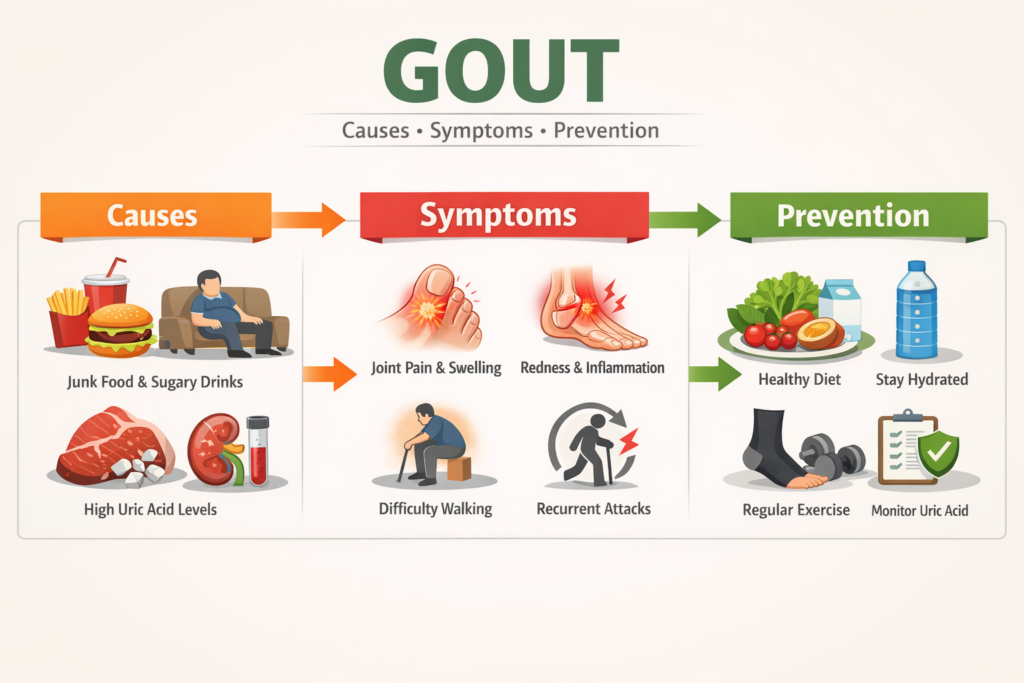
Gout is a condition when your small joints have severe pain ,swelling and inflammation. Gout is caused by high levels of uric acid in the blood. This uric acid solidifies crystals which get deposited between the joint spaces. Studies show gout is more common in men than women( after menopause).
Many people have high uric acid levels with no symptoms at all. But it silently there is an increased risk of developing gout and kidney stones if left unaddressed. A gout symptoms become visible when the level of uric acid is excessive.
According to the 2015–2016 National Health and Nutrition Examination Survey (NHANES), 3.9% (9.2 million) of US adults have gout. It is most common in arthritis in United States.
Gout Symptoms You Shouldn’t Ignore
Gout is called Asymptomatic until it shows symptoms like pain and swelling. Let’s explore all the Gout symptoms.
1. Sudden Joint Pain – Especially in the big toe, ankle, or knee.
2. Swelling and Redness – The affected area becomes hot and tender.
3. Limited Movement – Restricted movements which make it hard to walk or move the joint.
4. Recurrent Attacks – This means that pain may go away but return again and again.
5. Lingering Discomfort – Even after the attack, discomfort may last for days.
Nowadays studies show that gout cases are common in middle- and lower-income groups, especially due to:
- Processed and packaged food intake.
- Sugary drinks and junk food.
- Sedentary lifestyle and obesity.
- Lack of awareness about the uric acid level.
Dietary Patterns in Gout Symptoms
According to a article published by Hyon K Choi.et.at. Higher consumption of meat and seafood increases the risk of gout whereas they observed that higher consumption of dairy products is associated with a decreased risk. So let’s understand the Dietary patterns in gout disease.
Foods to Avoid if You Have Gout
Foods containing high purines are purine rich foods, Purine break down into uric acid in your body. Some list purine rich foods given below :
- Red meat (mutton, beef, pork)
- Organ meat (liver, kidney, brain)
- Seafood (anchovies, sardines, shellfish)
- Shellfish( Shrimp, lobster, crab, mussels, scallops)
- Processed meats (Bacon, sausages, salami)
- Alcohol (especially beer and spirits)
- Sugary drinks (like cola, fruit juices with high fructose, Sodas, energy drinks, fruit juices, Candy.)
- Baked goods with high sugar content
- Processed and packaged food
- Junk food
- Excess salt and saturated fats
- Yeast and yeast extracts (found in supplements like Marmite, B-complex capsules)
- Certain legumes (moderate purine): Lentils, chickpeas, beans (should be eaten in limited amounts if gout is active)
Reminder: Moderate level of purine rich foods can be taken occasionally.
Gout-Friendly Food Choices
What to eat when we need to avoid purine rich foods. We will eat Low-purine food, veggies, fruit, dairy products, grains and pulse etc. let list some Low-purine food.
- Low-purine veggies like spinach, broccoli, and kale.
- Cherries – may reduce inflammation and uric acid.
- Water – drink at least 2-3 liters per day
- Low-fat dairy – helps reduce uric acid levels.
- Whole grains – like brown rice, oats, quinoa.
Helpful Products for Day-to-Day in Gout disease
Water Bottles with Hourly Markers
Why it helps:
To stay hydrated flushes uric acid from the body. Choose a 2-liter bottle with time markers to stay on track. It will help you to remember to drink water timely.
Reusable Ice Packs
Why it helps
Reduces inflammation and to reduce joint pain during flare-ups. Apply for 15-20 minutes on the affected joint during a gout attack.
Compression Socks
Why it helps
It Supports joints and reduces swelling in the feet or ankles. Look for Non-restrictive, medical-grade socks that do not compress too tightly.
Lemon Water or Apple Cider Vinegar
Mix 1 tsp of apple cider vinegar or lemon juice in warm water and drink in the morning. It helps to alkalize your acidic body
Meal Prep Containers
Why it helps
Encourage consistent, gout-friendly meals with low purine foods like lentils, fruits, vegetables, and whole grains. Avoids last-minute junk food or meat-heavy meals , always eat half stomach.
Foot Elevation Pillows
Why it helps
Relieves swelling and pressure from joints. Use while sleeping or when resting on the sofa
Gout Symptom Tracker Journal or App
Why it helps
Tracks flare-up patterns, food intake, water consumption, and more.
Why Physiotherapy is Important for Gout Patients?
Several studies have highlighted the positive role of physiotherapy in managing gout, especially when combined with medical treatment and lifestyle changes.
A clinical review published in the Journal of Physiotherapy and Rehabilitation found that gout patients who received regular physiotherapy (including joint mobilization, strengthening, and pain-relieving modalities) had:
- Faster recovery times
- Improved joint flexibility
- Less reliance on pain medications
- Better long-term outcomes compared to those who only used medications
Another observational study revealed that patients who incorporated physiotherapy and exercise into their routine experienced fewer flare-ups, improved physical activity levels, and greater satisfaction with their overall health.
Physiotherapy is not just supportive, but therapeutically effective in reducing pain, restoring movement, and preventing joint damage in people suffering from gout.
Let’s explore how physiotherapy can play a crucial role in managing gout effectively
1. Helps Restore Joint Mobility
During a gout flare-up, joints become extremely painful, swollen, and stiff. This leads to limited movement, and patients often avoid using the affected limb.
- Reduce stiffness
- Restore joint flexibility
- Improve daily movements like walking or climbing stairs
2. Reduces Pain and Inflammation Naturally
Pain is the most distressing part of gout. Instead of relying solely on painkillers, physiotherapists use:
- Cold therapy
- Ultrasound therapy
- TENS (Transcutaneous Electrical Nerve Stimulation) to relieve pain and inflammation.
These methods offer drug-free pain relief and improve local blood flow, speeding up recovery.
3. Strengthens Muscles Around the Joint
After repeated gout attacks, muscles around the affected joint become weakened. This can make daily tasks more difficult and increase the risk of falls or joint injury.
A physiotherapy program includes strength-building exercises that:
- Support the joint
- Improve balance
- Restore confidence in walking or standing
This is especially helpful for older adults or those with chronic gout.
4. Prevents Joint Damage and Deformity
Chronic gout can cause long-term joint damage if not managed well. With time, it can lead to joint deformity, limited function, and even tophi (hard uric acid lumps under the skin).
Physiotherapy helps by:
- Teaching correct posture and movement
- Reducing pressure on inflamed joints
- Promoting healthy joint alignment
5. Encourages a Healthier, Active Lifestyle
Many gout patients become fearful of movement due to pain. But inactivity worsens stiffness, weight gain, and other health issues.
A physiotherapist guides you through:
- Safe physical activities
- Customized stretching routines
- Tips for weight management
This encourages a more active lifestyle, which in turn reduces the risk of future gout attacks.
6. Builds Long-Term Self-Management Skill
Physiotherapy empowers gout patients to manage their condition independently. It’s not just about exercise—it’s about education. Patients learn:
- How to prevent flare-ups
- When to rest vs. when to move
- Joint protection techniques
- Safe home remedies and ergonomics
This knowledge can reduce dependency on medicines and doctors, giving patients more control over their health
Gout is not just a temporary pain—it can have long-term effects on your mobility and quality of life. While medications address the symptoms, physiotherapy addresses the root causes of joint damage, weakness, and stiffness.
Consult a licensed physiotherapist today if you or some one you know suffer from gout. Early intervention can he
lf you move better, feel better, and live a fuller life—free from the fear of flare-up.