
Best 25 Heart Healthy Foods to Eat
Heart disease remains one of the leading health concerns worldwide, but many risk factors can be managed through healthy lifestyle choices. While factors such as age, family history, sex, and ethnicity are beyond our control, what we eat, how active we are, whether we smoke, and how we manage stress can significantly affect our heart health.
A well-balanced heart healthy diet is one of the most powerful tools for protecting your cardiovascular system. Eating more fibre-rich foods, fruits, vegetables, whole grains, and healthy fats while reducing saturated fat, sodium, and added sugars can help keep your arteries healthy and support normal cholesterol, blood pressure, and blood sugar levels.

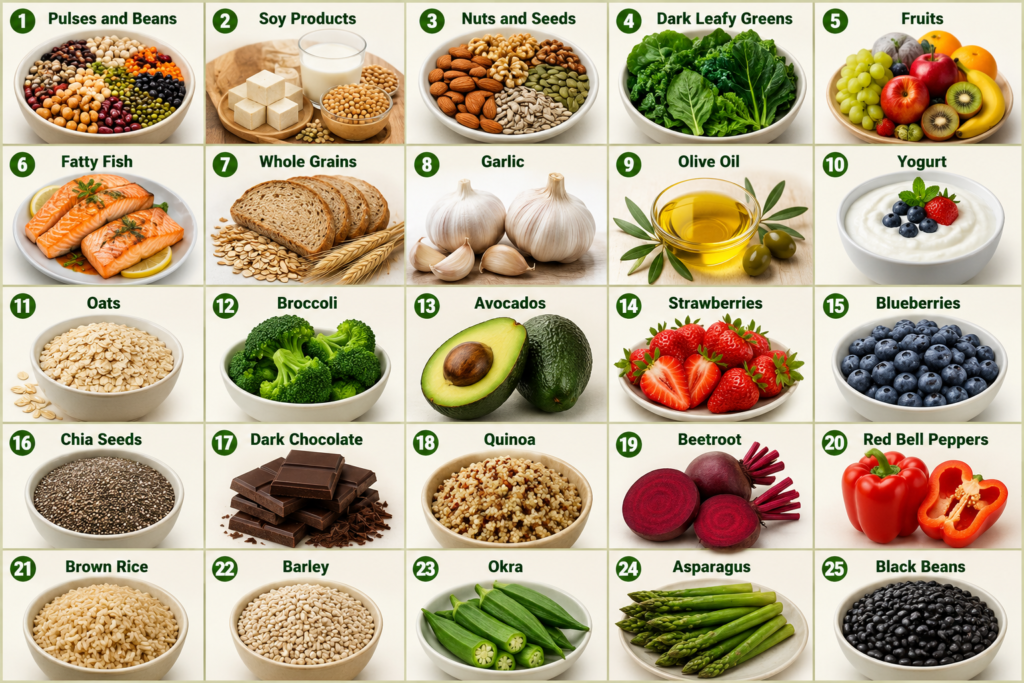
Here are 25 heart healthy foods that research has linked to better cardiovascular health.
Pulses and Beans
Beans, lentils, and peas are excellent additions to a heart healthy diet plan. They are rich in fiber, which helps regulate cholesterol and blood sugar levels. They also provide potassium and magnesium, minerals that support healthy blood pressure.
Easy ways to eat them:
- Add beans to soups and stews.
- Use lentils as a meat substitute in recipes.
- Include peas in salads and side dishes.
Soy Products
Soy-based foods such as tofu, tempeh, soy milk, and edamame provide many of the same benefits as legumes while also containing compounds called isoflavones. These plant compounds may help reduce inflammation and improve cholesterol levels.
Easy ways to eat them:
- Replace meat with tofu in stir-fries.
- Blend silken tofu into smoothies.
- Enjoy edamame as a healthy snack.
Nuts and Seeds
Walnuts, almonds, pecans, pumpkin seeds, chia seeds, and flaxseeds are packed with fiber, healthy fats, and antioxidants. Regular consumption has been associated with a lower risk of heart disease.
Easy ways to eat them:
- Snack on a handful of nuts.
- Sprinkle seeds over yogurt or oatmeal.
- Add ground flaxseed to smoothies.
Dark Leafy Greens
Leafy green vegetables rank among the most valuable choices in a list of 25 heart healthy foods because they provide a wide range of nutrients that support the cardiovascular system. Spinach, kale, romaine lettuce, bok choy, and beet greens contain naturally occurring nitrates that help improve blood vessel flexibility and encourage efficient blood flow throughout the body. These heart healthy foods are also excellent sources of potassium, which helps maintain normal blood pressure by balancing sodium levels. Their dietary fiber supports healthy cholesterol management, while antioxidants help defend heart tissues and blood vessels from damage caused by free radicals. In addition, leafy greens supply folate and other essential nutrients that contribute to overall vascular function. Regularly including these vegetables in a heart healthy diet can help support heart health, making them an important part of a balanced eating pattern focused on long-term cardiovascular wellness.
Easy ways to eat them:
- Add them to salads and sandwiches.
- Stir them into soups and stir-fries.
- Blend a handful into smoothies.
Fruits
Fruits, especially citrus fruits and berries, are among the most beneficial heart healthy foods. Oranges, grapefruit, tangerines, and pomelos have been linked to a lower risk of heart attacks and strokes, while berries provide antioxidants that help reduce inflammation.
Easy ways to eat them:
- Enjoy fresh fruit as a snack.
- Add berries to yogurt or oatmeal.
- Blend fruit into smoothies.
Note: Grapefruit may interact with certain medications, including some cholesterol-lowering drugs. Consult your healthcare provider if unsure.
Fatty Fish
Fatty fish are one of the best dietary sources of omega-3 fatty acids, which help reduce inflammation and support heart and blood vessel health.
Best choices include:
- Salmon
- Sardines
- Anchovies
- Trout
- Mackerel
Cooking ideas:
- Grill, bake, roast, or air-fry for a healthy meal.
Whole Grains
Whole grains contain all parts of the grain, providing more fiber, antioxidants, and nutrients than refined grains. People who consume more whole grains tend to have a lower risk of heart disease.
Examples include:
- Oatmeal
- Brown rice
- Whole wheat pasta
- Quinoa
- Bulgur
Garlic
Garlic is more than a flavor enhancer. Research suggests it may help increase HDL (“good”) cholesterol while lowering LDL (“bad”) cholesterol and triglycerides.
Easy ways to use it:
- Add garlic to sauces, dressings, and marinades.
- Season vegetables and meats with garlic instead of extra salt.
Olive Oil
Olive oil is a staple of many heart-friendly eating patterns. It contains healthy fats that may help reduce inflammation and support cardiovascular health.
Easy ways to use it:
- Drizzle over vegetables before roasting.
- Use in homemade salad dressings.
- Replace butter with olive oil when possible.
Yogurt
Low-fat, unsweetened yogurt is an excellent addition to a heart healthy diet. It is a key component of the DASH (Dietary Approaches to Stop Hypertension) eating pattern, which is known for supporting healthy blood pressure levels.
Easy ways to enjoy it:
- Create a yogurt parfait with fruit and whole-grain cereal.
- Use plain Greek yogurt instead of sour cream.
- Add nuts and seeds for extra nutrition.
Oats
Oats are one of the most popular among 25 heart healthy foods because they contain soluble fiber, particularly beta-glucan. This type of fiber helps reduce LDL (“bad”) cholesterol levels and supports healthy blood sugar control. Including oats in a heart healthy diet plan may help lower the risk of cardiovascular disease.
Easy ways to eat them:
- Enjoy oatmeal for breakfast.
- Add oats to smoothies.
- Use oats in homemade energy bites.
Broccoli
Broccoli is a nutrient-rich vegetable packed with fiber, antioxidants, vitamin C, and potassium. These nutrients support healthy blood vessels and help reduce oxidative stress that can affect heart health.
Easy ways to eat it:
- Steam and serve as a side dish.
- Add to stir-fries and soups.
- Roast with olive oil and herbs.
Avocados
Avocados provide heart-friendly monounsaturated fats that may help maintain healthy cholesterol levels. They are also rich in potassium, which supports healthy blood pressure.
Easy ways to eat them:
- Spread on whole-grain toast.
- Add slices to salads.
- Blend into smoothies or dips.
Strawberries
Strawberries contain antioxidants and fiber that support cardiovascular wellness. Their natural compounds may help reduce inflammation and promote healthy circulation.
Easy ways to eat them:
- Add to yogurt or oatmeal.
- Blend into smoothies.
- Enjoy as a fresh snack.
Blueberries
Blueberries are rich in antioxidants called anthocyanins, which help protect blood vessels from damage. Regular consumption can be part of a balanced heart healthy diet.
Easy ways to eat them:
- Mix into cereal or oatmeal.
- Add to fruit salads.
- Enjoy frozen as a snack.
Chia Seeds
Chia seeds are packed with fiber, omega-3 fatty acids, and minerals that support heart health. They may help maintain healthy cholesterol and blood pressure levels.
Easy ways to eat them:
- Stir into yogurt.
- Add to smoothies.
- Make chia seed pudding.
Dark Chocolate
Dark chocolate contains flavonoids, plant compounds that may support healthy blood flow and circulation. Choose varieties with a high cocoa content and enjoy in moderation.
Easy ways to eat it:
- Enjoy a small square as a treat.
- Add grated dark chocolate to oatmeal.
- Combine with fresh berries.
Quinoa
Quinoa is a whole grain that provides fiber, protein, and important minerals. It can help support healthy blood sugar and cholesterol levels as part of a heart healthy diet plan.
Easy ways to eat it:
- Use as a rice substitute.
- Add to salads.
- Serve with vegetables and lean protein.
Beetroot
Beetroot contains natural nitrates that help support healthy blood flow and circulation. It is a colorful and nutritious addition to meals focused on heart health.
Easy ways to eat it:
- Roast and add to salads.
- Blend into smoothies.
- Enjoy as a side dish.
Red Bell Peppers
Red bell peppers are rich in vitamin C, antioxidants, and fiber. These nutrients help support healthy arteries and overall cardiovascular function.
Easy ways to eat them:
- Slice into salads.
- Roast and serve with meals.
- Add to sandwiches and wraps.
Brown Rice
Brown rice is a whole grain that contains more fiber and nutrients than refined white rice. It can help support healthy cholesterol and blood sugar levels.
Easy ways to eat it:
- Serve as a side dish.
- Use in grain bowls.
- Add to soups and casseroles.
Barley
Barley is another fiber-rich whole grain that may help lower cholesterol levels and support digestive and heart health.
Easy ways to eat it:
- Add to soups and stews.
- Use in grain salads.
- Serve instead of rice.
Okra
Okra contains soluble fiber and antioxidants that may help support healthy cholesterol levels and cardiovascular wellness.
Easy ways to eat it:
- Add to curries and stews.
- Roast with spices.
- Stir-fry with vegetables.
Asparagus
Asparagus provides fiber, folate, and antioxidants that contribute to heart health. It is a nutritious vegetable that fits well into a balanced eating pattern.
Easy ways to eat it:
- Roast with olive oil.
- Grill as a side dish.
- Add to salads and pasta dishes.
Black Beans
Black beans are rich in fiber, plant protein, potassium, and magnesium. They support healthy cholesterol levels and make an excellent addition to a heart healthy diet plan.
Easy ways to eat them:
- Add to salads and soups.
- Use in tacos and wraps.
- Mix into grain bowls.