
Arches of Foot

Table of Contents

Introduction

The foot has three main arches. The arched shape is designed similarly to spring; bears the weight of the body and absorbs the shock that is produced with locomotion. The foot’s flexibility conferred by arches is what facilitates everyday loco-motor function such as walking and sprinting.

Classification of arches

There are two arches

  1. Longitudinal arches
    • Medial Longitudinal arch
    • Lateral Longitudinal arch
  2. Transverse arches
    • Anterior transverse arch
    • Posterior transverse arch

Medial Longitudinal arches

These arch is consider digher , more mobile . ot connsider as big arch of more bone and more joint

EndsΒ 

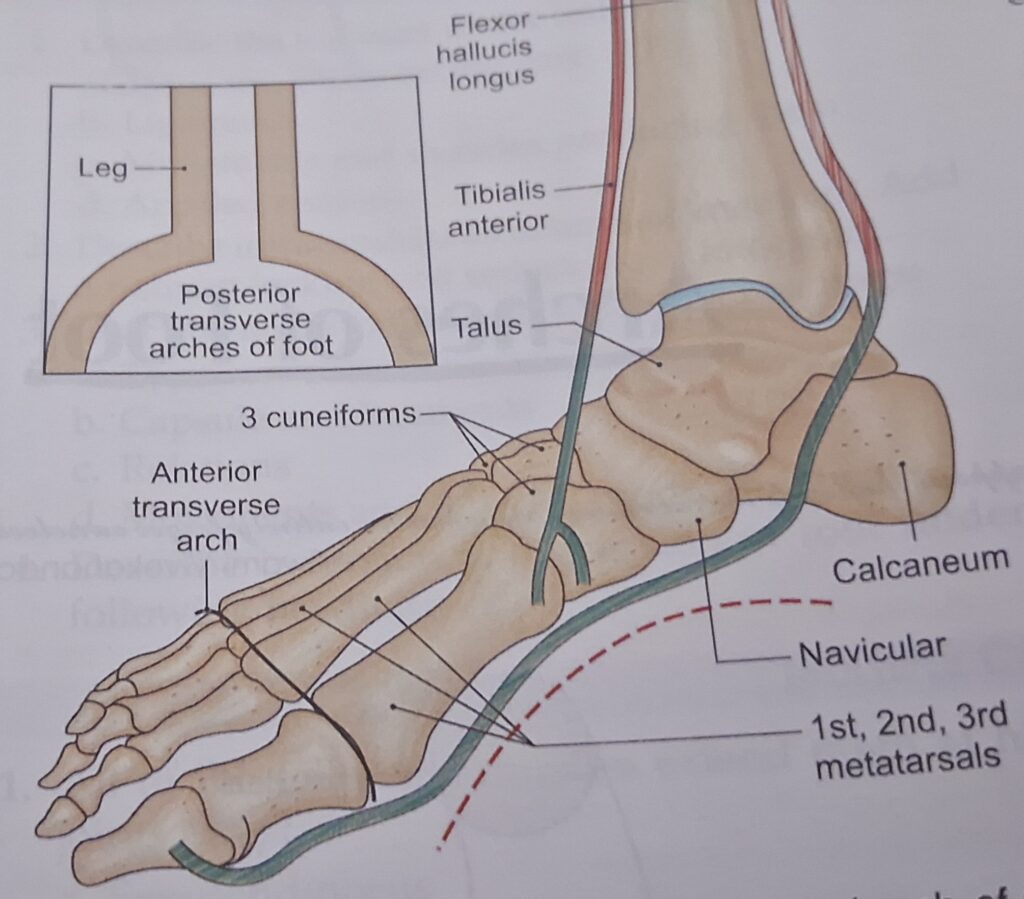
  • The anterior end is made up of the head of 1st, 2nd, and 3rd metatarsal bone
  • The posterior end is made up of medial Tubercity of calcaneum.

Summits

The superficial articular surface of a body of talus.

Pillars

  1. The anterior pillar is weak and long, along the navicular, the three cuneiform bones, and the first three metatarsal bones.
  2. The posterior pillar is short and strong, it is formed by the medial part of the calcaneum.

The main point of the arch is the talocalcaneonavicular joint.

Medial Longitudinal arches

Lateral longitudinal Arch

It is characterized by low with less bone and joint and mobility

EndsΒ 

  1. Anterior end – head of 1st , 2nd &3rd metatarsal bone
  2. Posterior end – medial tuberosity of calcaneum

SummitsΒ 

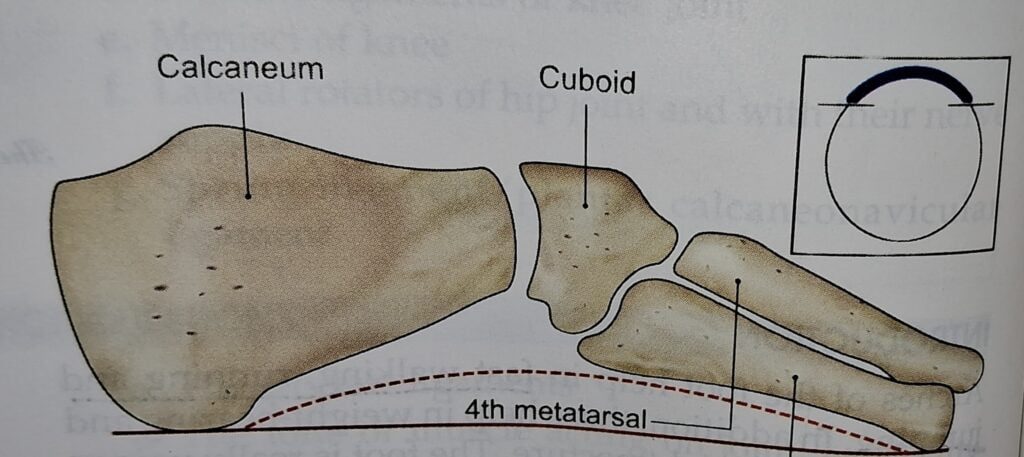
The summit lies at the level of the articular facets on the superior surfaces of the calcaneum at the level of the subtalar joint .

PillarsΒ 

  1. The anterior pillar is weak and long. It is formed by cuboid bone and by the 4th and 5th metatarsal
  2. The posterior pillar is short and strong. It is formed by lateral half of the calcaneum

The main joint in the lateral longitudinal Arch is calcaneocuboid joint

Lateral longitudinal Arch

Transverse arch

Anterior transverse arch

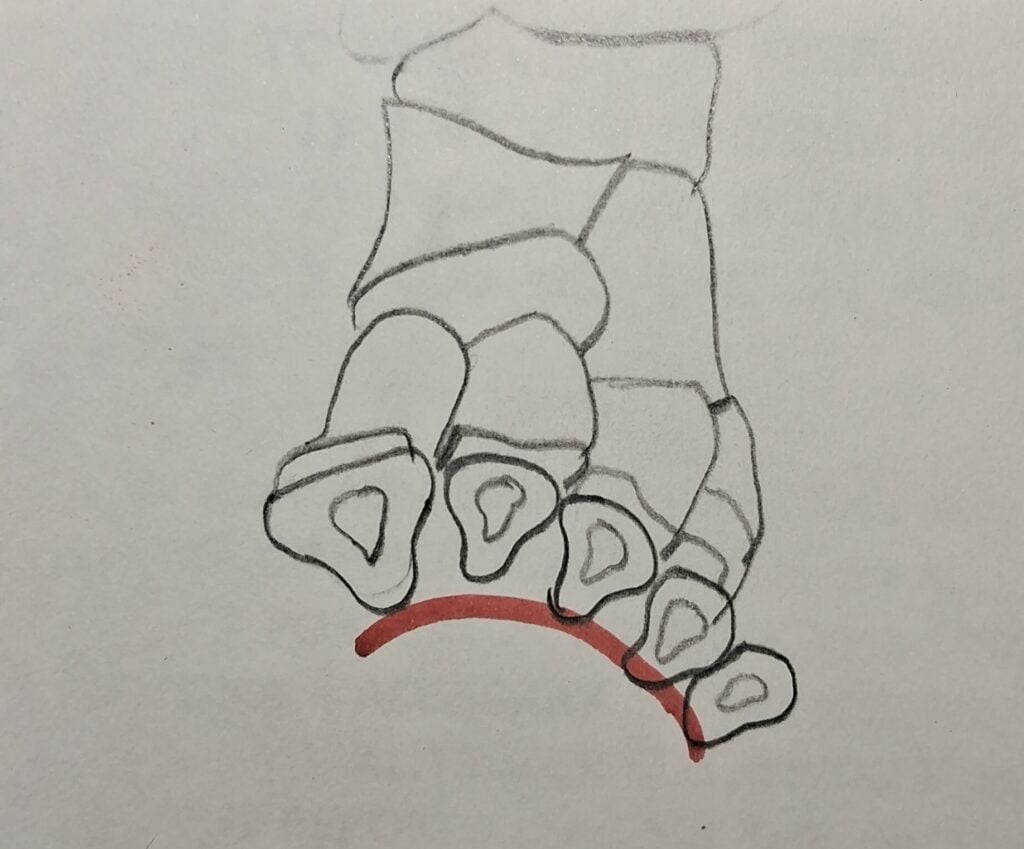
The anterior transverse arches are formed by the heads of the five metatarsal bones. It is complete because heads of the first and fifth metatarsals both come in contact with the ground and form two ends of the arch.

Anterior transverse arch

Posterior transverse arch

The posterior transverse arches are formed by the greatest parts of the tarsus and bases of the metatarsal. It is incomplete because only the lateral end comes in contact with the ground, the arch forming a half dome which is completed by the similar half dome of the opposite foot.

Recent Post