
Walking Aid

Table of Contents

What is a Walking Aid?ย 

There are a number of Walking Aids available to assist people who have difficulty walking or who cannot walk independently without one. These external aids are crutche, sticks, and frames. Braces and splints which can be used to assist walking are not described in book

Crutches as Walking Aidย 

There are three basic types of crutche and they are used to reduce weight-bearing on one or both legs or to give additional support where balance is impaired and strength is inadequate.

  1. ย 

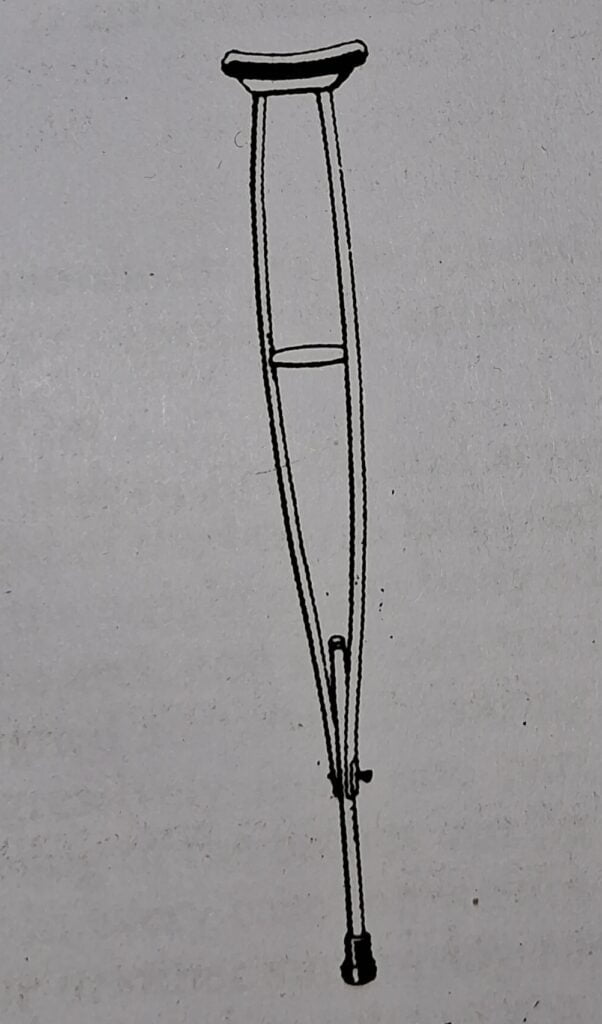
Axillary Crutches

    • Axillary crutches are made of wood with an axillary pad, handpiece, and a rubber ferrule.
    • The position of the handpiece and the total length are usually adjustable.
    • The axillary pad should rest against the largest wall approx 5 cm below the apex of the axilla and the hand grip should be adjusted to allow the elbow to be slightly flexed when weight is not being taken.
    • The axillary pad could lead to neuropraxia(impinchment) of the radial nerve or brachial plexus.

Measurement of length

      • 5cm vertically down from the apex of the axilla at a point 20cm lateral to the heel of the shoe.
      • The measurement from the axillary pad to hand grip should be taken with elbow slightly flexed (approx 15 degrees)from a point 5 cm below the apex of the axilla to the ulnar styloid.
      • The therapist must tell the correct way to use the crutches and they do not allow the axillary pad to press into the axilla
Axillary Crutche , walking aids
Axillary Crutches

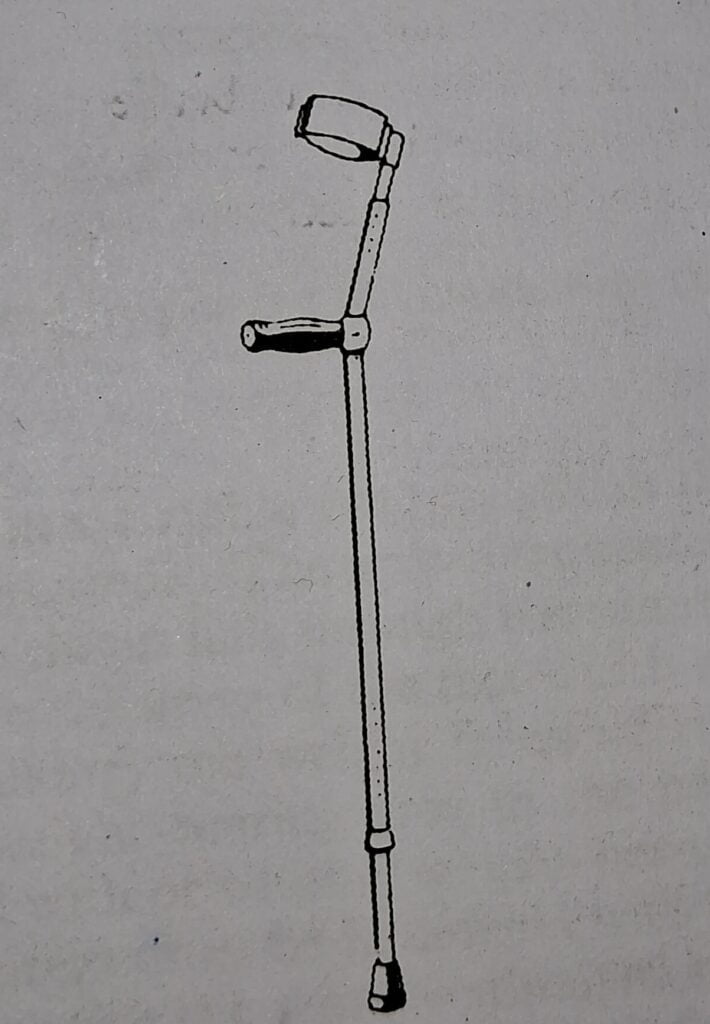
Elbow Crutches

Elbow Crutches are made of metal and have a metal or plastic forearm band. They are usually adjustable in length using a press clip-on metal button and have a rubber ferrule. These waking aidย  are good for stronger arms and good balance.

Measurement of length

      • The measurement is taken from ulnar styloid to a point 20 cm lateral to the heel of the shoe.
Crutche
Elbow Crutches

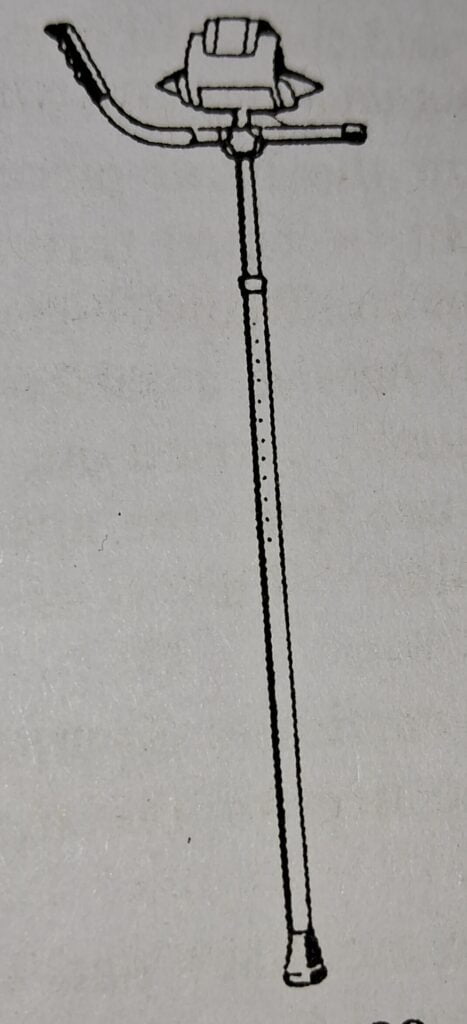
Gutter Crutches

Gutter Crutches are made up of the metal with padded forearm support and strap, an adjustable handpiece, and a rubber ferrule. These are used for Rheumatoid Disease as a walking aid by patients.

Measurement of length

  • If the patient is able to stand, it is better to assess the required length in this position from the elbow to the floor.
  • Measurement can be carried out with patient lying with shoes on and is taken from point of flexed elbow to 20 cm lateral to the heel.
Crutche
Gutter Crutches

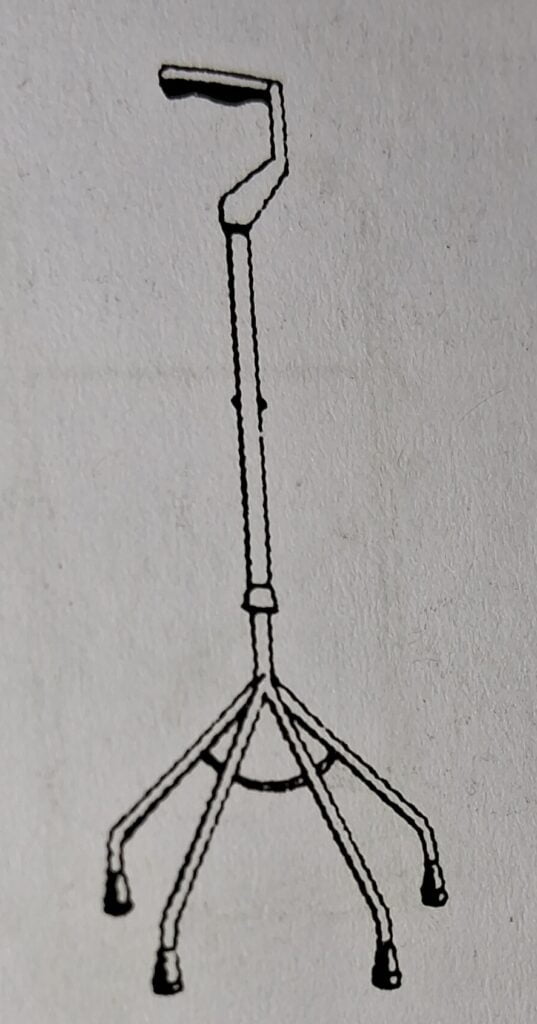
Tripod or quadruped

A walking aid made up of metal having Metal sticks with three or four bases gives more stable support than a stick.

Tripod

Frames

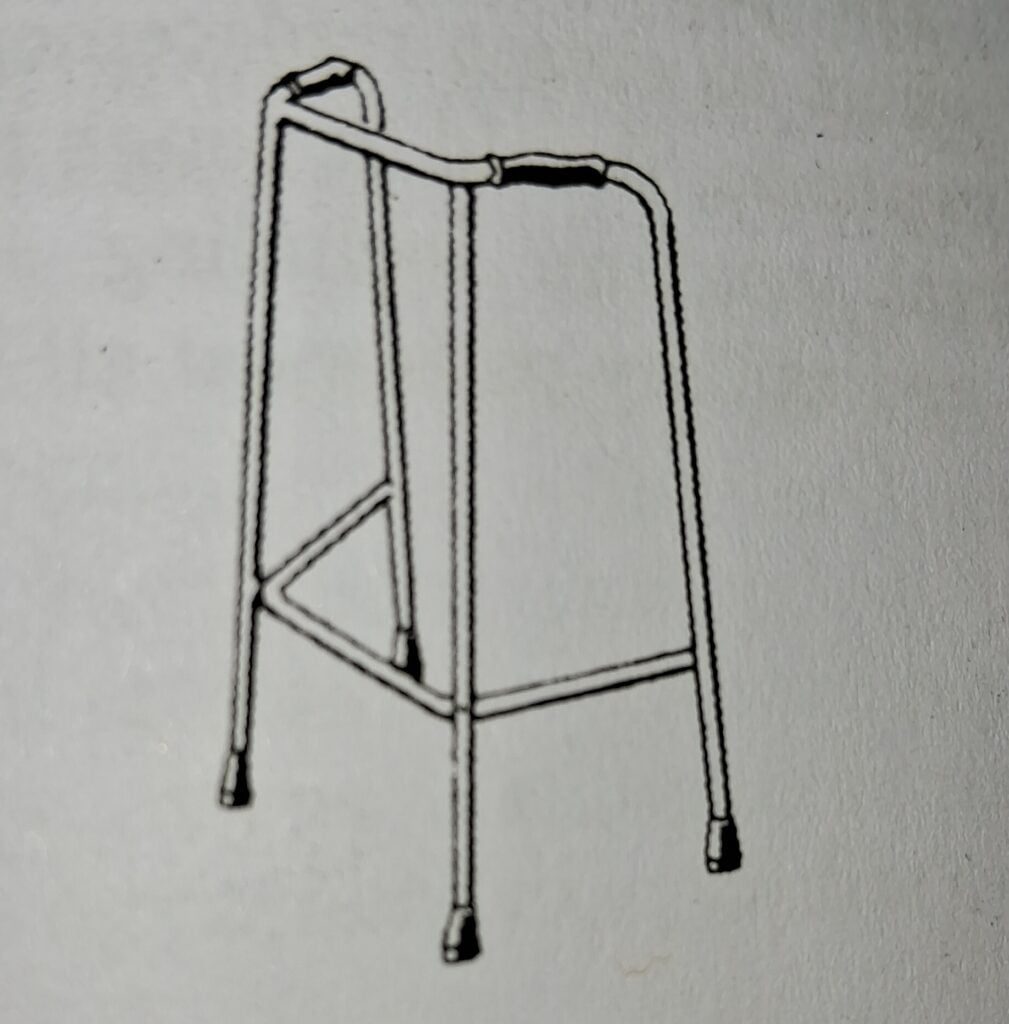
  • The commonest type is the lightweight frames with four feet which may be adjustable in height.
  • The patient lifts the frame forward, then leans on it, and takes two steps.
  • The patient should take even strips, keeping the frame well forward.
Frames

Recent post