
Goniometry of elbow joint
Table of Contents
Type of joint: Hinge joint (engagingly) with one degree of freedom allowing
for flexion and extension
Capsular pattern: Flexion > extension
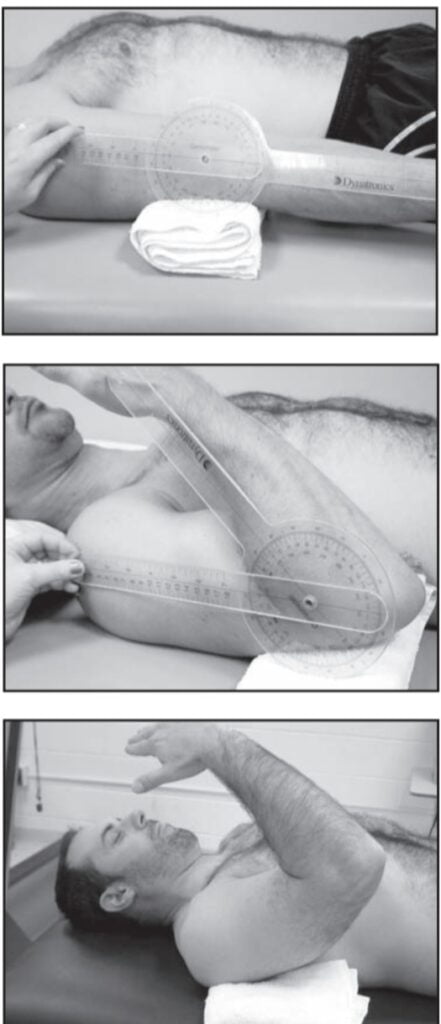
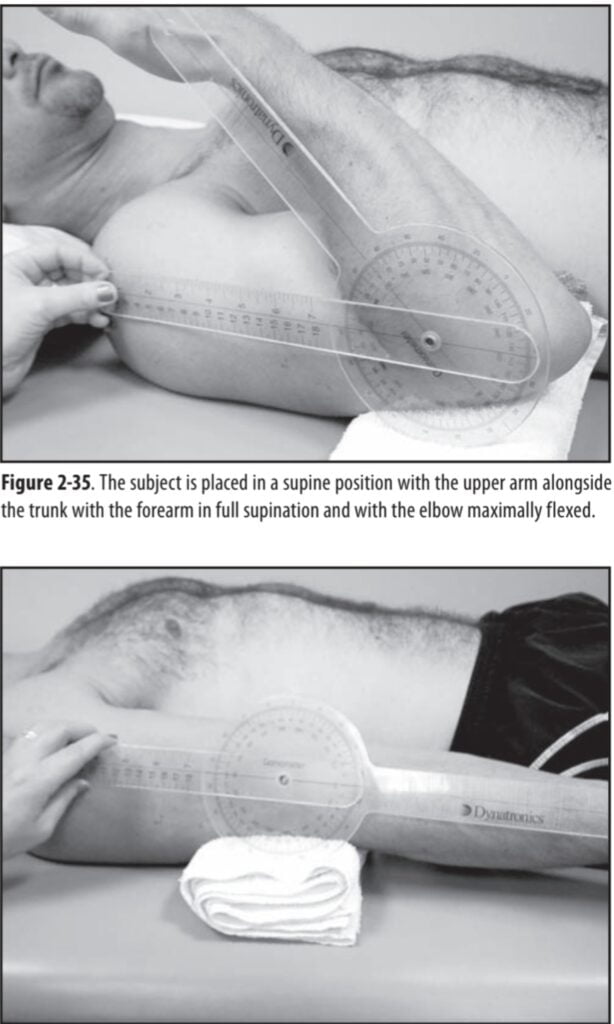
Elbow Flexion
Planes/axis of movement: Motion occurs in the sagittal plane around a
coronal axis.
Range of motion:
0 degrees to 145 degrees
Goniometric alignment:
Axis: Over the lateral epicondyle of the humerus
Stationary arm: Align along the lateral midline of the humerus, siting
the acromion process
Moving arm: Align along the lateral midline of radius, siting radial styloid
Stabilization:
The distal end of humerus should be stabilized against supporting surface to prevent shoulder flexion.

Elbow Extension
Planes/axis of movement: Movement occurs in sagittal plane around
a coronal axis.
Range of motion:
145 degrees to 0 degrees
Goniometric alignment:
Axis: On the lateral epicondyle of the humerus
Stationary arm: Align along the lateral midline of the humerus, siting
the acromion process
Moving arm: Align along lateral midline of radius, siting radial styloid.
Stabilization:
The proximal humerus should be stabilized anteriorly by the
clinicianβs hand to the prevent scapular protraction and trunk extension.
Substitutions:
The subject may try to extend the trunk to enhance the
motion or move shoulder into flexion or extension to avoid pain with
testing

Forearm
Type of joint: The proximal radioulnar joint may be considered alone as a
uniaxial pivot joint with one degree of freedom.
Capsular pattern: Pronation = supination.
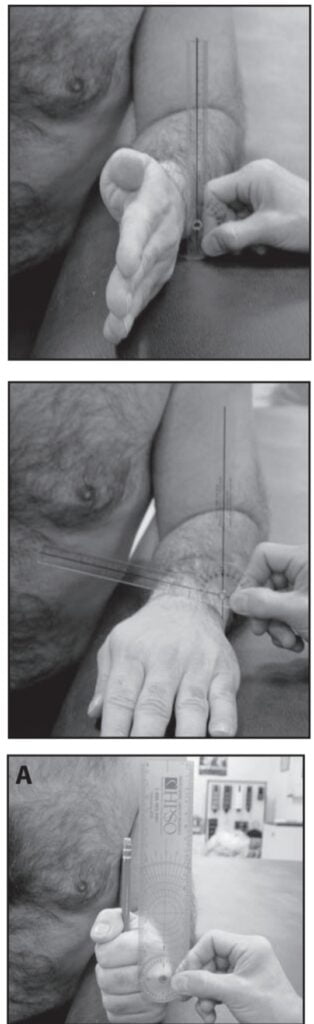
Forearm Pronation
Planes/axis of movement: Motion occurs in transverse plane around a
longitudinal axis in the anatomical position. Motion occurs in the frontal
plane while in the preferred testing position.
Range of motion:
0 degrees to 90 degrees
Goniometric alignment
- Axis: Lateral to the ulnar styloid
- Stationary arm: Align parallel to the anterior midline of the humerus
- Moving arm: Align across dorsal aspect of the wrist, proximal to the
styloid process of the ulna and radius
Stabilization:
The distal end of humerus must be stabilized on supporting surface to prevent internal rotation and abduction at the shoulder
joint. The subject may use the non tested hand to keep the humeral shaft
against the thorax
Substitutions:
The subject may try to laterally flex the trunk away from the
tested side or abduct/internally rotate the shoulder to increase the amount
of range of motion.
Goniometric alignment for alternate method:
- Axis: The third metacarpal head, siting through the third metacarpal
shaft - Stationary arm: Align perpendicular to the table surface
- Moving arm: Align parallel to the midline of the pencil

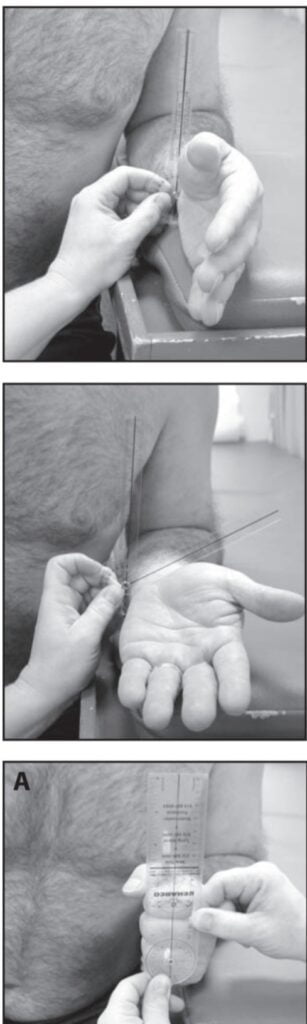
Forearm Supination
Planes/axis of movement: Movement occurs in the transverse plane
around a longitudinal axis in the anatomical position. Motion occurs in the
frontal plane while in the preferred testing position.
Range of motion:
0 degrees to 90 degrees
Goniometric alignment:
- Axis: Center medial to the ulnar styloid process
- Stationary arm: Align on the anterior surface of the wrist parallel to the
anterior midline of the humerus - Moving arm: Place on ventral surface of wrist, just proximal to styloid process of ulna and radius
Stabilization:
The humerus must be stabilized on a supporting surface to prevent external rotation of shoulder. The subject may use the non tested hand to keep humeral shaft against thorax.
Substitutions:
The subject may try to use shoulder external rotation to
avoid a painful motion. The examiner may also observe the subject laterally
flexing to tested side or extending elbow to obtain more movement.
Goniometric alignment for alternate method:
- Axis: The third metacarpal head, siting through the third metacarpal
shaft - Stationary arm: Align perpendicular to the table surface
- Moving arm: Align parallel to the midline of the pencil

Recent Post
Why my heel hurts when i walk : Possible Reasons and Fixes
Why my heel hurts when i walk : Possible Reasons and Fixes Heel pain can make everyday activities difficult. Many people notice discomfort while getting

8 best pain killers for muscle pain
8 best pain killers for muscle pain Pain is one of the most common health complaints worldwide, and pain killers are often the first solution

Immediate Gout Pain Relief Fast in 24 hours
Immediate Gout Pain Relief Fast in 24 hours Gout is a form of inflammatory arthritis caused by elevated serum uric acid levels, leading to the
5 Effective knee pain exercises at home
5 Effective knee pain exercises at home Knee pain exercises at home are a simple way to reduce pain, ease stiffness in an aching knee,

Why My Knee Hurt and Fix It?
Why My Knee Hurt and Fix It? Knee hurt is a common problem that can affect your daily routine, especially when walking, running, or climbing

Understanding ALL about Rheumatoid arthritis
Rheumatoid arthritis Rheumatoid arthritis (RA) is a disease of synovium (a thin, soft connective tissue membrane that lines the inner surface of synovial joints) characteristics