
Anti inflammatory drugs
Table of Contents
NSAIDS drugs
NSAIDs are aspirin-type or non-opioid analgesics. In addition they have anti-inflammatory, antipyretic and uricosuric properties—without the addiction liability
Mechanism of Action
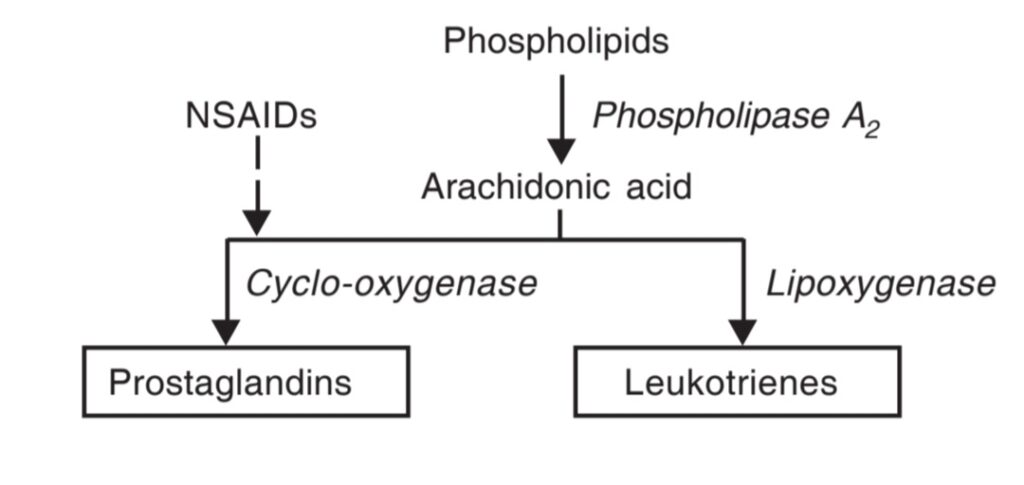
NSAIDS CLASSIFICATION
Nonselective Cox Inhibitors
- Salicylic acid derivatives—Aspirin, sodium , salicylate, diflunisal.
- Para-aminophenol derivatives—Paracetamol.
- Pyrazolone derivatives—Phenylbutazone, azapropazone.
- Indole acetic acid derivatives—Indomethacin, sulindac.
- Arylacetic acid derivatives—Diclofenac,
ketorolac, tolmetin - Propionic acid derivatives—Ibuprofen, fenoprofen, carprofen, naproxen, ketoprofen, oxaprozin
- Anthranilic acids (Fenamates)—Flufenamic acid, mefenamic acid, enfenamic acid.
- Oxicams—Piroxicam, tenoxicam.
- Alkanones—Nabumetone.
Selective Cox-2 Inhibitors
Nimesulide, celecoxib, rofecoxib, etoricoxib.
NSAIDS drugs
Aspirin
PHARMACOLOGICAL ACTIONS
- Analgesia: Aspirin is a good analgesic and relieves pain of inflammatory origin without euphoria.
- Antipyretic action: In fever, salicylates bring
down the temperature to normal level. But, in
normal individuals, there is no change in temperature - Anti-inflammatory action: At higher doses of 4-6 gm/day, aspirin acts as an anti-inflammatory agent. Signs of inflammation like tenderness, swelling, erythema and pain are
all reduced or suppressed. But, the progression of the disease in rheumatoid arthritis, rheumatic fever or osteoarthritis is not affected. - Respiration: In therapeutic doses of 4-6 g/
day—salicylates increase consumption of oxygen by skeletal muscles. As a result there is ↑CO2 production. The ↑CO2 stimulates respiratory center. - Uric acid excretion:n: Uric acid is excreted by secretion from the distal tubules. In a dose of
1-2 gm/day, aspirin increases plasma urate levels because it inhibits urate secretion by distal tubules.
ADVERSE EFFECTS
- Nausea, vomiting, epigastric distress, erosive gastritis, peptic ulcer, increased occult blood loss in stools are common
- Allergic reactions are manifested as rashes, angio-edema, urticaria, and asthma especially in those with a history of allergies.
- Salicylates can cause hemolysis in patients with the G6PD deficiency
- Nephrotoxicity: Almost all NSAIDs can cause nephrotoxicity after long-term use.
Aspirin Uses
- As analgesic for headache, backache, myalgias, arthralgias, neuralgias, toothache
and dysmenorrhea. The NSAIDs are beneficial in a variety of painful conditions of integumental origin. - Fever: NSAIDs are useful for symptomatic relief of fever.
- For inflammatory conditions: Aspirin is effective in a number of inflammatory conditions such as arthritis and fibromyositis.
- Acute rheumatic fever: In dose of 4-6 g/day,
aspirin brings about a dramatic relief of signs and symptoms in 24 to 48 hr. The dose is reduced after 4-7 days and maintenance doses of 2-3 g/day are given for 2-3 weeks. - Rheumatoid arthritis: Aspirin relieves pain, reduces swelling and redness of joints in
rheumatoid arthritis. NSAIDs do not alter the progress of the disease. The relief is only
symptomatic.
Dose: 4-6 g/day in 4-6 divided doses - Postmyocardial infarction and post-stroke: Aspirin in a low dose inhibits platelet aggregation and by this it may prevent reinfarction.
Paracetamol (acetaminophen)
Paracetamol (acetaminophen): Phenacetin was first drug used in this group. But, due to severe adverse effects it is now banned.
ADVERSE EFFECTS
- Nausea and rashes
- Vomiting,
- Anorexia
- Abdominal pain during first 24 hrs.
Paracetamol Uses
- Paracetamol is used as an analgesic in painful conditions like toothache, headache and
myalgia. - As an antipyretic in fevers.
Phenylbutazone
Phenylbutazone has good anti-inflammatory activity, but has poorer analgesic and antipyretic effects. It is an uricosuric agent.Phenylbutazone causes retention of Na+ and water. Thus, after 1-2 weeks of use edema results. It can also precipitate congestive cardiac failure.
Dose: 100-200 mg, BD. Small doses may be given 3-4 times a day to avoid gastric irritation.
ADVERSE EFFECTS
- Phenylbutazone is more toxic than aspirin and is poorly tolerated—dyspepsia, epigastric distress, nausea, vomiting, peptic ulceration and diarrhea may occur. Edema and CCF can occur.
- Hypersensitivity reactions like rashes, serum sickness, stomatitis, hepatitis, nephritis,
dermatitis and jaundice can occur. Phenylbutazone may cause serious hematological
complications such as bone marrow depression, aplastic anemia, agranulocytosis and thrombocytopenia. - It may inhibit iodine uptake by thyroid resulting in hypothyroidism and goiter on
long-term use. - CNS effects like insomnia, vertigo, optic neuritis, blurring of vision and convulsions
may be encountered.
Phenylbutazone Uses
- Rheumatoid arthritis
- Ankylosing spondylitis.
- Osteoarthritis.
- Gout—phenylbutazone produces satisfactory
relief from pain and inflammation in acute
attacks - Other musculoskeletal disorders.
Indomethacin
Indomethacin is a potent anti-inflammatory agent, antipyretic and good analgesic. It is well absorbed, 90 percent bound to plasma proteins;
t½—4-6 hr.
Dose: 25-50 mg BD-TDS.
Indomethacin Uses
- Rheumatoid arthritis.
- Gout
- Ankylosing spondylitis.
- Psoriatic arthritis.
- For closure of patent ductus arteriosus in the
newborn.
Diclofenac
Diclofenac is an analgesic, antipyretic and antiinflammatory agent. It’s tissue penetrability is good and attains good concentration in synovial fluid which is maintained for long time. Adverse effects are mild
Dose: 50 mg BD–TDS. Gel is available for topical application (INAC GEL). Ophthalmic preparation is available for use in postoperative pain.
Diclofenac Uses
- Treatment of chronic inflammatory conditions like osteoarthritis and rheumatoid arthritis.
- Postoperatively for relief of pain and
inflammation. - Acute musculoskeletal pain.
Ibuprofen
Ibuprofen is better tolerated than aspirin. Analgesic, antipyretic and anti-inflammatory
efficacy is slightly lower than aspirin. It’s 99 percent bound to plasma proteins.
Dose: Ibuprofen—400-800 mg TDS (BRUFEN); Ibuprofen + paracetamol (COMBIFLAM).
Adverse effects
Adverse effects are milder and incidence is lower. Nausea, vomiting, gastric discomfort, CNS effects, hypersensitivity reactions, fluid retention are all similar but less severe.
Ibuprofen Uses
- As an analgesic in painful conditions.
- In fever
- Soft tissue injury, fractures, following tooth extraction, to relieve postoperative pain, dysmenorrhea and osteoarthritis.
- Gout.