
Range of Motion | ROM Definition, Types & Joint range
Table of Contents
Range of Motion Definition
Range of Motion (ROM) is the amount of movement that a joint can perform. There is movement in the body which is performed by a combination of multiple joint motions For example, shoulder flexion movement occurs by movement of the Scapula and the Sterni-clavicular joint.
Types of Range of Motion
Flexion: Bending movement, e.g., Shoulder Flexion
Extension: Straightening movement, e.g., Elbow extension
Abduction: Movement away from the midline, e.g., Shoulder abduction
Adduction: Movement towards the midline, e.g., Hip adduction
Rotation: Turning movement, e.g., Shoulder rotation
Circumduction: Circular movement, e.g., Shoulder circumduction
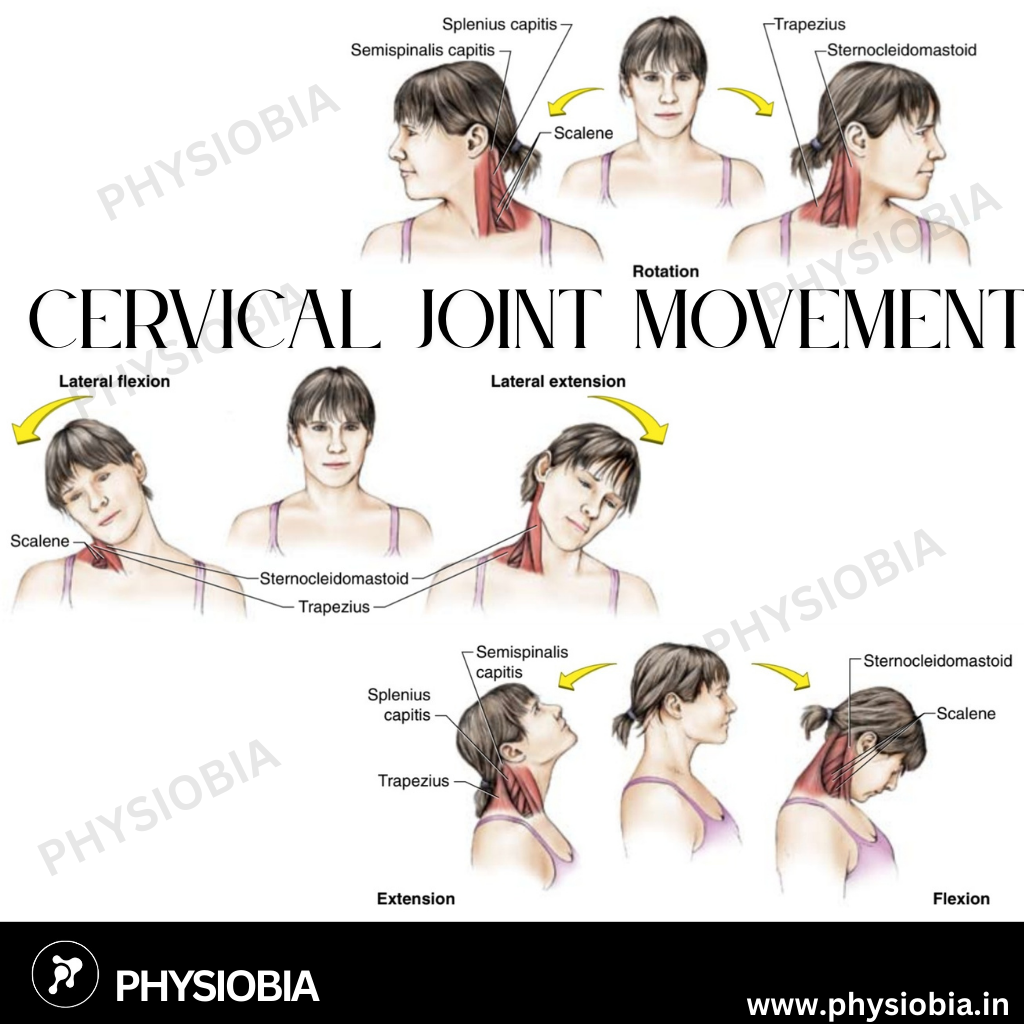
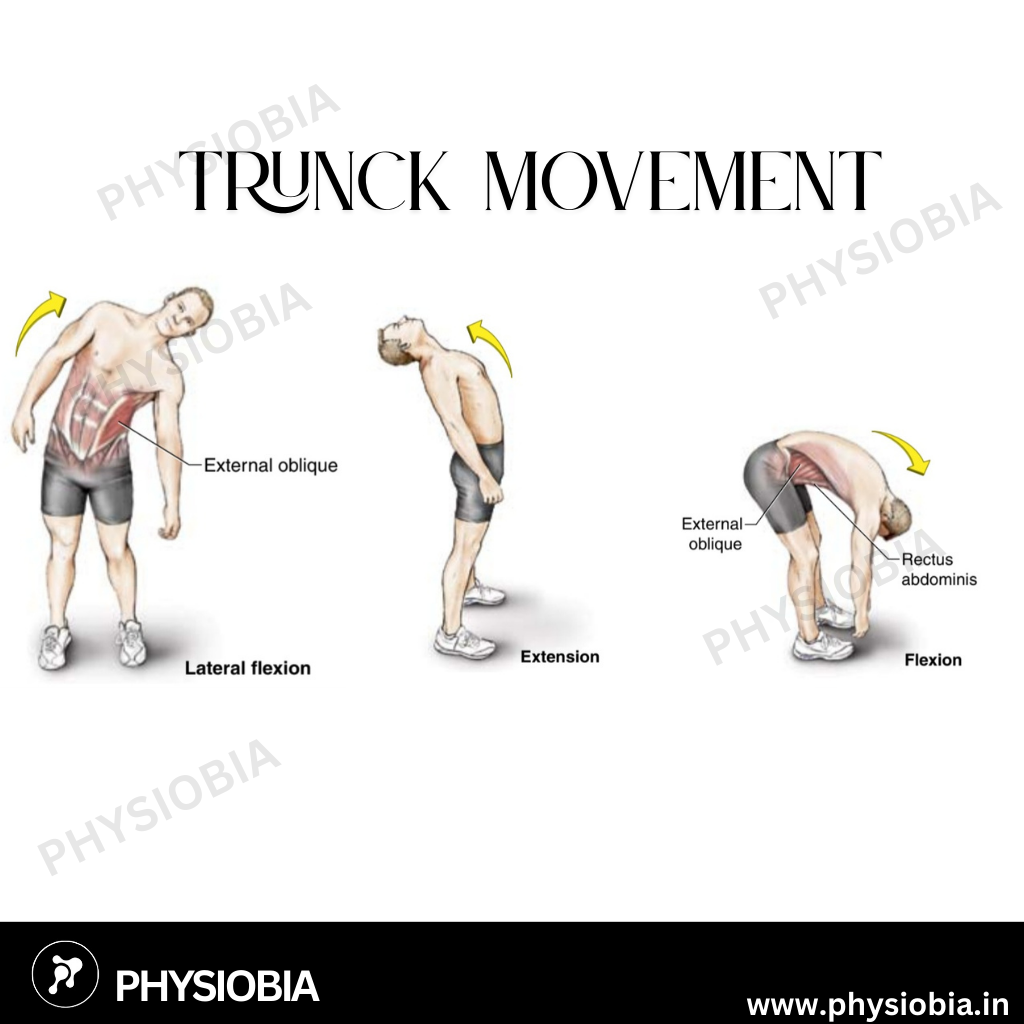
Let us understand the movement of some major joints of the body. This will help you to understand the range of motion.
Shoulder Joint
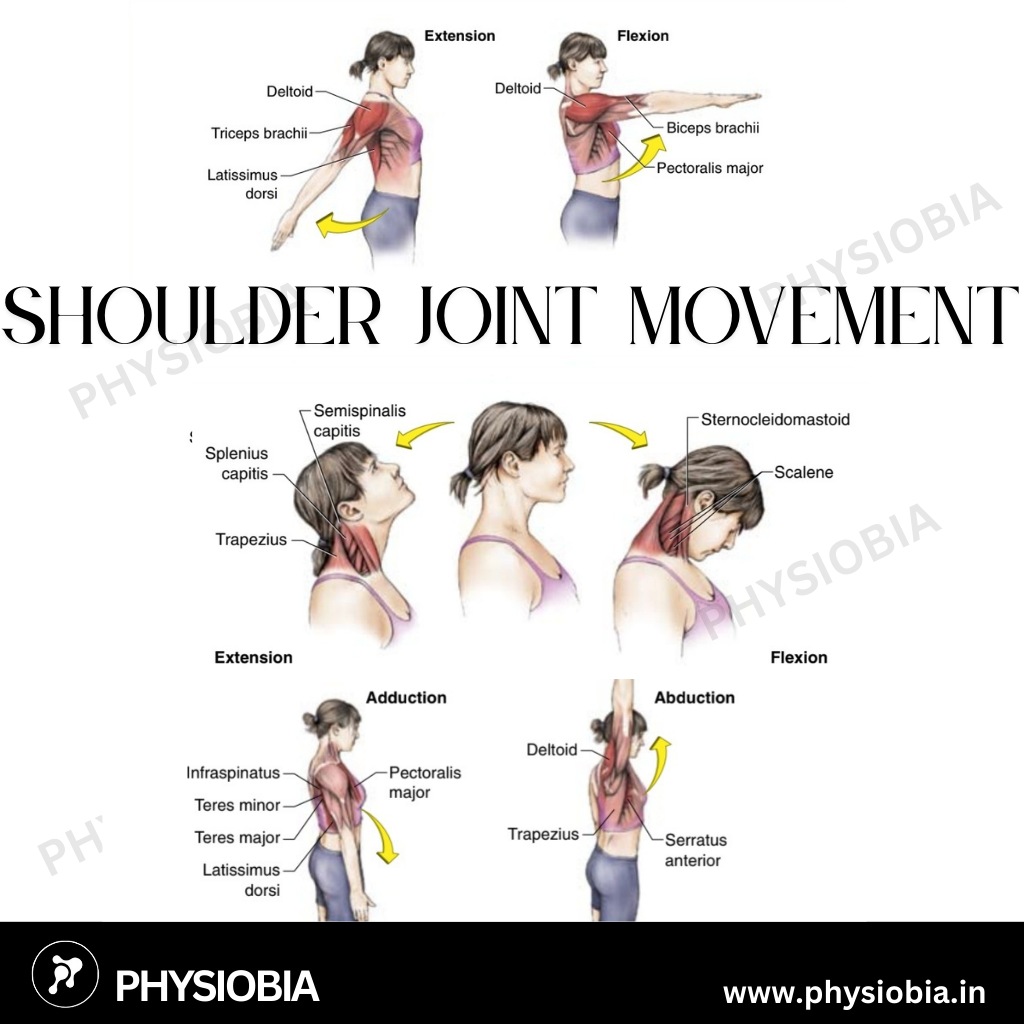
Flexion, Extension, Abduction, and Adduction are the four movements in the shoulder joint. The Range of Motion seen in each movement is as follows
Shoulder Flexion
Planes/axis of movement: Motion occurs in the sagittal plane around a transverse axis through the head of the humerus.
Range of motion: 0 degrees to 180 degrees
Shoulder Extension
Planes/axis of movement: Motion occurs in the sagittal plane around a transverse axis through the head of the humerus. Extension is the reverse action of flexion. As the arm passes the trunk in the anatomic position, hyperextension occurs.
Range of motion: 180 degrees to 0 degrees of extension (from full flexion) and 0 degrees to 40 to 60 degrees of hyperextension
Shoulder Abduction
Planes/axis of movement: Motion occurs around an anterior/posterior axis in the frontal plane.
Range of motion: 0 degrees to 180 degrees
Shoulder Adduction
Planes/axis of movement: Movement occurs in the frontal plane around an anterior/posterior axis. It is discontinued by contact of the upper arm with the body.
Range of motion: 180 degrees to 0 degrees (from full abduction)
Shoulder Internal (Medial) Rotation
Planes/axis of movement: Movement occurs in the transverse plane around a longitudinal axis through the humerus’s head and shaft.
Range of motion: With the shoulder stabilized: 0 degrees to 75 degrees
Shoulder External (Lateral) Rotation
Planes/axis of movement: Motion occurs in the transverse plane around a longitudinal axis through the humerus’s head and shaft.
Range of motion: 0 degrees to 90 degrees
The Range of Motion Exercises can be performed in the same motions which have been described above. Many a times physiotherapist uses this movement to recover the patient from various musculoskeletal disorder.


Elbow Joint
Flexion and Extension, are the two movements in the elbow joint. The Range of Motion seen in each movement is as follows
Elbow Flexion
Planes/axis of movement: Motion occurs in the sagittal plane around a coronal axis.
Range of motion: 0 degrees to 145 degrees
Elbow Extension
Planes/axis of movement: Movement occurs in the sagittal plane around a coronal axis.
Range of motion: 145 degrees to 0 degrees
The Range of Motion Exercises can be performed in the same motions which have been described above. Many times physiotherapists use this movement with minimal and maximal manual resistance to recover the patient’s muscle strength.
Wrist Joint
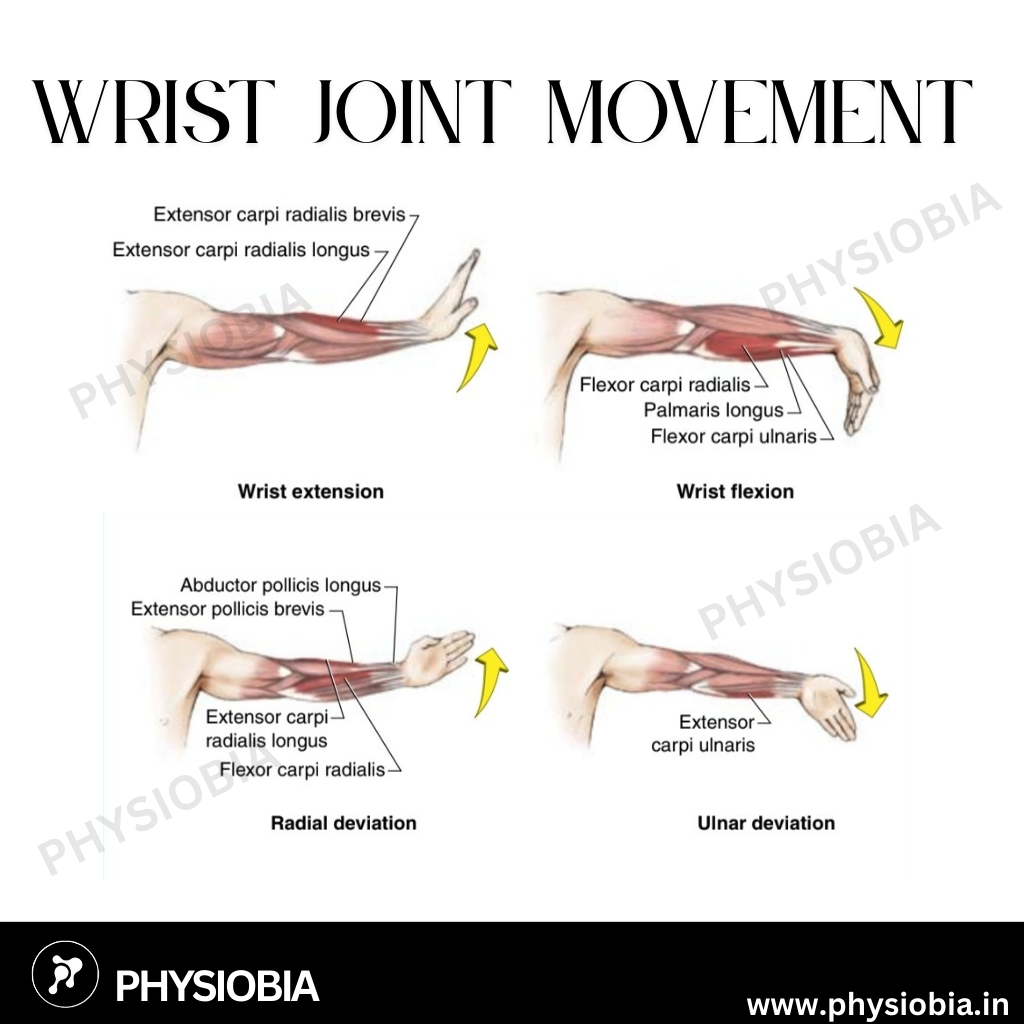
Flexion and Extension, Wrist Radial Deviation, and Wrist Ulnar Deviation are the four movements in the elbow joint. The Range of Motion seen in each movement is as follows
Wrist Flexion
Planes/axis of movement: Motion occurs in the sagittal plane around a coronal axis primarily at the radiocarpal joint. Flexion also occurs at the midcarpal joint to a lesser degree, while the proximal row of carpal bones glide posteriorly on the distal end of the radius.
Range of motion: 0 degrees to 90 degrees (from the anatomical position)
Wrist Extension
Planes/axis of movement: Motion occurs in the sagittal plane around a coronal axis at both the radiocarpal and midcarpal joint, with extension occurring more extensively at the latter.
Range of motion: 90 degrees to 0 degrees (from full flexion)
Wrist Radial Deviation (Abduction)
Planes/axis of movement: Motion occurs in the frontal/coronal plane in the anatomic position around an anterior/posterior axis. In the testing position, motion occurs in the transverse plane around a vertical axis. The motion occurs between the radiocarpal joint and the intercarpal bones.
Range of motion: 0 degrees to 25 degrees
Wrist Ulnar Deviation (Adduction)
Planes/axis of movement: Motion occurs in the frontal/coronal plane in the anatomic position around an anterior/posterior axis. In the testing position, motion occurs in the transverse plane around a vertical axis. The motion occurs between the radiocarpal joint and the intercarpal bones.
Range of motion: 0 degrees to 35 degrees
The Range of Motion Exercises can be performed in the same motions which have been described above. Many times physiotherapists use this movement with minimal and maximal manual resistance to recover the patient to regain muscle strength of the Wrist joint.
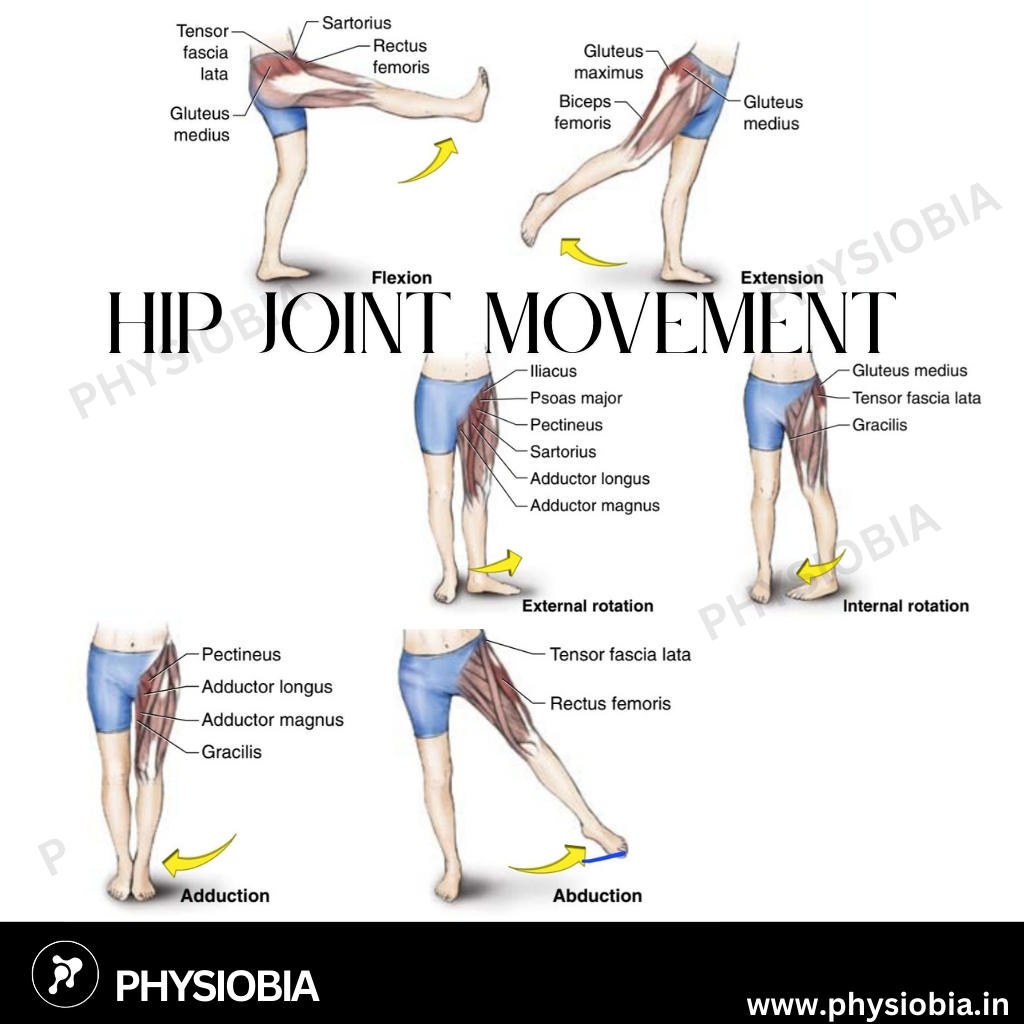
Hip Joint
Flexion and Extension, Abduction, and Adduction are the four movements inthe elbow joint. The Range of Motion seen in each movement is as follows
Hip Flexion
Planes/axis of movement: Motion occurs in the sagittal plane around a coronal axis. During testing, the knee is allowed to flex passively so the hamstrings do not limit movement.
Range of motion: 0 degrees to 115 (with the knee extended) & 0 degrees to 125 (with the knee flexed )
Hip Extension
Planes/axis of movement: Movement occurs in the sagittal plane around a coronal axis. Extension and hyperextension are the “return” movements from a position of hip flexion.
Range of motion: 125 degrees to 0 degrees (extension)
Hip Abduction
Planes/axis of movement: Movement occurs in a frontal plane around an anterior/posterior axis.
Range of motion: 0 degrees to 45 degrees
Hip Adduction
Planes/axis of movement: Movement occurs in the frontal plane around an anterior/posterior axis. This is the return motion from abduction.
Range of motion: 0 degrees to 30 degrees
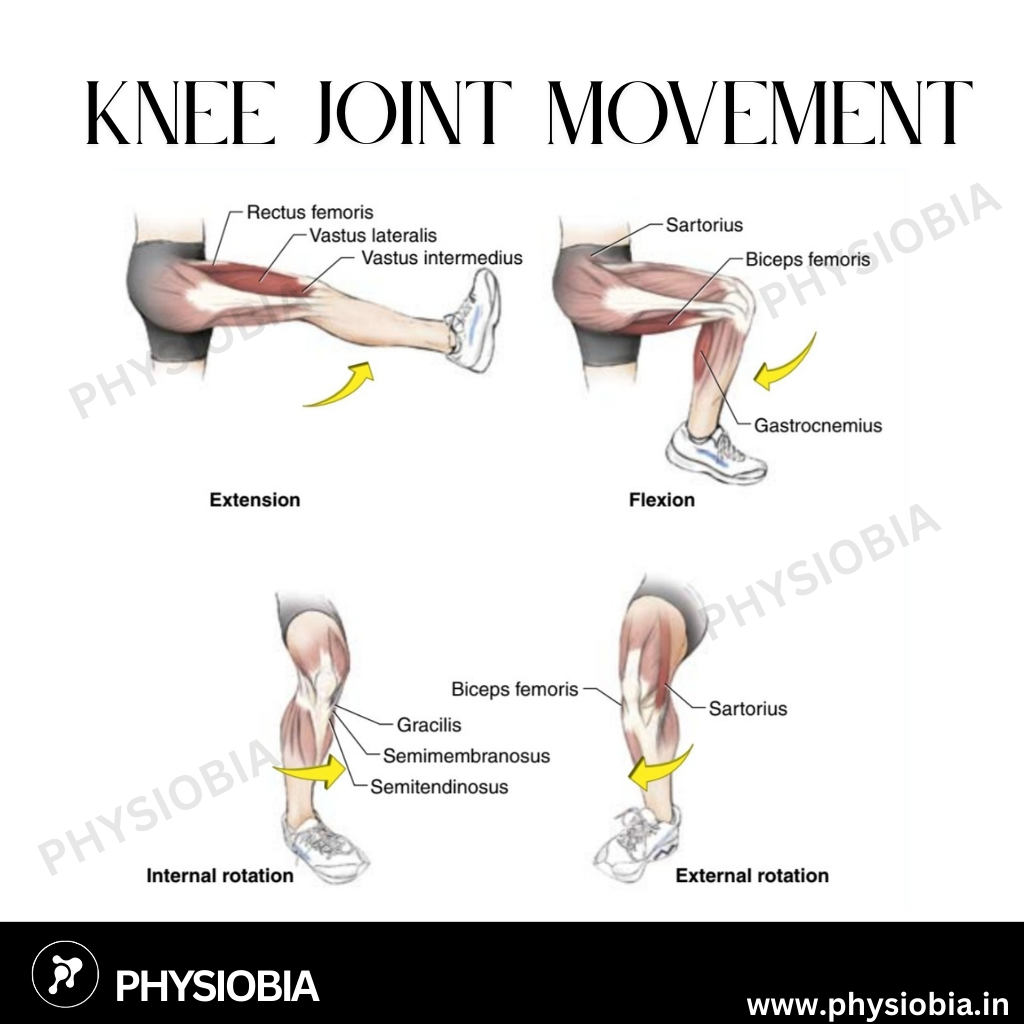
Knee Joint
Flexion and Extension are the two movements in the Knee joint. The Range of Motion seen in each movement is as follows
Knee Flexion
Planes/axis of movement: Motion occurs in the sagittal plane around a coronal axis. Axial rotation occurs in the transverse plane when the knee is in a flexed position.
Range of motion:
- 0 degrees to 120 degrees (with the hip extended)
- 0 degrees to 135 degrees (with the hip flexed)
Knee Extension
Knee Extension Planes/axis of movement: Motion occurs in the sagittal plane around a coronal axis. Extension is the return motion from knee flexion.
Range of motion:
- 120 degrees to 0 degrees (from knee flexion with the hip extended)
- 135 degrees to 0 degrees (from knee flexion with the hip flexed)
The Range of Motion Exercises can be performed in the same motions which have been described above. Many a times physiotherapist uses these movement with minimal and maximal manual resistance to recover the patient to regain muscle strength of the Knee joint.
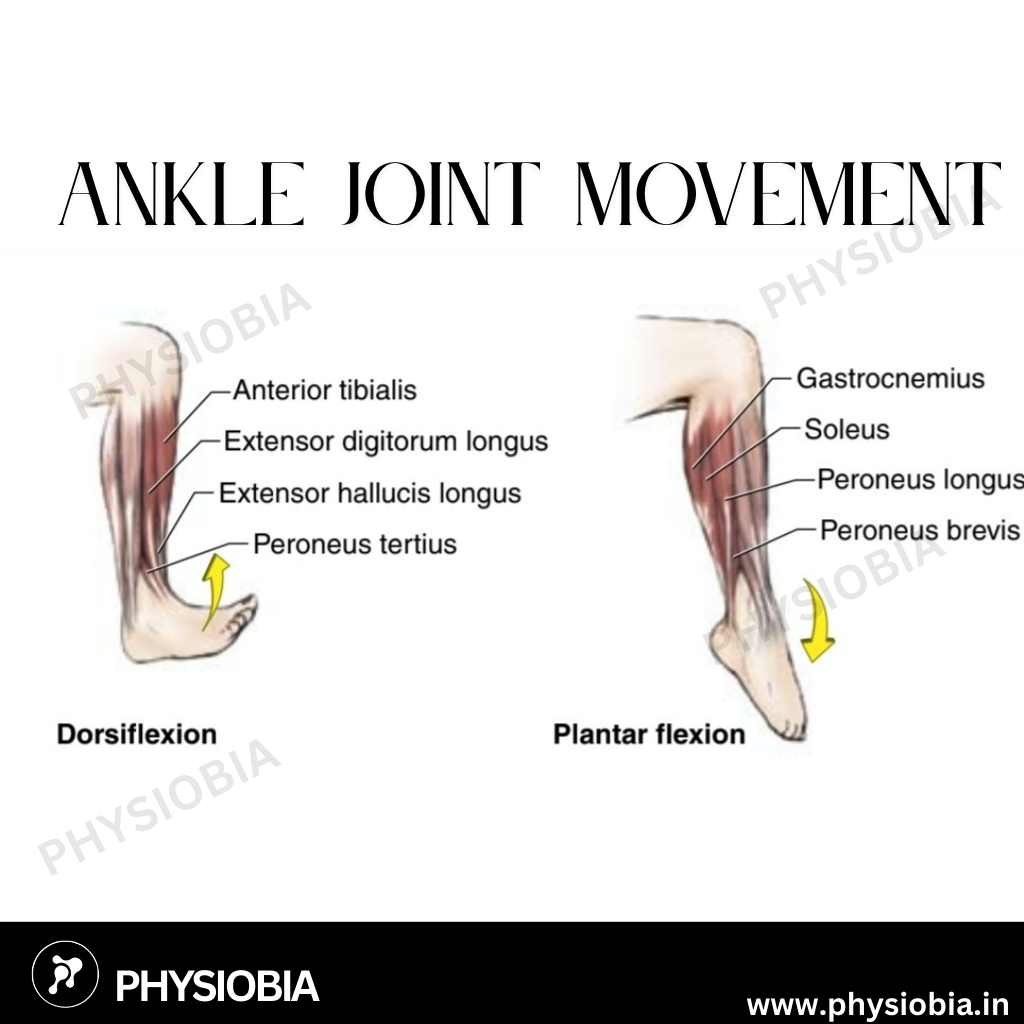
Ankle Joint
Ankle Dorsiflexion and Ankle Planterflexion are the two movements in ankle joint. The Range of Motion seen in each movement is as follows
Ankle Dorsiflexion
Planes/axis of movement: Motion occurs in the sagittal plane around a coronal axis.
Range of motion: 0 degrees to 20 degrees
Ankle Plantarflexion
Planes/axis of movement: Motion occurs in the sagittal plane around a coronal axis.
Range of motion: 0 degrees to 45 degrees
The Range of Motion Exercises can be performing in the same motions which have been described above. Many a times physiotherapist uses these movement with minimal and maximal manual resistance to recover the patient to regain muscle strength of Ankle joint.