
How to cure stiff low back in the morning ?
Every morning walking up with stiff or heavy lower back which slowly eases after a few minutes of movement? You’re not alone. Between the age of 30-45 adults experiences this discomfort. It can be due to long sitting hours, weak core muscles, and improper sleeping posture.
As we age, our spine naturally loses a bit of flexibility, and muscles surrounding it can tighten overnight. The good news is that morning back stiffness is not permanent — with a few daily habits ( stay active ) and guided physiotherapy exercises and avoid rest , you can wake up pain-free and ready for the day.
In this article, we’ll uncover why your back feels stiff in the morning, the common lifestyle habits behind it, and simple physiotherapy-based solutions that you can start today.
Why Your Back Feels Stiff Every Morning?
A Non specific Low back pain and stiffness (It means that no clear underlying structural cause (like fracture, infection, or disc herniation) can be identified) has common causes like:
- Improper Sleeping Posture
Lying on your stomach or sleeping on a very soft mattress can disturb your spine’s natural alignment. This uneven position puts pressure on the lower back muscles and joints, causing stiffness when you wake up. - Muscle Weakness or Tightness
Weak core muscles or tightness in the hamstrings and hip flexors often pull on the lower back. This imbalance makes the spine less stable and more prone to stiffness after a night’s rest. - Inflammation or Early Joint Changes
If your back feels stiff for longer than half an hour after waking, mild inflammation or early arthritis could be the reason. Gentle stretching and regular movement can help manage this. - Limited Movement During Sleep
When you sleep, your body stays still for hours, which reduces joint lubrication and muscle flexibility. That’s why your back may feel tight until you start moving in the morning. - Cold Room or Air-Conditioner Exposure
Sleeping in a cold environment can cause your back muscles to contract slightly. This muscle tightening overnight is another reason you may feel stiff when you get out of bed.
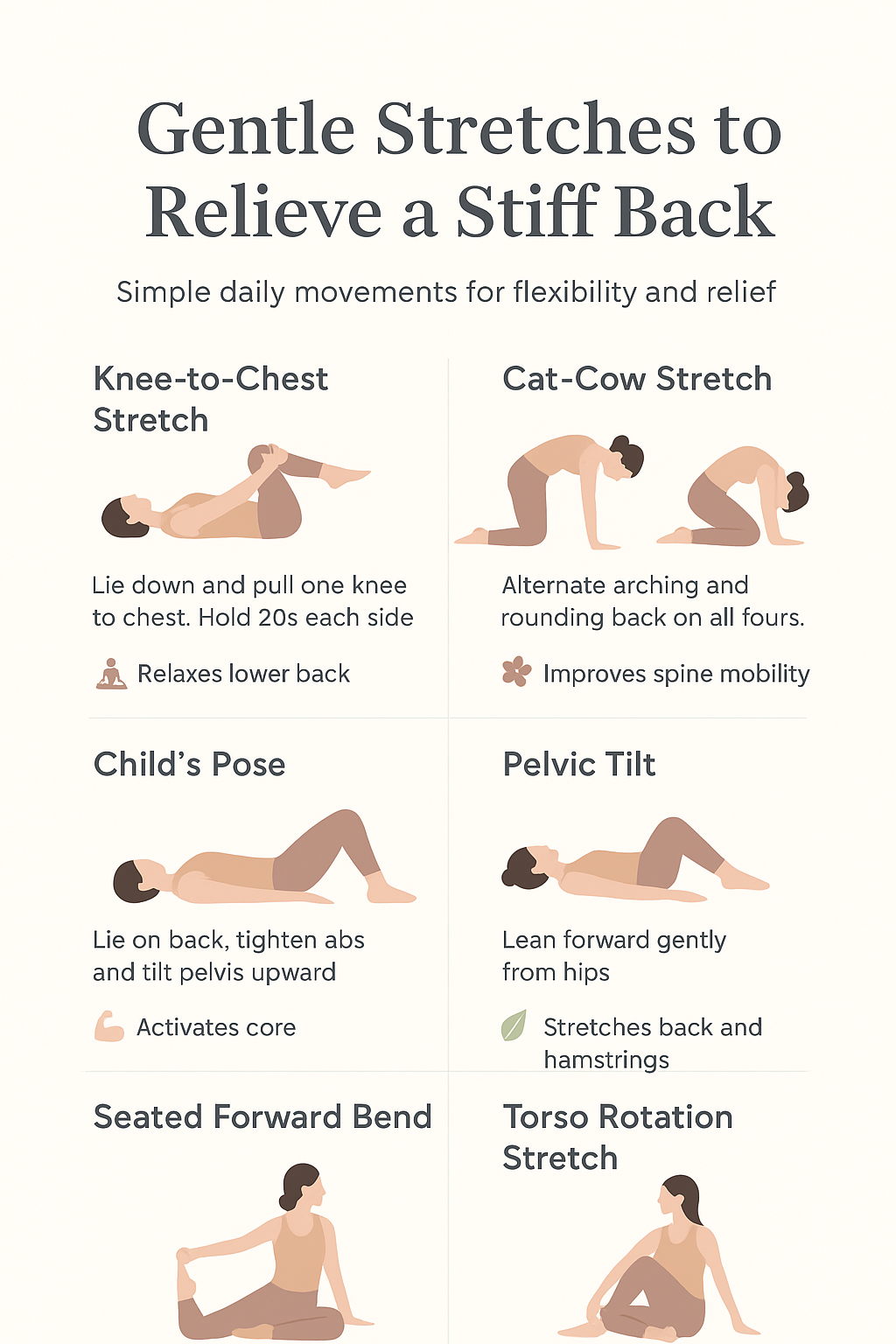
Starting your day with a few mindful habits can greatly reduce morning back stiffness. Begin by gently stretching in bed before getting up — simple movements like knee-to-chest pulls or pelvic tilts help loosen tight muscles.
Once you’re out of bed, do light exercises such as cat-cow stretches or child’s pose to improve spine flexibility and circulation. Drink a glass of warm water to rehydrate your muscles, and take a few deep breaths to relax your body.
Maintaining good posture while brushing your teeth or sitting for breakfast also prevents strain on the lower back. With just five minutes of daily care, you can make your mornings pain-free and keep your spine active throughout the day.
How we as physiotherapist cure Stiff low back pain?
There are two type of non specific low back stiffness and pain,
- Acute ( Less then 6 week )
This type of pain usually appears suddenly and lasts for less than 6 weeks. It’s often caused by muscle strain, poor posture, or lifting something incorrectly.
- Chronic ( more than 6 week )
When back pain lasts for more than 6 weeks (months), it’s considered chronic. This type may come and go. In some articles and books they also categorise as Acute (> 6 week), Subacute (6 – 12 week) and Chronic (< 12 week)
Treatment of Acute stiff Low back pain
If you’re experiencing sudden lower back pain but don’t have any serious injury or medical condition after doing every investigation . Then don’t panic — it’s very common and usually gets better within a few weeks. You just need to take care of your back.
According to studies conducted in America says that exercise, manual therapy, and evidence for different approaches can treat stiff low back in the morning usually due to low back pain .
- Stay active: Keep moving and avoid long periods of bed rest — gentle activity helps your back heal faster.
- Try simple self-care:
- Do light stretching and basic mobility exercises.
- Use a warm compress or heating pad to relax muscles.
- Maintain good posture while sitting, standing, and lifting objects.
- Follow trusted online physiotherapy videos or programs for guided exercises.
- Seek physiotherapy if needed: A physiotherapist may recommend:
- Gentle strengthening and flexibility exercises.
- Manual therapy to release tight muscles.
- Use of superficial heat to ease stiffness.
- Return to routine: Resume normal daily activities gradually to prevent stiffness and weakness.
- Medications:
- Short-term use of anti-inflammatory drugs (like ibuprofen) may help.
- Paracetamol alone is not very effective for back pain.
- Strong painkillers should be used only if necessary and for a short time.
- Follow-up:
- Recheck your progress after 7–14 days.
- If the pain doesn’t improve or spreads to your legs, consult a physiotherapist or doctor for further assessment.
Treatment for Chronic stiff Low Back pain
If you have stiff back in the morning and also back pain has been going on for more than 3 months, it’s called chronic low back pain. In most people, it isn’t caused by anything serious — but it can still affect daily life if not managed properly.
Before starting treatment, your doctor or physiotherapist will first assess your condition. They’ll ask about your symptoms, daily routine, and past injuries, and may do a few simple physical or nerve tests to check how your back and legs are working. This helps them rule out any serious problems. If anything unusual is found (called “red flags,” such as fever, weight loss, or nerve weakness), further tests like X-rays or MRI scans may be advised.
Sometimes, people continue to have pain because of stress, fear of movement, or negative thoughts about recovery — these are known as “yellow flags.” Your physiotherapist might help you overcome these with reassurance, education, and gradual exercises that build confidence.
The main focus of treatment is non-surgical and non-drug care. You’ll be encouraged to stay active, exercise regularly, and return to your normal daily routine instead of resting too much. Physiotherapists often combine exercise therapy with simple lifestyle changes to help you recover safely.
Common exercise options include:
Walking or light aerobic activities
A study was done to find out whether aerobic walking is as effective as muscle-strengthening exercises in improving function in people with chronic low back pain. It was a randomized controlled clinical trial conducted in an outpatient clinic with 52 sedentary adults aged 18–65 years who had long-term back pain. People with surgery, injury, heart, or cancer problems were not included. This means that a regular walking program is just as beneficial as strengthening exercises for improving function and reducing stiffness in people with chronic low back pain.
This article – CLICK ON THIS
Yoga or Pilates to improve flexibility and balance
A was study conducted to find out whether yoga is more effective than usual care for people with chronic or recurring low back pain. A total of 313 adults in the United Kingdom took part in this randomized controlled trial conducted between 2007 and 2010. It concluded that a 12-week yoga program significantly improves back function and flexibility in adults with long-term or recurrent low back pain compared to usual care alone.
This article –CLICK ON THIS
Tai Chi
Tai Chi is a gentle, slow-moving form of exercise that combines smooth body movements, deep breathing, and relaxation. It helps improve balance, flexibility, posture, and body control. For people with a stiff or painful back, Tai Chi can be very effective because it strengthens the core and back muscles without putting too much stress on the spine.
These are the some common Gentle stretching used to cure stiff back in the morning.
- Knee-to-Chest Stretch
- Cat–Cow Stretch
- Child’s Pose
- Pelvic Tilt
- Seated Forward Bend
- Torso Rotation Stretch
Learn More About – Back Pain Exercise
Progressive relaxation or breathing exercises
Progressive relaxation and deep breathing exercises are simple yet powerful ways to relieve a stiff back caused by tension or stress. In progressive relaxation, you gently tighten and then release different muscle groups in your body — starting from your feet and moving up to your head. This helps your body recognize the difference between tension and relaxation, allowing your back muscles to loosen naturally.
Breathing exercises such as deep diaphragmatic breathing or slow rhythmic breathing increase oxygen flow, relax tight muscles, and calm the mind. When practiced regularly, they help lower stress hormones that often contribute to muscle stiffness and pain.
Article –
Effects of breathing exercises on chronic low back pain
Massage or manual therapy
Manual therapy may also involve joint mobilization or manipulation, where the therapist moves the spine or nearby joints in a controlled way to restore normal movement and flexibility. These techniques help reduce stiffness, correct posture, and relieve pressure on nerves that may cause pain.
No single exercise works best for everyone — the right one depends on your comfort, body type, and what your physiotherapist recommends. What matters most is regular practice and choosing movements you enjoy.
Passive treatments like bed rest, too many painkillers, or avoiding movement can actually make back pain worse over time and are not recommended. If medicines are needed, doctors usually prescribe anti-inflammatory drugs (like ibuprofen) or, in some cases, low-dose antidepressants to reduce nerve-related pain — only for short durations and at the lowest effective dose.
Procedures such as injections, nerve blocks, or surgery are not usually advised unless there’s a serious condition or nerve compression that doesn’t improve.
If there’s no improvement after about 4 weeks of consistent care, or if symptoms like leg pain or numbness appear, your physiotherapist or doctor may refer you to a specialist for further evaluation.