
Sharp Pain in the Heel of My Foot: Causes and Treatment
Pain in the heel of my foot is one of the most common foot problems affecting people of all ages. The feet are complex structures made up of 26 bones, 33 joints, and more than 100 muscles, tendons, and ligaments that work together to support movement and balance. Because the feet absorb pressure with every step, they are highly vulnerable to stress, inflammation, and injury.
Many people notice my heel hurts when they first get out of bed, while others feel discomfort after standing or walking for long periods. Some individuals also experience foot arch pain or discover that the heel hurts when walking during daily activities.
Heel pain may develop slowly over time or appear suddenly after injury, overuse, or poor foot support. Identifying the underlying cause is important because proper treatment often prevents chronic pain and long-term complications.
Common Causes of Pain in the Heel of My Foot
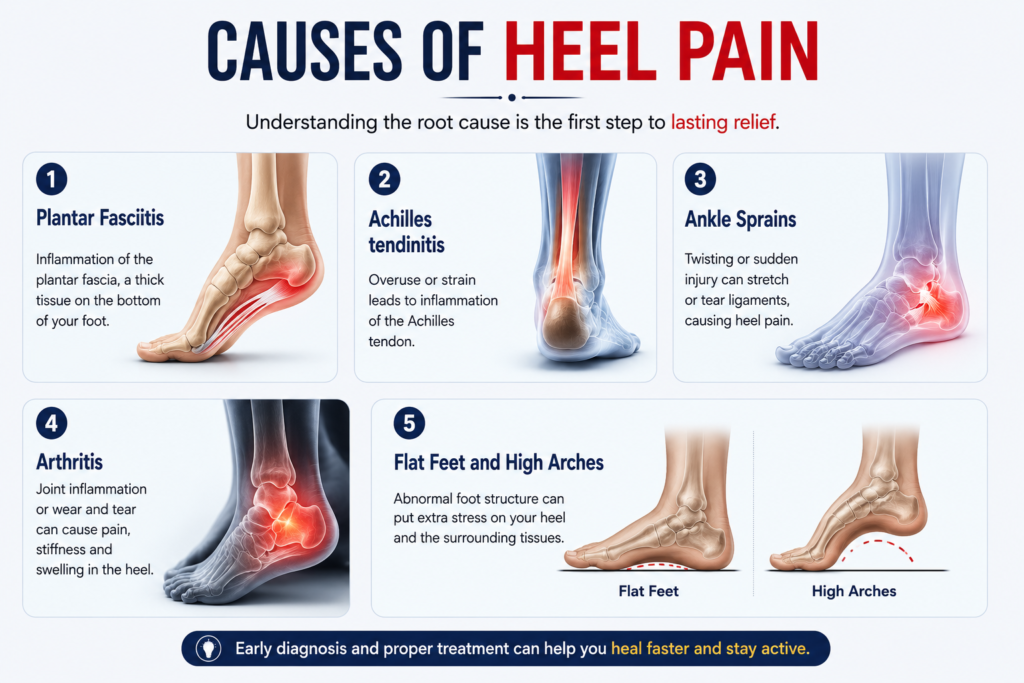
Plantar Fasciitis
Plantar fasciitis is one of the leading causes of heel pain. The plantar fascia is a thick band of tissue located on the bottom of the foot that connects the heel bone to the toes. When this tissue becomes irritated, inflamed, or overly tight, it may cause severe heel pain.
Symptoms of Plantar Fasciitis
- Sharp pain under the heel
- My heel hurts during the first steps in the morning
- Foot arch pain after standing
- Heel hurts when walking after rest
- Tightness along the bottom of the foot
Why Morning Heel Pain Happens ?
During sleep, the plantar fascia relaxes and shortens slightly. When a person suddenly stands up, the tissue stretches quickly, causing pain near the heel.
Risk Factors
- Long periods of standing
- Running or jumping activities
- Tight calf muscles
- Poor footwear support
- Obesity
- Flat feet or high arches
Achilles Tendinitis
Achilles tendinitis affects the Achilles tendon located at the back of the heel. Repetitive stress, overuse, or tight calf muscles may irritate the tendon and cause inflammation.
Symptoms
- Pain behind the heel
- Swelling near the tendon
- Tightness in the calf
- Pain during walking or exercise
Most cases improve without surgery when treated early.
Ankle Sprains
Ankle sprains occur when the ankle twists suddenly, stretching or tearing the ligaments around the joint.
Symptoms
- Swelling
- Bruising
- Difficulty walking
- Tenderness around the ankle
Ankle sprains are one of the most common causes of ankle and foot discomfort.
Stress Fractures
Stress fractures are tiny cracks in the bones caused by repetitive pressure or overuse.
Causes
- Running long distances
- High-impact sports
- Sudden increase in exercise
- Poor shock absorption
Symptoms
- Localized heel pain
- Swelling
- Pain that worsens with activity
Arthritis
Arthritis causes inflammation and wear in the joints of the foot and ankle.
Symptoms
- Joint stiffness
- Swelling
- Pain during movement
- Difficulty walking
Arthritis-related heel pain often becomes worse with age or prolonged activity.
Flat Feet and High Arches
Foot structure affects how pressure is distributed while walking. Flat feet may place extra stress on the plantar fascia and heel. Whereas the high arches reduce shock absorption and increase pressure on the heel. Both conditions may contribute to foot arch pain and chronic heel discomfort.
Symptoms
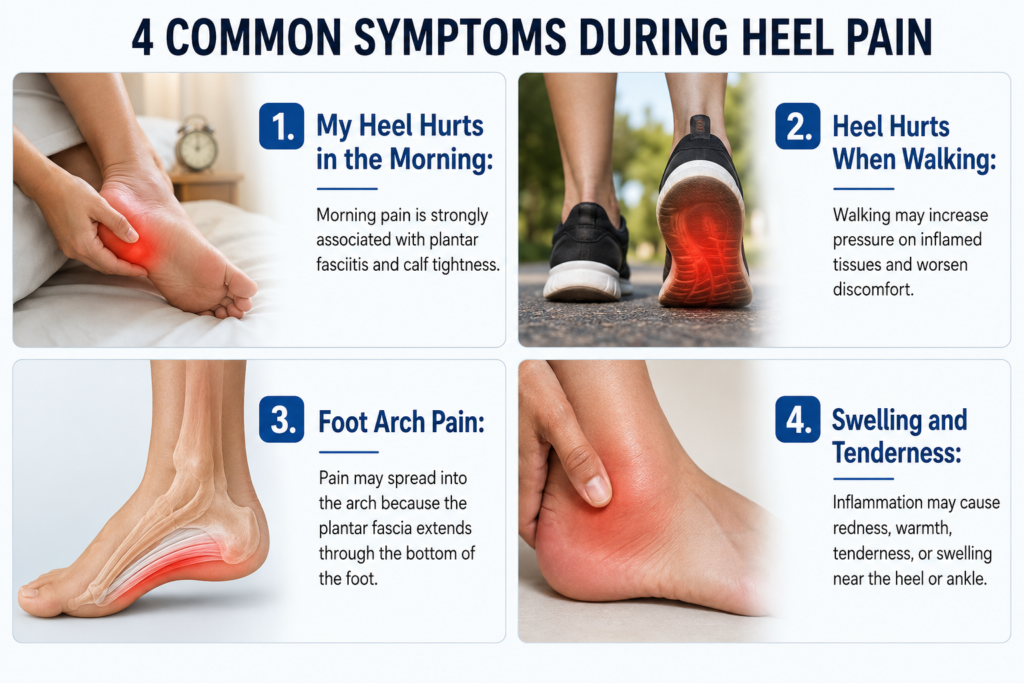
1. My Heel Hurts in the Morning: Morning pain is strongly associated with plantar fasciitis and calf tightness.
2. Heel Hurts When Walking: Walking may increase pressure on inflamed tissues and worsen discomfort.
3. Foot Arch Pain: Pain may spread into the arch because the plantar fascia extends through the bottom of the foot.
4. Swelling and Tenderness: Inflammation may cause redness, warmth, tenderness, or swelling near the heel or ankle.
Treatment for Pain in the Heel of My Foot
Rest and Activity Modification
By Reducing activities that increase pain allows the foot tissues time to recover but Always try to Avoid these activities such as , Excessive running, Jumping activities, Long standing hours
Frozen Water Bottle Massage
Ice helps reduce inflammation and pain in the heel (Ice therapy). A frozen water bottle may be rolled under the foot from the heel toward the toes for about five minutes. This technique helps to reduce inflammation , improve circulation and relax tight tissues. Rolling at different angles may target additional painful areas.
Stretching Exercises for Heel Pain
Stretching is one of the most effective conservative treatments for plantar fasciitis and heel tightness.
Morning Towel Stretch
Before getting out of bed:
- Place a towel or belt around the foot
- Pull the foot gently toward the body
- Hold for several seconds
- Repeat slowly
This may reduce stress on the plantar fascia during the first steps of the morning.
Tennis Ball Exercise for Heel Pain
A tennis ball exercise may help release tight tissues under the foot.
How to Perform :
- Place a tennis ball under the tender area of the foot
- Apply gentle body weight pressure
- Lean forward slightly to increase stretch
- Hold for 20 seconds
- Repeat up to five times
This exercise may help:
- Reduce plantar fascia tightness
- Improve flexibility
- Relieve foot arch pain
A frozen water bottle or rolled towel may also be used instead of a tennis ball.
Gua Sha Soft Tissue Massage Technique
Soft tissue tightness is a major contributor to heel pain and plantar fasciitis. A simple self-massage technique may help improve blood flow and reduce tissue adhesions. The Materials needed for massage; Coconut oil or massage lotion, thick metal spoon.
Technique
- Apply lubrication to the foot
- Use the spoon to make slow strokes from the heel toward the toes
- Focus on tight or gritty areas
- Repeat several times over the arch and heel
This technique may:
- Increase blood circulation
- Reduce tissue tightness
- Improve mobility
- Help decrease plantar fascia irritation
Massage may also be applied gently around the Achilles tendon and calf muscles.
Video – Link
Chair Circuit Exercises for Heel Pain
Chair exercises may help improve mobility in the plantar fascia, arch, and metatarsal bones.
Foot Twist Stretch
Steps
- Hold the foot with both hands
- Twist gently in opposite directions
- Move slowly from the heel toward the toes
This may help stretch tight tissues and improve flexibility.
Metatarsal Mobility Exercise
The metatarsal bones run through the middle of the foot and may contribute to plantar fascia irritation.
Steps
- Stabilize the foot
- Apply gentle pressure along each metatarsal bone
- Move slowly up and down
This exercise may improve mobility and reduce pressure on the plantar fascia.
Toe Spreader Stretch
Steps
- Place fingers between the toes
- Pull the foot backward gently
- Hold for 15–20 seconds
This stretch targets the plantar fascia and arch tissues.
Gentle circular ankle movements may increase flexibility further.
Calf Stretching and Strengthening Exercises
Tight calf muscles commonly contribute to heel pain.
Standing Calf Stretch
Steps
- Stand in a split stance
- Place a towel under the toes
- Keep the heel flat
- Lean forward slowly
Hold the stretch for 20 seconds and repeat several times.
Bent Knee Calf Stretch
Slightly bending the knee changes the stretch and targets deeper calf muscles.
Heel Raise Strengthening Exercise
Steps
- Stand near a wall for balance
- Raise the heel slowly
- Hold for 10–15 seconds
- Lower slowly
This exercise strengthens the calf muscles and improves foot support.
Supportive Footwear
Shoes with proper arch support and cushioning may help reduce stress on the heel.
Avoid
- Tight shoes
- Worn-out footwear
- Unsupportive high heels
Supportive footwear may help prevent recurring heel pain.
Medications for Heel Pain
Anti-inflammatory medications may temporarily reduce swelling and discomfort.
Topical Pain Relief Creams
Topical creams and gels may help because the medication can directly target painful tissues around the foot and ankle.
To know more about – 8 best pain killers for muscle pain
Injections
For persistent inflammation, doctors may recommend:
- Steroid injections
- Pain-relief injections
- Regenerative therapies
These treatments are generally considered after conservative methods fail.
Surgery
Surgery is usually reserved for severe cases such as:
- Tendon rupture
- Advanced arthritis
- Severe fractures
- Chronic untreated injuries
Most heel pain conditions improve without surgery.
Prevention Tips for Heel Pain
- Wear Proper Footwear : Supportive shoes may reduce heel stress.
- Stretch Regularly: Daily stretching may improve flexibility and reduce tightness.
- Avoid Overuse: Increase physical activity gradually.
- Maintain Healthy Weight: Reducing excess body weight may decrease pressure on the feet.
- Listen to Your Feet: Early treatment may prevent chronic heel pain and long-term injury.