
How to Cure Insomnia Naturally
If you’re struggling with insomnia, the good news is that effective treatment doesn’t always require medication. Research shows that several non-drug approaches can significantly improve sleep quality, help you fall asleep faster, and reduce nighttime awakenings. Even better, these techniques teach lifelong habits that support healthy sleep for years to come.
Healthcare professionals generally begin by evaluating your sleep history, lifestyle, and symptoms before diagnosing insomnia. Once the cause is identified, the insomnia treatment typically follows one of two paths:
- Non-pharmacological treatment: cognitive behavioral therapy for insomnia without medication.
- Pharmacological treatment: Prescription medications when necessary.
- Ayurvedic Treatment: several natural practices
For many people, behavioral therapies are recommended as the first-line treatment because they address the underlying causes of insomnia rather than simply masking the symptoms. You can add the behavioural therapies with Ayurvedic natural practices.
Below are six of the most effective, science-backed strategies along with six Ayurvedic natural ways for improving sleep naturally.

1. Improve Your Sleep Hygiene
Sleep hygiene refers to the daily habits and environmental factors that support healthy, restorative sleep. Although simple, these practices form the foundation of insomnia treatment.
Maintain a Consistent Sleep Schedule
Your body operates on an internal biological clock, known as the circadian rhythm. Going to bed and waking up at the same time every day—including weekends—helps regulate this clock and improves sleep quality.
Avoid Stimulants Before Bedtime
Certain substances and activities can interfere with your body’s ability to prepare for sleep, including:
- Caffeine
- Nicotine
- Recreational drugs
- Energy drinks
- Intense gaming or emotionally stimulating activities
Reducing or avoiding these before bedtime allows your brain to transition more easily into sleep.
Develop a Relaxing Bedtime Routine
Creating a calming routine before bed signals your brain that it’s time to unwind. Effective bedtime activities include:
- Reading a book
- Gentle stretching
- Meditation
- Listening to calming music
- Taking a warm shower
- Practicing deep breathing
Repeating the same routine every night strengthens your body’s natural sleep cues.
Create a Sleep-Friendly Bedroom
Your bedroom should promote rest by being:
- Cool and well-ventilated
- Dark enough to block outside light
- Quiet or supported by white noise if needed
- Comfortable with a supportive mattress and pillow
A comfortable sleep environment reduces unnecessary disturbances during the night.
Avoid Daytime Naps
While naps may seem helpful after a poor night’s sleep, they reduce your natural sleep drive, making it harder to fall asleep at bedtime. If you have chronic insomnia, avoiding naps is generally recommended.
Reduce Alcohol and Caffeine Intake
Although alcohol may initially make you feel sleepy, it disrupts normal sleep architecture and often causes fragmented sleep later in the night. Likewise, caffeine can remain active in the body for several hours, delaying sleep onset and reducing sleep quality.
Exercise Regularly
Regular physical activity is one of the most effective natural sleep enhancers. Around 20–30 minutes of moderate exercise most days of the week can help you fall asleep more quickly and enjoy deeper sleep.
Stop Watching the Clock
Repeatedly checking the time during the night often increases stress and anxiety, making it even harder to fall asleep. Turning the clock away or removing it from view can reduce sleep-related worry.
2. Stimulus Control Therapy
Many people unknowingly train their brain to associate the bed with activities other than sleep, such as working, watching television, scrolling on a phone, or worrying.
Stimulus control therapy works as insomnia therapies ,helps rebuild the connection between your bed and sleep.
Key recommendations include:
- Go to bed only when you genuinely feel sleepy.
- Use your bed only for sleep and intimacy.
- Avoid working, studying, or watching television in bed.
- If you cannot fall asleep within about 20 minutes, get out of bed and do a quiet, relaxing activity until you feel sleepy again.
- Wake up at the same time every morning, including weekends.
Over time, these habits help your brain recognize the bed as a place for sleep rather than wakefulness. It will work as a insomnia treatment.
3. Sleep Restriction Therapy
Despite its name, sleep restriction therapy is not about depriving yourself of sleep. Instead, it aims to improve sleep efficiency by limiting the amount of time spent awake in bed.
The process usually involves:
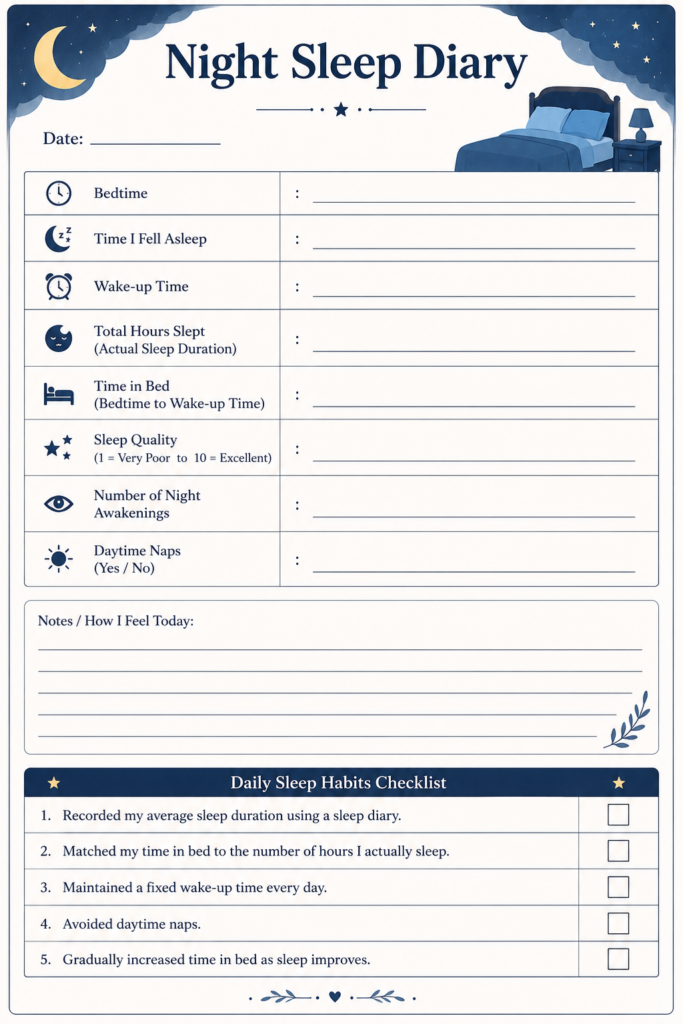
- Recording your average sleep duration using a sleep diary.
- Matching your time in bed to the number of hours you actually sleep.
- Maintaining a fixed wake-up time every day.
- Avoiding daytime naps.
- Gradually increasing time in bed as sleep improves.
This can be done by having a sleep Record book or manual before bed. It will work as insomnia treatment.
For example, if you typically sleep only six hours despite spending eight hours in bed, your initial schedule may allow only six hours in bed. As your sleep becomes more consolidated, bedtime is gradually adjusted.
Because this technique temporarily increases sleepiness, it should ideally be performed under the guidance of a qualified sleep specialist.
4. Relaxation Techniques
Stress and mental overactivity are common causes of insomnia. Relaxation exercises help calm the nervous system and prepare both the body and mind for sleep.
Progressive Muscle Relaxation
This method involves slowly tensing and relaxing different muscle groups, beginning with the feet and gradually moving upward toward the head.
Benefits include:
- Reduced muscle tension
- Lower stress levels
- Faster sleep onset
- Improved sleep quality
Deep Breathing Exercises
Slow diaphragmatic breathing activates the body’s relaxation response.
One commonly used technique is the 4-7-8 breathing method:
- Inhale through your nose for 4 seconds.
- Hold your breath for 7 seconds.
- Exhale slowly through your mouth for 8 seconds.
Repeating this cycle several times may reduce heart rate and promote relaxation.
Meditation for insomnia
Mindfulness meditation for insomnia, guided visualization, and gratitude exercises can reduce intrusive thoughts that often interfere with sleep. These techniques help shift attention away from stress and toward relaxation.
5. Cognitive Behavioral Therapy for Insomnia (CBT-I)
Cognitive Behavioral Therapy for Insomnia (CBT-I) is considered the gold standard treatment for chronic insomnia.Rather than simply helping people sleep, CBT-I identifies and changes the thoughts and behaviors that contribute to sleep difficulties.
Examples include:
- Fear of not getting enough sleep
- Unrealistic expectations about sleeping perfectly every night
- Anxiety associated with bedtime
- Negative beliefs about insomnia
CBT-I combines several proven techniques, including:
- Sleep hygiene education
- Stimulus control therapy
- Sleep restriction therapy
- Cognitive restructuring
- Relaxation training
Studies consistently show that CBT-I improves:
- Time taken to fall asleep
- Sleep duration
- Sleep efficiency
- Number of nighttime awakenings
- Overall sleep quality
Unlike sleeping pills, the benefits of CBT-I often continue long after treatment has ended.
6. Circadian Rhythm Re-Training
Your circadian rhythm is your body’s internal 24-hour clock that regulates sleep and wakefulness. When this rhythm becomes disrupted—because of shift work, jet lag, or irregular schedules—sleep problems often follow.
Circadian rhythm re-training focuses on resetting this internal clock through:
Morning Light Exposure
Exposure to bright natural sunlight shortly after waking helps reinforce your body’s daytime signals and improves night time melatonin production.
Aim for 15–30 minutes of morning sunlight whenever possible.
Melatonin Timing
For selected individuals, healthcare professionals may recommend carefully timed melatonin supplements to help shift the sleep schedule.
Follow Your Natural Sleep Pattern
Understanding whether you’re naturally an early riser or a night owl can help create a sleep schedule that works with your biology instead of against it. These might help you for
Combining Treatments Works Best
Research suggests that combining multiple behavioral therapies often produces better results than relying on a single strategy.
An effective treatment plan may include:
- Good sleep hygiene
- Stimulus control
- Sleep restriction therapy
- Relaxation techniques
- CBT-I
- Circadian rhythm optimization
Ayurvedic Treatment
According to Ayurveda, sleep (Nidra) is one of the three pillars of good health (Trayopastambha), alongside a balanced diet and a healthy lifestyle. When sleep becomes disturbed, it can affect energy levels, digestion, immunity, mood, and overall quality of life.
If you struggle with insomnia or poor-quality sleep, Ayurveda offers several natural practices that may promote relaxation and support healthy sleep when combined with good sleep habits. They work as best insomnia treatment.

1. Soaked Raisins Before Bed
One traditional Ayurvedic practice involves eating soaked raisins before bedtime.
How to Use
- Soak 10–15 raisins in a glass of water during the late afternoon or early evening.
- Before going to bed, eat the raisins and drink the soaking water.
Potential Benefits
This simple remedy is traditionally believed to help calm the body, nourish the tissues, and support restful sleep.
2. Warm Milk with Ashwagandha
Ashwagandha (Withania somnifera) is one of Ayurveda’s most well-known adaptogenic herbs. It has traditionally been used to help the body cope with stress and promote relaxation.
How to Prepare
- Add one teaspoon of Ashwagandha powder to a cup of warm milk.
- Drink it 30–60 minutes before bedtime.
Potential Benefits
Ashwagandha may help reduce stress, support relaxation, and improve sleep quality in some individuals. If you have medical conditions, are pregnant, or take medications, consult your healthcare provider before using herbal supplements.
3. Shankhpushpi Herbal Tea
Shankhpushpi is another herb widely used in Ayurveda to support mental calmness and cognitive health.
How to Prepare
- Add fresh or dried Shankhpushpi flowers to a cup of water.
- Simmer gently until the water develops a light bluish-purple color.
- Strain and enjoy the tea while it is warm.
Potential Benefits
Shankhpushpi contains natural plant compounds with antioxidant properties and has traditionally been used to promote relaxation before bedtime.
4. Pad Abhyanga (Foot Massage)
Foot massage, known as Pad Abhyanga, is a relaxing Ayurvedic practice that may help reduce stress after a long day.
How to Perform
- Warm a small amount of sesame oil.
- Massage the soles of both feet using gentle circular movements from the heels toward the toes.
- Leave the oil on for 10–15 minutes or wear cotton socks overnight.
Potential Benefits
This soothing ritual may help relax tired muscles, reduce stress, and prepare the body for sleep.
5. Shiro Abhyanga (Head Massage)
A gentle scalp massage before bedtime is another traditional Ayurvedic technique for promoting relaxation.
How to Perform
- Apply a small amount of Brahmi oil or Jatamansi oil to your fingertips.
- Massage your scalp using slow, circular motions for several minutes.
Potential Benefits
A calming head massage may ease mental tension, improve relaxation, and create a peaceful bedtime routine.