
Arrhythmia
Table of Contents
Arrhythmia meaning
Arrhythmia refers to irregular heartbeat or disturbance in rhythm of the heart. heartbeat may be fast or slow or there may be extra beat or a missed beat. It occurs in physiological and pathological condition.
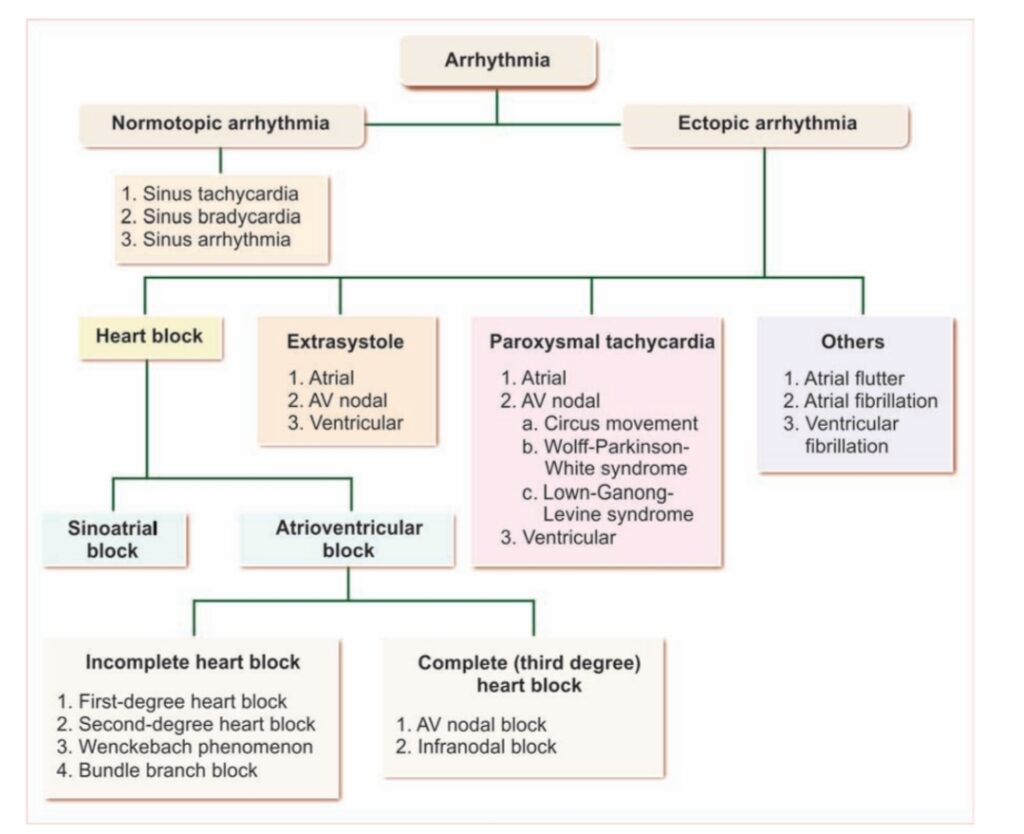
Classification of Arrhythmia
A. Normotopic arrhythmia
Normotopic arrhythmia is irregular heartbeat, in which SA node is the pacemaker.
Normotopic arrhythmia is of three types:
1. Sinus arrhythmia
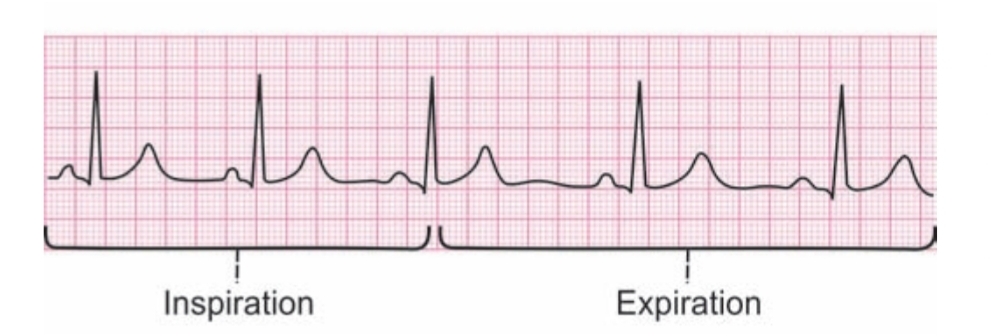
Sinus arrhythmia is a normal rhythmical increase and decrease in heart rate, in relation to the respiration. It’s also called respiratory sinus arrhythmia (RSA).
ECG Changes :ECG is normal during sinus arrhythmia. Only the duration
of R-R interval varies rhythmically according to phases of respiration.
2. Sinus tachycardia
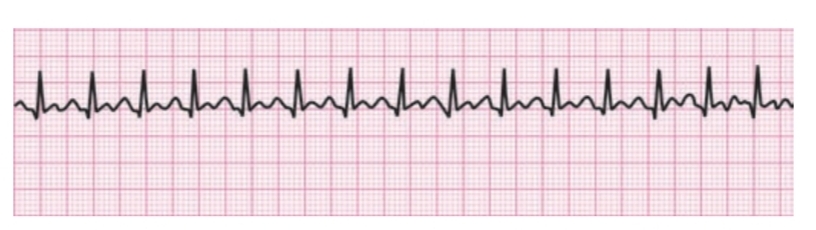
Sinus tachycardia is the increase in discharge of impulses from SA node, resulting in increase in heartthe heart rate increases up to 100/minute and sometimes up to 150/minute.
ECG Changes :ECG is normal in sinus tachycardia, except for short R-R intervals because of increased heart rate.
3. Sinus bradycardia.
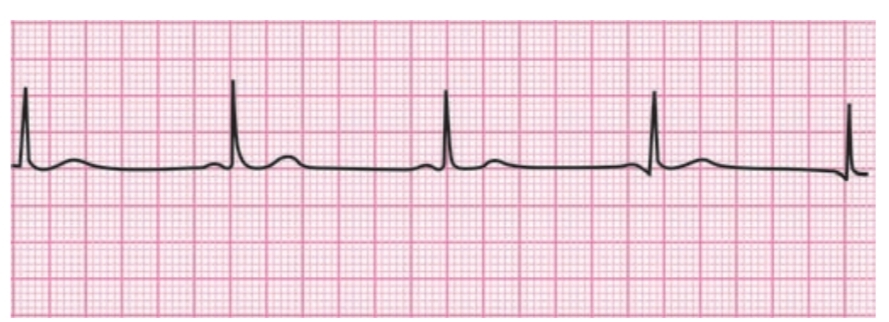
Sinus bradycardia is reduction in discharge of impulses from SA node resulting in decrease in heart rate. Heart rate is less than 60/minute.
ECG Changes :ECG show prolonged waves and prolonged R-R interval
B. Ectopic arrhythmia.
Ectopic arrhythmia is abnormal heartbeat, in which one of the structures of the heart other than SA node becomes the pacemaker. Impulses produced by these structure are called ectopic foci.
Ectopic arrhythmia is further divided into two subtypes:
1. Homotopic arrhythmia, in which impulses for heartbeat arise from any part of conductive system
2. Heterotopic arrhythmia, in which impulses arise from the musculature of heart other than conductive system.
Different Ectopic Arrhythmia
1. Heart block
2. Extrasystole
3. Paroxysmal tachycardia
4. Atrial flutter
5. Atrial fibrillation
6. Ventricular fibrillation
Clinical features of arrhythmias
- Many arrhythmias are asymptomatic
- sustained tachycardias
- rapid palpitation,
- dizziness,
- chest discomfort
- syncope
- Bradycardias tend to cause symptom that reflect low cardiac output, including fatigue, lightheadedness and syncope. Extreme bradycardias or tachycardias can precipitate
sudden death or cardiac arrest.
Investigations of arrhythmias
- Electrocardiogram (EKG or ECG):The first-line investigation is a standard 12-lead ECG, which can be diagnostic in many cases. If arrhythmias are intermittent and resting ECG is normal, an attempt should be made to capture abnormal rhythm using an ambulatory ECG or a patient-activated ECG.
- Blood tests measure the level of certain substances in the blood, such as potassium or other electrolytes and thyroid hormone.
- Heart imaging tests, such as computed tomography (CT) scans or cardiac magnetic resonance imaging (MRI), may check structure of your heart chambers.
- Genetic testing can check whether you have type of arrhythmia that is caused by specific genes
Principles of management of cardiac arrhythmias
Cardiac arrhythmias can be managed with either anti-arrhythmic drug therapy or external devices that depolarise the heart by passing an electric current through it.
Anti-arrhythmic drugs
- Disopyramide
- Lidocaine
- Mexiletine
- Flecainide
- Class II
- Atenolol
- Amiodarone
- Atropine
Electrical cardioversion
Electrical cardioversion, also known as direct current cardioversion, is useful for terminating an organised rhythm, such as AF or VT. The electric current interrupts arrhythmia and produces a brief period of asystole, which is usually followed by resumption of sinus rhythm.
Defibrillation
Defibrillators deliver a DC, high-energy, short-duration shock via two large electrodes or paddles coated with conducting jelly or a gel pad, positioned over the upper right sternal edge and the apex.
Temporary pacemakers
Temporary pacing involves delivery of an electrical impulse into heart to initiate tissue depolarisation and to trigger cardiac contraction.
Temporary pacing is indicated in the management of transient AV block and other arrhythmia complicating acute MI or cardiac surgery, to maintain the rhythm in other situations of reversible bradycardia (such as metabolic disturbance or drug overdose), or as bridge to permanent pacing.