Stages of menstrual cycle Phases
Let’s start this article with my story of mensturation , I was 15 when I got my first period and that was on a 30-day trip to Kolkata. I was so new to understand this thing but it was a whole new chapter begin in life. A chapter of becoming a lady from girl.
In human females, menstruation is repeated at an average interval of about 28/29 days, and the cycle of events starting from one menstruation till the next one is called the menstrual cycle.
So, When I get my first period that was in medical term called as menarche. This age is called puberty when period starts.
Normally we say mensturation with different names like Periods , Mahavari (in hindi), Menstrual bleeding, Menstrual flow etc.
Different 4 phases of menstrual cycle
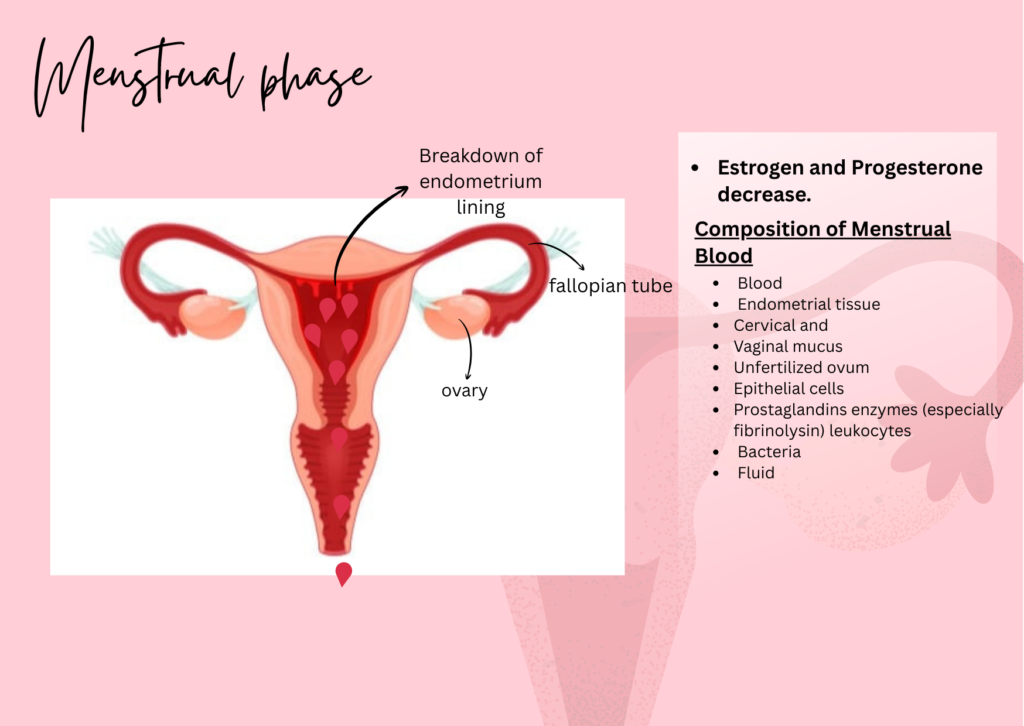
The menstrual cycle begins with the menstrual phase, during which bleeding occurs for about 3–5 days. This bleeding happens because the endometrial lining of the uterus, along with its blood vessels, breaks down and is shed, forming menstrual fluid that is expelled through the vagina. Menstruation takes place only when the released ovum is not fertilized. If menstruation does not occur, it may indicate pregnancy, although factors such as stress, illness, hormonal imbalance, or poor general health can also lead to missed or delayed periods.
Mensuration Phase
Menstrual bleeding occurs because levels of the hormone’s estrogen and progesterone decrease, causing the endometrial blood vessels to constrict and the tissue to disintegrate. The shed endometrial tissue, blood, and mucus are expelled from the uterus through the vagina as menstrual flow.
Menstruation happens only when the released ovum is not fertilized. If fertilization and implantation occur, the menstrual phase does not take place. The menstrual phase prepares the body for the next cycle by clearing the uterine lining, allowing the following follicular phase to begin.
Some common symptoms we as girl face during every mensuration.
- Abdominal cramps
- Back pain
- Bloating
- Breast tenderness
- Fatigue
- Headache
- Mood swings
- Irritability
- Acne
- Changes in appetite
- Vaginal bleeding
What we eat during menstruation plays a crucial role in managing symptoms, as research shows that a balanced diet rich in iron, calcium, whole grains, fruits, and vegetables can help reduce fatigue, cramps, and mood changes while supporting overall menstrual health.
Learn More –
What should we eat during periods to reduce pain?


Follicular Phase
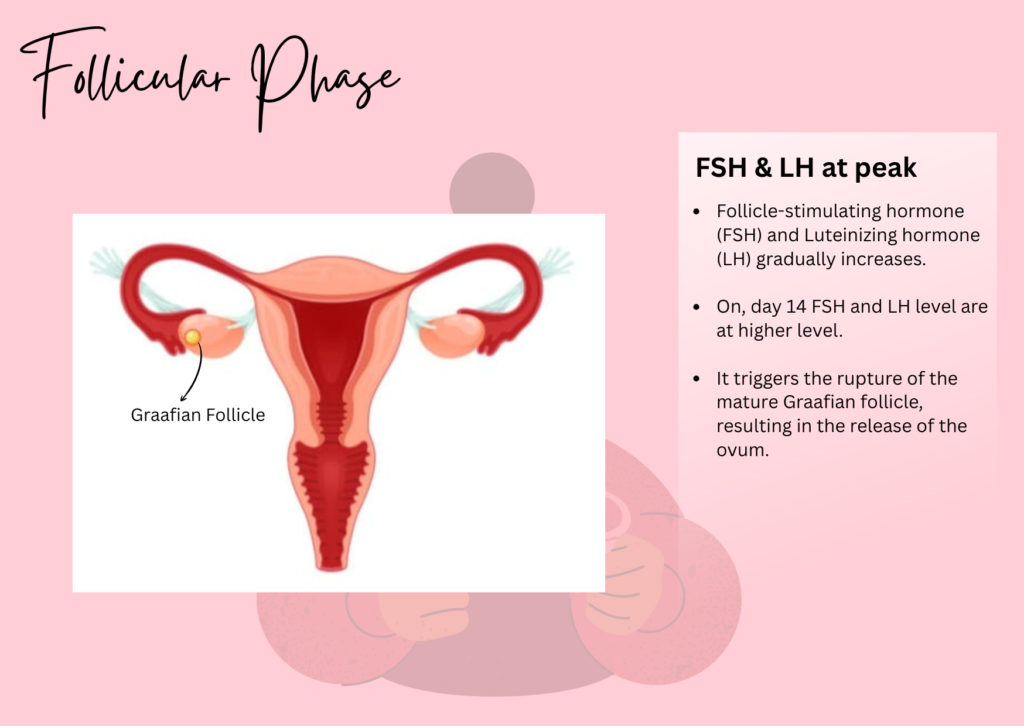
Following the menstrual phase is the follicular phase. In this phase, primary follicles in the ovaries begin to develop and mature, eventually forming a Graafian follicle. At the same time, the endometrial lining of the uterus starts to rebuild and thicken through cellular proliferation, preparing the uterus for possible implantation.
The changes occurring in the ovary and uterus during the menstrual cycle phases, particularly the follicular phase, are regulated by variations in pituitary and ovarian hormone levels. During the follicular phase, the secretion of gonadotropins—follicle-stimulating hormone (FSH) and luteinizing hormone (LH)—gradually increases. These hormones promote the growth and maturation of ovarian follicles and stimulate the developing follicles to produce estrogen.
As the cycle progresses, both FSH and LH reach their highest concentrations around the middle of the menstrual cycle (approximately day 14). A sudden and marked rise in LH, known as the LH surge, triggers the rupture of the mature Graafian follicle, resulting in the release of the ovum, a process referred to as ovulation.
Ovulation Phase
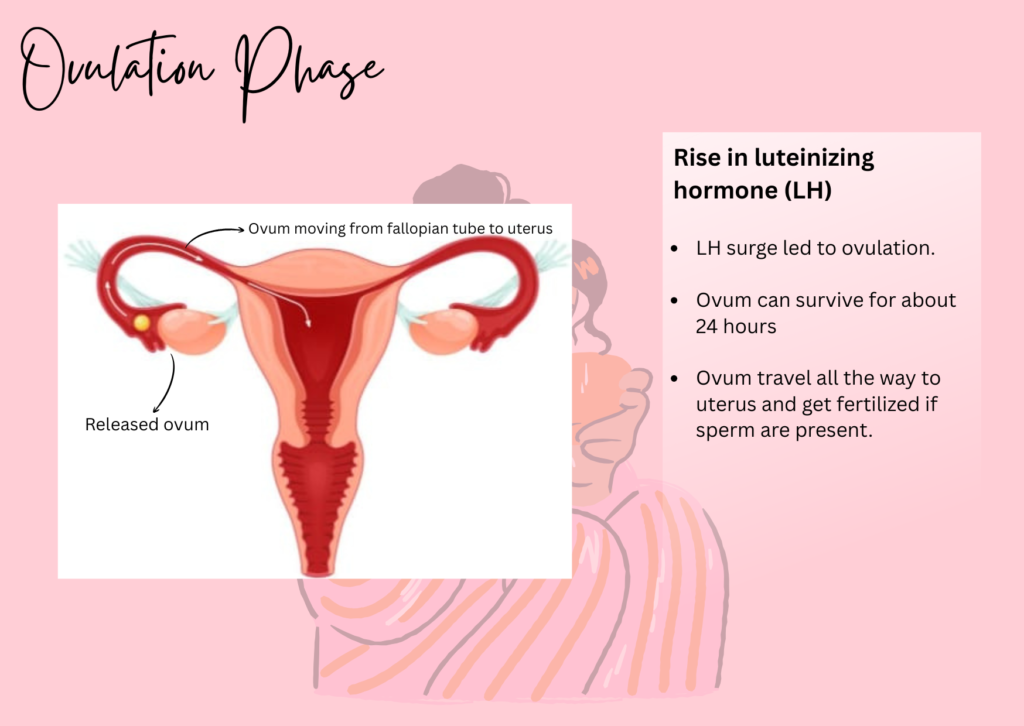
The ovulation phase is a central stage among the menstrual cycle phases and usually takes place around the middle of the cycle, near day 14 in a regular cycle. This phase occurs after the follicular phase, during which hormonal activity prepares the ovary for egg release. Increasing estrogen levels lead to a sudden and significant rise in luteinizing hormone (LH), commonly known as the LH surge.
This surge causes the fully developed follicle formed during the follicular phase to break open, allowing the ovum to be released from the ovary. The egg is then taken up by the fimbriae of the fallopian tube, where it can survive for about 24 hours and may be fertilized if sperm are present. During this time, the uterine lining remains supportive for possible implantation. Ovulation marks the most fertile period of the menstrual cycle phases.


Luteal Phase
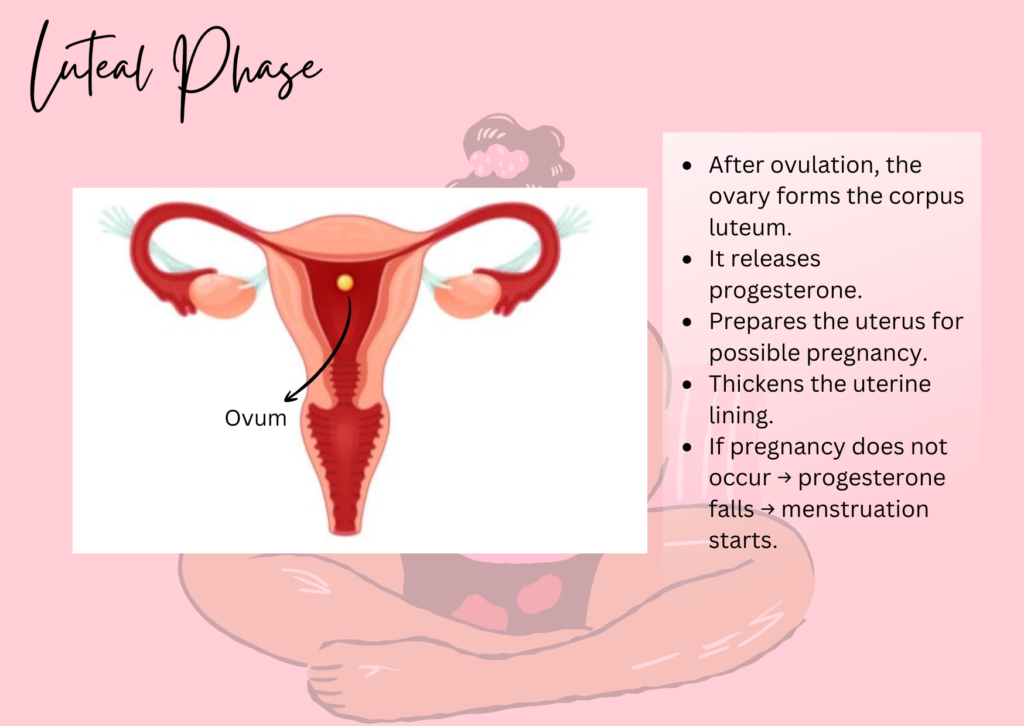
The ovulation phase is followed by the luteal phase, which is one of the important menstrual cycle phases. During the luteal phase, the remnants of the ruptured Graafian follicle undergo structural changes to form the corpus luteum. This temporary endocrine structure releases a high amount of progesterone, a hormone that plays a crucial role in maintaining the endometrial lining of the uterus.
A progesterone-rich endometrium is essential for the implantation of a fertilized ovum and for supporting the early stages of pregnancy. If pregnancy occurs, the normal sequence of menstrual cycle phases is interrupted, and menstruation does not take place. However, when fertilization does not occur, the corpus luteum gradually regresses, leading to a fall in progesterone levels. As a result, the endometrial lining breaks down and is shed as menstrual bleeding, signaling the beginning of a new menstrual cycle.