
Understanding your back Problems at once
Introduction
Because you clicked on this article, it is likely that you have had firsthand experience of how frustrating back problems can be. Perhaps even more frustrating than the pain itself is going to see your doctor in desperate need of help, only to be told to rest, take some pain medication, and come back in a month if the pain persists.
This guide provides an insider’s look at how doctors think about back problems and explains the seven worrying signs that make it more likely that there is a serious underlying cause.
How Common Is Back Problems?
Low back pain is extremely common.
- Around 4 out of every 5 people will experience back pain at some point in their lives.
- Some people can identify a trigger, such as heavy lifting or a sporting injury.
- For many others, low back pain seems to come out of nowhere.
Back problems can be incredibly debilitating. It can prevent people from going to work and make simple activities, such as going out with friends, a miserable experience.
The Three Main Types of Back Pain
When doctors assess back pain, they generally divide the causes into two broad categories:
1. Musculoskeletal Back Pain
Musculoskeletal back pain is caused by strain or injury to the joints, ligaments, tendons, discs, sore lower back or back spasm.
Because so many nerves run through the lower back, even a minor injury can cause severe pain. Since these structures are located so close together, it can also be difficult to pinpoint the exact source of the problem.
This is the most common form of back pain and is usually the type that doctors worry about the least.
Why Doctors Worry Less About It
Most musculoskeletal back pain improves with:
- Physiotherapy
- Pain medication
- Time
A physiotherapist may also identify muscle imbalances or postural problems that can be improved with targeted stretches and exercises.
2. Pathological Back Pain
Pathological back pain occurs when an underlying disease process is responsible for the pain.
Examples include:
- Infection
- Cancer
- Fractures
- Autoimmune diseases
- Nerve damage
Although these conditions account for only about 1% of people who visit a family doctor for back problems, they are important not to miss.
Must visit back clinic as it is doctor’s job to distinguish these serious conditions from ordinary musculoskeletal back pain.
3. Non Specific Back Pain
Non-specific back pain is the most common type of low back pain. It refers to pain in the lower back that cannot be traced to a single identifiable structure or medical condition, even after a detailed medical history and physical examination.
People with non-specific back pain may experience symptoms such as a sore lower back, stiffness, reduced movement, or even episodes of back spasm. Although these symptoms can be painful and affect daily activities, they usually improve with appropriate pain management, exercise, education, and physiotherapy.
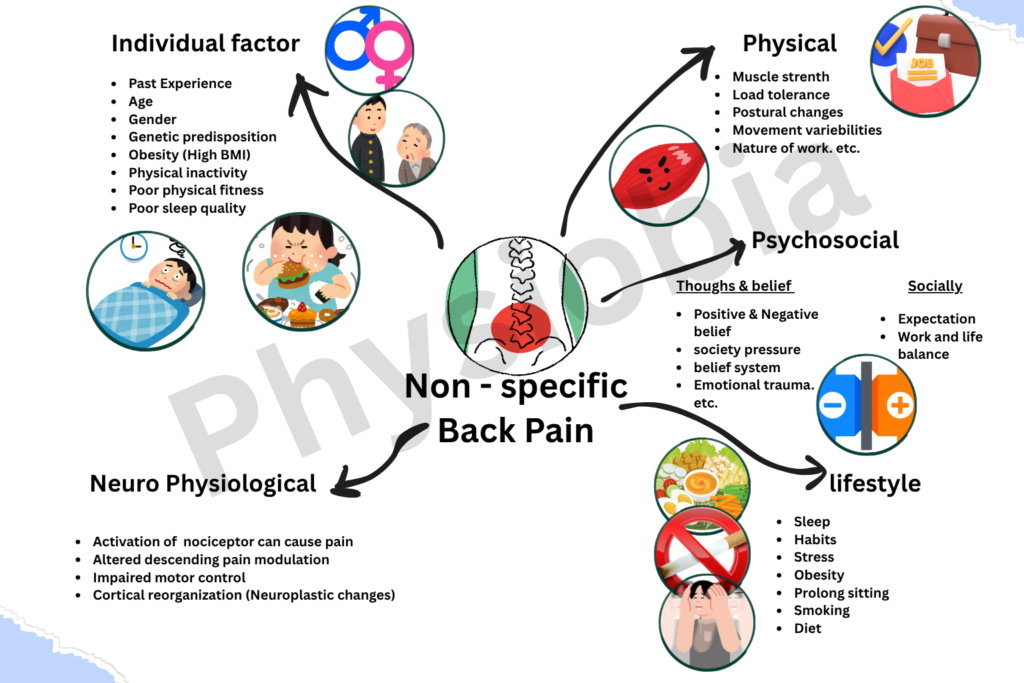
Non-specific back pain is considered a multifactorial condition, meaning that several physical, psychological, lifestyle, neurophysiological, and personal factors work together to influence the onset and persistence of pain. Understanding these factors helps healthcare professionals develop an individualized treatment plan rather than focusing on a single cause.
Factors That May Contribute to Non-Specific Back Pain
Physical Factors
Physical factors affect how the spine and surrounding muscles function and may include:
- Reduced muscle strength and endurance
- Increased physical workload or repetitive activities
- Poor posture or prolonged sitting and standing
- The nature of work, such as frequent lifting, bending, twisting, or prolonged desk work
- Reduced flexibility and general physical conditioning
Psychosocial Factors
Thoughts, emotions, and beliefs can influence how pain is experienced and managed. These include:
- Fear of movement or re-injury
- Negative beliefs about back pain
- Anxiety, depression, or emotional stress
- Low confidence in returning to normal activities
Lifestyle Factors
Everyday habits can affect spinal health and recovery, including:
- Poor sleep quality
- Physical inactivity
- Chronic stress
- Unhealthy nutrition
- Smoking
- Obesity or excess body weight
Neurophysiological Factors
The nervous system plays an important role in pain perception. In some individuals, the nervous system becomes more sensitive over time, allowing pain to continue even after the tissues have healed.
Past Experiences
Previous episodes of back pain, earlier injuries, treatment experiences, and personal beliefs about pain can influence how the body and brain respond to future episodes.
Seven Signs About Back Pain
1. Pain Lasting More Than Six Weeks
The first warning sign is the duration of pain.
If back pain persists beyond six weeks, it may suggest that something more than a simple muscle strain is occurring.
While many cases of musculoskeletal pain gradually improve, persistent pain deserves further evaluation.
2. Pain That Continues to Get Worse
The second warning sign is a progressive escalation in pain severity.
With musculoskeletal back pain:
- Symptoms often fluctuate.
- Some days feel better.
- Some days feel worse.
Pain caused by pathological conditions behaves differently.
Once the problem develops, the pain tends to persist and gradually worsen over time.
A steadily increasing level of pain may indicate an underlying disease process.
3. Fever or Night Sweats
The third warning sign is back pain accompanied by:
- Fever
- Night sweats
Although spinal infections are uncommon, they can occur in people who:
- Use injecting drugs
- Take immunosuppressive medications
- Live in regions where infections such as tuberculosis are common
These symptoms may suggest an infection affecting the spine.
4. New Back Problems After Age 50
The fourth warning sign is the development of new back pain in people over the age of 50.
As people age, conditions such as:
- Cancer
- Fractures
Women over the age of 50 are particularly vulnerable because menopause leads to a reduction in bone density, increasing the risk of spinal fractures.
5. Unexplained Weight Loss
The fifth warning sign is back pain associated with unexplained and unintentional weight loss.
Weight loss can sometimes occur because of cancer.
Cancer cells grow uncontrollably and consume energy, which may cause significant weight loss.
Some cancers originate in the spine, while others, such as prostate cancer, may begin elsewhere and spread to the spinal column.
6. Severe Spine Stiffness
The sixth warning sign is significant stiffness of the spine.
This may indicate an autoimmune condition known as ankylosing spondylitis.
What Is Ankylosing Spondylitis?
- Cause fusion of the vertebrae
- Reduce spinal mobility
- Lead to increasing stiffness over time
Early diagnosis is important because the condition can significantly affect quality of life if left untreated.
7. Signs of Nerve Injury
The seventh warning sign is evidence of nerve damage.
Severe Symptoms
These may include:
- Urinary incontinence
- Constipation
- Numbness around the genitals
- Numbness around the buttocks
Less Severe Symptoms
These may include:
- Altered sensation in the legs
- Tingling or numbness
- Weakness in leg movements
These symptoms suggest that nerves within or around the spinal column may be compressed or injured.
Possible Causes
- Disc bulge pressing on a nerve root
- Compression of the spinal cord
A bulging disc is often managed initially with physical therapy. However, spinal cord compression may require urgent surgical treatment.
Important Reminder About These Warning Signs
It is important to remember that these seven signs are not absolute proof of a serious condition.
Research has shown that some of these warning signs can produce false positives.
If you experience one or more of these signs:
- Stay calm
- Arrange an assessment with a healthcare professional
- Follow appropriate medical advice
What Is Chronic Back Pain?
Some people experience lower back pain for more than 6 to 12 weeks, yet no serious pathological cause is found despite a thorough medical evaluation.
This situation is known as chronic back pain.
Chronic back pain is a complex and often frustrating condition. The problem may begin in the back itself, but over time it can also involve changes in the body’s pain signaling system, making pain persist even after the original injury has healed.
Modern Lifestyle and Back Pain
There is no doubt that modern lifestyles encourage people to be more sedentary than previous generations.
Unfortunately, this increased level of comfort comes with disadvantages, one of which is a gradual loss of flexibility and physical conditioning, both of which can contribute to back pain and ongoing musculoskeletal problems
For Best Treatment of Back problem you can visit these aritcles :