7 Unique Upper Back Stretches recommended by Physio Experts
-
 Dr.
Arpita Biswas
Dr.
Arpita Biswas
- Dr.Rahul Kr. Jha
- Disclaimer

Table of Contents
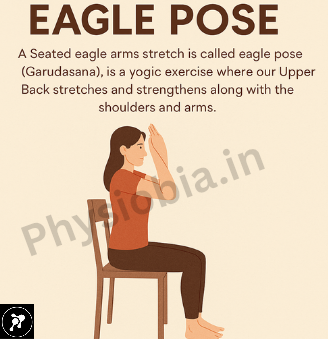
Eagle pose
A Seated eagle arms stretch is called eagle pose ( Garudasana ) , is a yogic exercise where our Upper Back stretches and strengthens along with the shoulders, and arms. In simple terms crossing your arms and potentially interlocking your hands or forearms, depending on your flexibility while on chair or in floor is Eagle pose.
The Benefits we get are :
- Upper back Stretches and increase in flexibility.
- Strengthens shoulder muscles ( Rotatory cuff muscle )
- Improve Your posture
- Reduces stress and tension
Let’s start with
- Sit comfortably on chair or floor with spin straight.
- Extend Your arm try to bring your right arm under your left arm with bended elbows.
- Try to touch your palms of hand or interlock your fingers.
- lifting it up to your shoulder height.
- Hold the pose and feel the upper back Stretches and shoulder stretches.
- Gently release and do on the opposite side similarly.
Wall crawl with foam roller
As the name suggests, a person crawls on a wall with the help of a foam roller. It directly works on the shoulder and back muscles including the serratus anterior, lower and upper trapezius, and rotator cuff muscles.
The Benefits we get are :
- Improved Shoulder Mobility and Rotator Cuff Strength by increasing Range of motion.
- It helps to reduce the Sore upper back
- It works on muscle tightness and promoting flexibility.
- Enhances Blood flow of Upper back.
Let’s start with
- Stand Facing the Wall about 6–12 inches away from a wall.
- Bend your elbows to 90 degrees as the forearms should be resting on the roller and palm facing you or neutral.
- Slowly roll the foam roller upward by sliding your forearms up the wall.
- Go as high as your mobility allows without pain or shoulder shrugging.
- Hold the stretch position for 2–3 seconds.
- Gently reverse the motion, bringing the roller back down with control
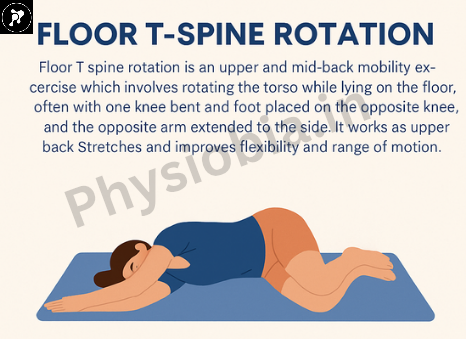
Floor T-spine rotation
Door frame lat and upper back stretches
As the Name suggests it is a stretching position which effectively targets the lats and upper back muscles, helps to improve flexibility and mobility. This exercise is performed when you place your hand on the frame, and lean away, feeling the stretch in your side and back.
The Benefits we get are :
- Improve posture ( hunched posture)
- Increase flexibility
- This exercise helps relieve tension and stiffness in the upper back, shoulders, and neck.
- Relief Pain
Let’s get started
- Stand in a doorway with feet shoulder-width apart, facing the frame.
- Cross your arms and grip the door frame on either side.
- Push your upper back away from the frame, rounding your back with your chin tucking slightly
- Hold the position for 10-30 second.
- Repeat 4-5 min
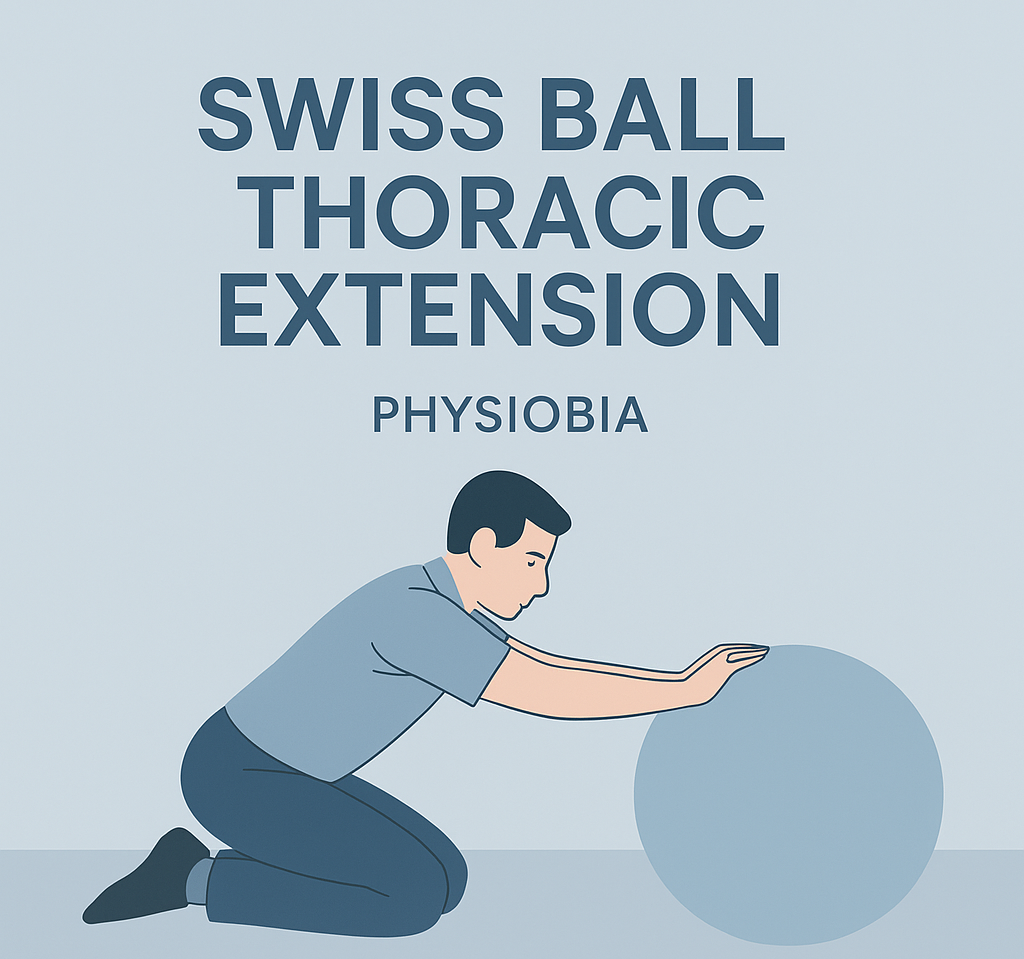
Swiss Ball thoracic Extension
A Swiss ball thoracic extension is an exercise where Swiss Ball is used to improve upper back stiffness and mobility. It involves arching over the ball, promoting extension of the thoracic spine and engaging the upper back muscles. This exercise can be performed in various ways such as kneeling with the ball supporting
or sitting and leaning back onto the ball.
The Benefits we get are :
- Enhance the Upper Back muscle movement and flexibility.
- Improve core stability as it works against an unstable ball.
- The swiss ball thoracic extension can help alleviate back pain and discomfort.
Let’s get started
- Setup: Kneel on the floor with your knees shoulder-width apart and toes pushing into the ground.
- Positioning: Place your hands on the Swiss ball, extending your arms forward.
- Rolling Forward: Slowly roll the ball forward, allowing your chest to move towards the floor.
- Stretching: Continue rolling until you feel a comfortable stretch in your upper back which we call as upper back Stretches
- Holding: Hold the stretch for a specific duration, typically 15-30 seconds, or as recommended by your physical therapist.
- Returning: Slowly roll the ball back to the starting position, maintaining control.
- Repetitions: Repeat the exercise for the desired number of repetitions.
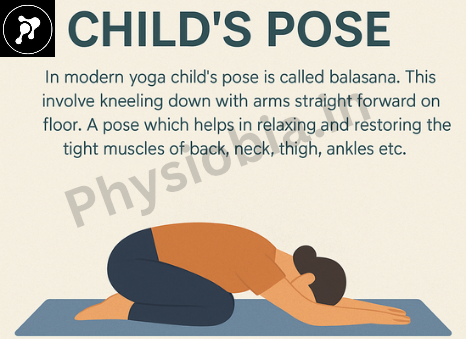
Child's pose
In modern yoga child’s pose is called balasana. This involve kneeling down with arms straight forward on floor. A pose which helps in relaxing and restoring the tight muscles of back ,neck , thigh, ankles etc.
The Benefits we get are :
- It gently stretch in the lower back and hips can help to alleviate back pain and discomfort.
- Stimulates the digestive system by gently compressing the abdomen
- It relieve the gas and bloating.
- Women during menstrual can perform this asana to reduce the menstruation discomfort.
Let’s get started with
- Kneel on the floor ,with your big toe touching ground While sitting on you heels.
- Exhale slowly and bend forward , allowing your forehead to touch on ground.
- Extending your arm infront of you with palm downward by your side.
- Hold for 3-5 sec and feel the upper back stretches and thigh as long as you are .
- Slowly relax and come back in seated positions.
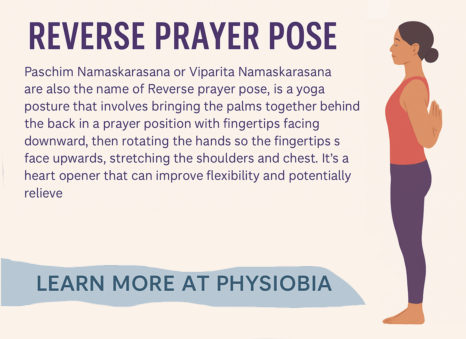
Reverse prayer pose
Paschim Namaskarasana or Viparita Namaskarasana are also the name of Reverse prayer pose , is a yoga posture that involves bringing the palms together behind the back in a prayer position with fingertips facing downward, then rotating the hands so the fingertips face upwards, stretching the shoulders and chest. It’s a heart opener that can improve flexibility and potentially relieve stress and anxiety.
The Benefits we get are :
- This exercise helps to stretch pectoral muscles, and upper back.
- This pose is helpful in reducing stress and anxiety by balancing emotions.
- It helps to relieve asthma and other lung-related issues.
Let’s get started with
- Stand with the spine straight and feet together, arms at your sides( In tadasana ).
- Bring your arms behind your back by bending your elbow, palms facing each other, with fingertips pointing downward.
- Rotate the arms upward while slowly inhaling.
- Hold the position for few breathes
- Gently release both the arms and return to tadasana.