
Tobacco mosaic virus

Table of Contents

Tobacco mosaic virus(TMV)

Tobacco mosaic virus is a serious disease of tobacco and tomato and causes serious losses
to tobacco and tomato and some other crop plants.

World wide Tobacco mosaic virus

World wideΒ Tobacco mosaic virus(TMV) distribution affects more than 150 genera mostly herbaceous (dicots), many vegetables, ornamental flowers and weeds. It is the most resistant virus known so far of which the thermal death point is 90Β°C for 10 minutes. Tobacco mosaic virus was the first virus that was crystallized by Stanley in 1935 from USA.

Β 

Β 

General symptoms of Tobacco mosaic virus

Tobacco mosaic virus
Leaves suffering from TMV
  • The damage on leave, flowers, fruits and causes stunting in plant.
  • Mottling of older leaves with or without malformations of the leaflets is produced when disease affects tomato.
  • Irregular dark green and light green areas on leaves (patchy pattern of discoloured areas)
  • The leave become narrow and elongated rather than oval shaped.
  • Leaflets become long and pointed and sometimes
    shoestring like.
  • Dwarfing
  • Distortion
  • Blistering
    of leaves
  • Chlorosis
  • Curling

Β 

Structure of Tobacco mosaic virus

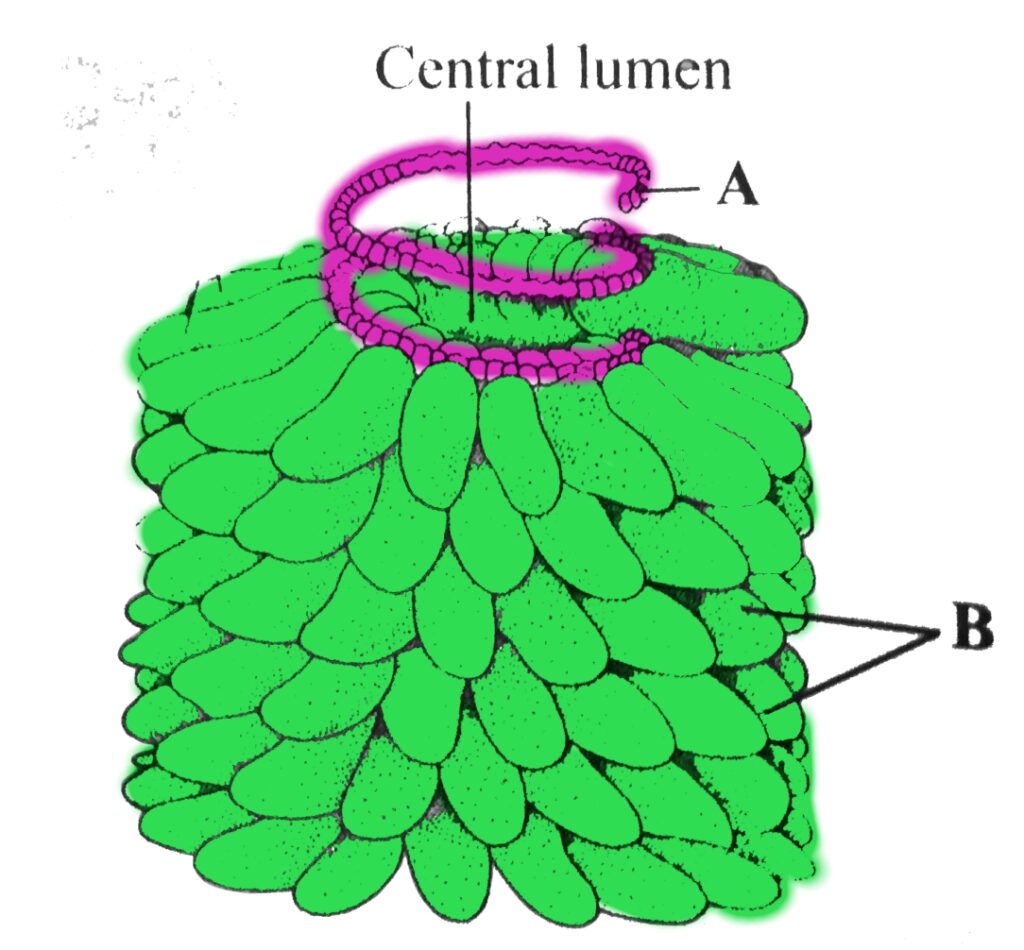
Tobacco mosaic virus diagram
Structure of TMV

Franklin et al. (1957) described the structure of Tobacco mosaic virus. It is rod shaped helical virus, 280 x 150 Ilm with molecular weight of 39 x 106 Dalton. The virion consist of protein coat, made up of 2,130 protein subunit of identical sizes. The protein subunits are arranged around central hole of 4 nm (40AO). Each protein subunit is made up of single polypeptide chain made by 158 amino acids, molecule weight of each polypeptide chain is 17,500 Dalton. The central/hole consist of ssRNA molecule which is also spirally coiled to forms helix. This RNA consist of 6,500 nucleotides. In one turn of RNA contains 49 nucleotides.

Total number of proteins subunits counting in 3 turns is 49 i.e. 49/3 unit/turn. Therefore single protein subunit is linked with 3 nucleotides Tobacco mosaic virus is an excellent immunogen. There are 3-5 different epitopes distributed over the surface of TMV protein. The two epitopes located on C-terminal and N-terminal extremities of polypeptide chains are responsible for stimulating production of antibodies.

Tobacco mosaic virus demonstrated direct entry of Tobacco mosaic virus into the isolated protoplast from mesophyll cells of tobacco. After entry genetic material (RNA) rapidly starts uncoating
by removing subunits from the capsid by using the host cell enzyme. The parented RNA is localized in nucleus which do two functions, it acts as mRNA and direct the synthesis of protein and also function as template for the synthesis of complementary strand.

The virus RNA utilizes the amino acids, ribosomes and tRNA of the host and synthesize the complementary strand and proteins, i.e. coat proteins of 17,500 Dalton and two other polypeptide (of molecule weight 160,000 and 140,000 dalton). Nucleic acid is about 5-40% of virus and proteins 60-70%.

Transmition of Tobacco mosaic virus

Tobacco mosaic virus is transmitted through cell sap of host and enters a new host through wound incision. It is also transmitted by wind and water.

Cryptogram of Tobacco mosaic virus (TMV)= R/1 : 2/5 : E/E : 5/0.