
Cirrhosis

Table of Contents

Define cirrhosis

Cirrhosis is a condition in whichΒ liver is scarred and permanently damaged. Scar tissue replaces healthy liver tissue which affects the normal functioning of liver . Scar tissue also partly blocks flow of blood through the liver. As cirrhosis gets worse : lead to liver failure .

Pathophysiology of cirrhosis

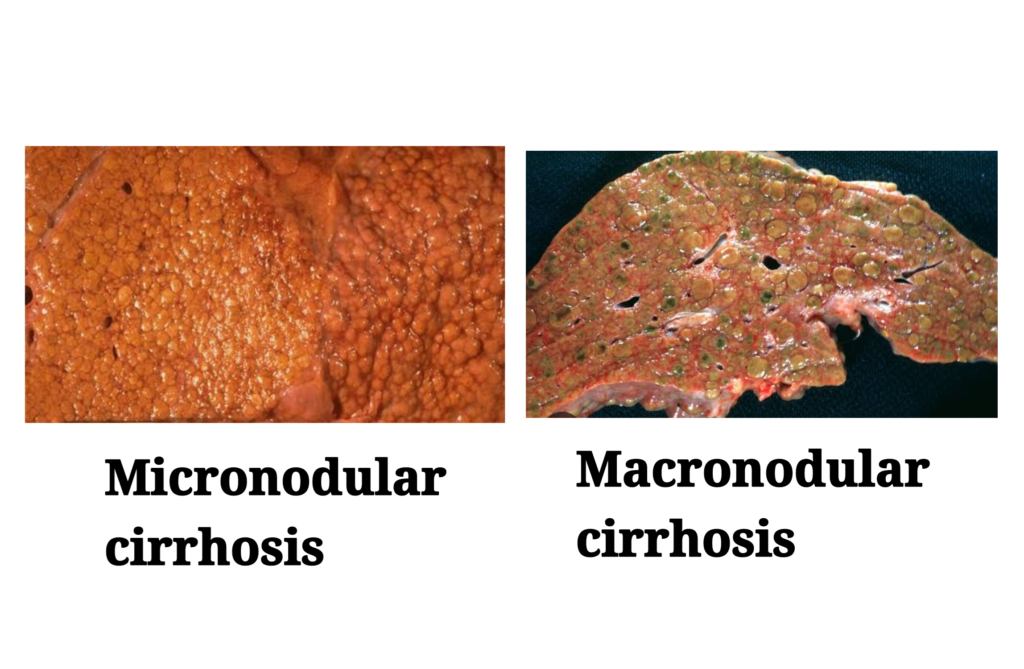
Cirrhosis can be classified histologically into:

β€’ Micronodular cirrhosis, characterized by small nodules about 1mm in diameters and typically seen in alcoholic cirrhosis.

β€’ Macronodular cirrhosis, characterized by larger nodules of various sizes. Areas of previous collapse of liver architecture are evidenced by large fibrous scars.

Micronodular cirrhosis and Macronodular cirrhosis,

Causes of cirrhosis

Worldwide, the most common causes of cirrhosis are chronic viral hepatitis, prolonged excessive alcohol consumption and NAFLD but any condition leading to persistent or recurrent hepatocyte death may lead to cirrhosis.

  • Alcohol
  • Chronic viral hepatitis (B or C)
  • Non-alcoholic fatty liver disease
  • Chronic venous outflow obstruction
  • Any chronic liver disease
  • Autoimmune liver disease
  • Wilson’s disease
  • Cystic fibrosis

Cirrhosis symptoms

Many people are not aware that they have cirrhosis, because as cirrhosis is asymptomatic until their liver is badly damaged.

When symptoms are present, they are often can be seen early in the disease but is of limited diagnostic value

  • Weakness,
  • Fatigue,
  • Muscle cramps,
  • Weakness,
  • Anorexia,
  • Nausea,
  • Vomiting
  • Upper abdominal
    discomfort.
  • Jaundice :Jaundice is mild when it first appears and is due primarily to a failure to excrete bilirubin.
  • Β 
  • Circulatory changes: spider telangiectasia, palmar erythema, cyanosis
  • Portal hypertension: splenomegaly, collateral vessels, variceal bleeding
  • Endocrine changes: loss of libido, hair loss.
  • Other features: pigmentation, digital clubbing, Dupuytren’s contracture
  • Ascites

Cirrhosis treatments

This includes treatment of the underlying cause, maintenance of nutrition and treatment of complications, including ascites, hepatic encephalopathy, portal hypertension and varices. Once the
diagnosis of cirrhosis is made, endoscopy should be performed to screen for esophageal varices and repeated every 2 years. As cirrhosis is associated with an increased risk of hepatocellular carcinoma, patients should be placed under regular surveillance for it .

Chronic liver failure due to cirrhosis can also be treated by the liver transplantation. This currently accounts for about three-quarters of all liver transplants

Prognosis

The overall prognosis in liver cirrhosis is poor. Overall, only 25% of patients survive 5 years from diagnosis, but where liver function is good, 50% survive for 5 years and 25% for up to 10 years.

The prognosis is more favorable when the underlying cause can be corrected, as in alcohol misuse, haemochromatosis or Wilson’s disease