
Fetal Circulation

Table of Contents

Definition 

Fetal circulation is a system of circulation between fetal blood and the mother’s blood which comes into function during pregnancy. Fetal circulation is different from that of adults because of the presence of the placenta. The placenta is responsible for the exchange of gases between fetal blood and mother’s blood.

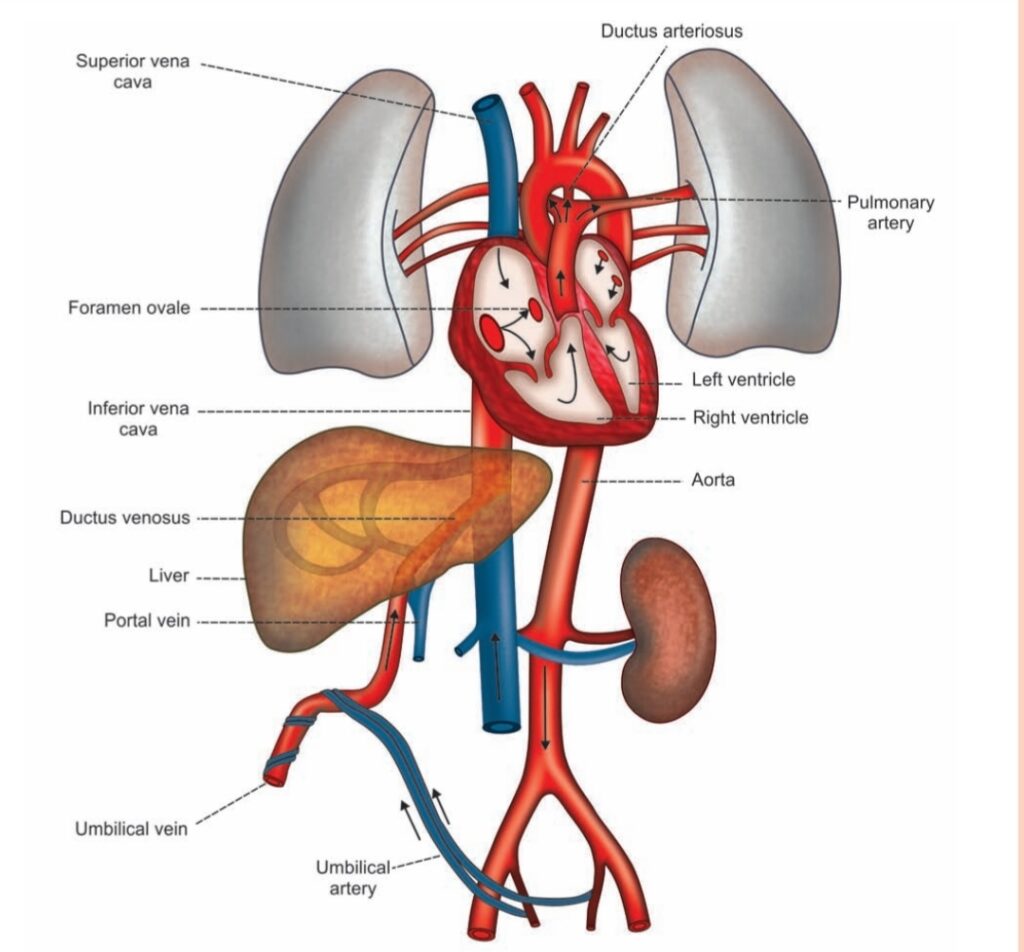
Fetal circulation diagram

Fetal circulation before birth 

Fetal lungs are non-functioning which makes fetal circulation easy because there is no necessity of large amounts of blood to be pumped into the lungs. Instead, the fetal heart pumps a large quantity of blood into the placenta to exchange substances.

1 – From the placenta to the Liver of the fetus 

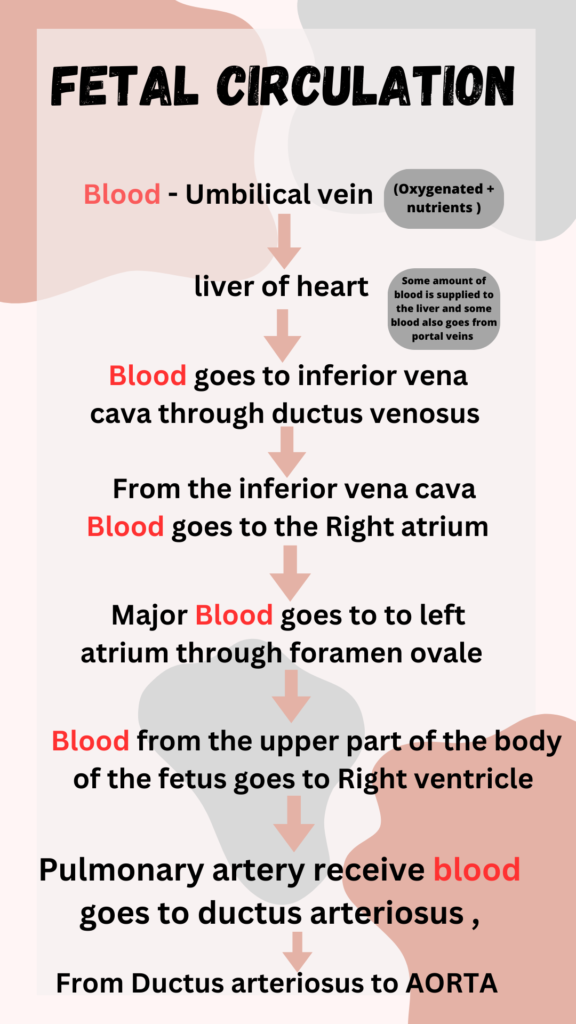
During circulation from the placenta, the umbilical veins collect the blood, which has more oxygen and nutrients. The umbilical vein passes through the liver. Some amount of blood is supplied to the liver from the umbilical vein.

2-From liver to Right atrium 

In the liver, the oxygenated blood mixes slightly with deoxygenated blood and enters the right atrium via the inferior vena cava through ductus venosus. Liver receives blood from the portal vein also.

3-From Right atrium to Left atrium  

From the right atrium, a major portion of blood is diverted into the left atrium via the foramen ovale. The Foramen ovale is an opening in the intra-atrial septum, Simultaneously the blood from the upper part of the body enters the right atrium through the superior vena cava. From the right atrium, blood enters the right ventricle. From here, blood is pumped into pulmonary artery.

4-From the pulmonary artery to the aorta through ductus arteriosus

From the pulmonary artery, blood enters the systemic aorta through ductus arteriosus. Only a small quantity of blood is supplied to the fetal lungs. Blood from left ventricle is pumped into the aorta.

5-From aorta to umbilical arteries

During fetal circulation, Fifty percent of blood from the aorta reaches the placenta through umbilical arteries

Fetal circulation flow chart

Fetal circulation after birth 

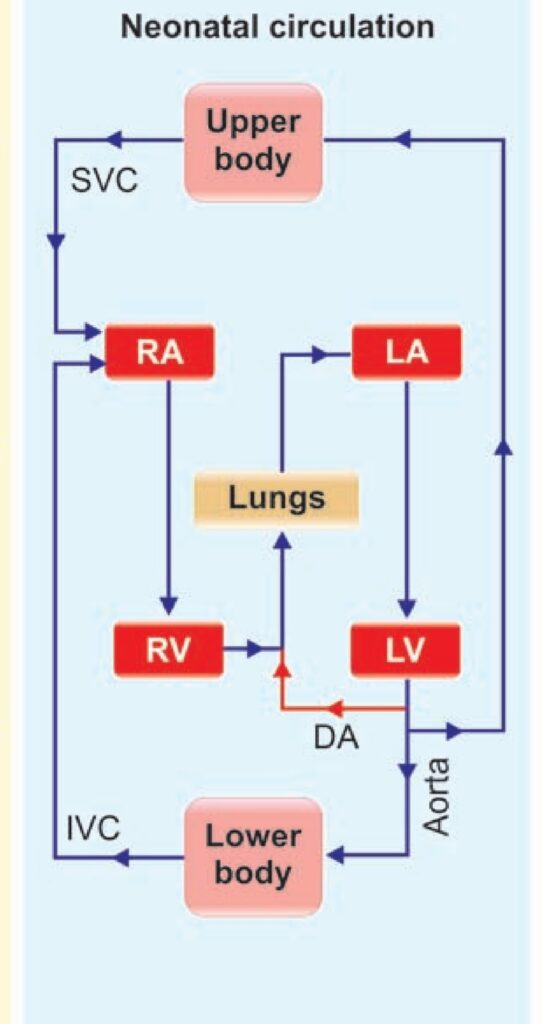
The fetal circulation after birth is called neonatal circulation. 

1- First breath of a child 

When a fetus is delivered it automatically starts the fetal circulation after birth. The umbilical cord is cut and tied, the lungs start functioning. When placental blood flows is cut off, there is sudden hypoxia( and hypercapnia. the respiratory center is strongly stimulated by these two factors and respiration starts.

2. Flow of blood to lungs 

Lungs expand during the first breath of the infant. Expansion of lungs causes immediate reduction in the pulmonary vascular resistance and a sudden fall in pressure in the blood vessels of the lungs

3. Closure of the foreman ovale 

When blood starts flowing through the pulmonary circulation, the oxygenated blood from the lungs returns to the left atrium. Simultaneously, due to the stoppage of blood from the placenta, pressure in the inferior vena cava is decreased. It leads to a fall in right atrial pressure. Thus, the pressure in the right atrium is less and the pressure in the left atrium is already high. This causes the closure of the foramen ovale.

4. Reversal of blood flow in ductus arterioles 

In neonatal life, since the systemic arterial pressure is more than pulmonary arterial pressure, the blood passes in the opposite direction in ductus arteriosus, i.e. from the systemic aorta into the pulmonary aorta

5 – Closure of ductus venosus

Due to the contraction of smooth muscle near the junction between the umbilical vein and ductus venosus, the constriction and closure of ductus venosus occur. Later, the ductus venosus becomes a fibrous band.  

6- Closure of ductus arteriosus 

The Ductus arteriosus starts closing due to narrowing. It closes completely after 2 days and adult type of circulation starts.

Neonatal circulation flow chart
Neonatal circulation

Frequently Asked Question

Q1. Why is fetal circulation different from adult circulation?

Ans. Because the fetal lungs are not used for breathing, blood flow bypasses the lungs through special shunts.

Q2. How does the fetus receive oxygen?

Ans. The fetus receives oxygenated blood from the placenta through the umbilical vein.

Q3. What carries deoxygenated blood back to the placenta?

Ans. Two umbilical arteries carry deoxygenated blood from the fetus to the placenta.

Q4. What happens to fetal shunts after birth?

Ans. They close as the baby takes the first breath:

  • Foramen ovale → becomes fossa ovalis

  • Ductus arteriosus → becomes ligamentum arteriosum

  • Ductus venosus → becomes ligamentum venosum

Q5. What are the main shunts in fetal circulation?

Ans. There are three important shunts:

  • Ductus venosus – bypasses the liver

  • Foramen ovale – bypasses the right ventricle

  • Ductus arteriosus – bypasses the lungs

Leave a Reply

Your email address will not be published. Required fields are marked *