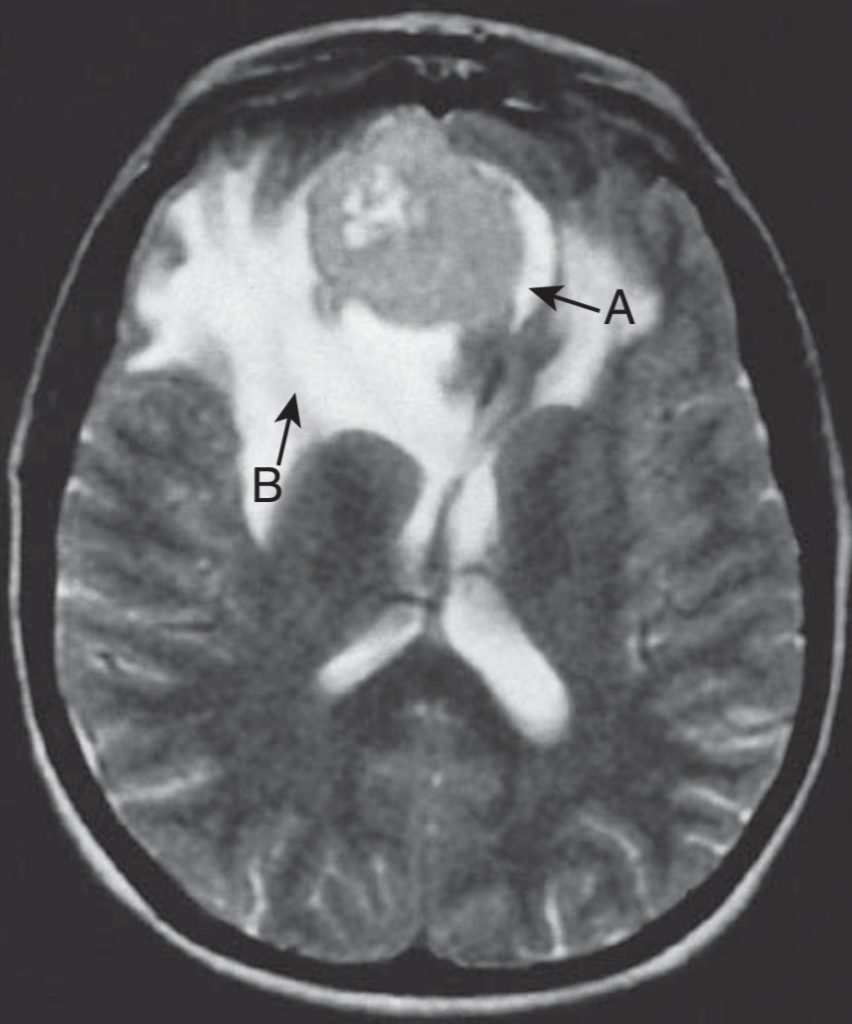
Brain Tumor Treatment option?
Brain tumors are treated with a combination of some medication, surgery, radiotherapy, and chemotherapy, depending on the type of tumor and the patient.
Medication
Dexamethasone is given orally (or intravenously where RICP is acutely or severely raised) and may reduce vasogenic oedema visible in high-grade gliomas.
Before the surgery of a brain tumor, some medications are required such as bromocriptine, cabergoline, or quinagolide during imaging the hormone levels are required to establish a formal diagnosis.
Surgical
The primary treatment of brain tumor is surgery, either resection (full or partial debulking) or biopsy, depending on the site and likely radiological diagnosis. Clearly, if a tumor occurs in an area of the brain that is highly important for normal function
(e.g. motor strip), then a biopsy may be the only safe surgical intervention but, in general, maximal safe resection is the optimal
surgical management.
Resection: It is a surgical procedure of complete removal of the brain tumor.
Partial resection: It is a surgical procedure of partial removal of the brain tumor near sensitive areas of the brain to relieve symptoms and facilitate or increase the effectiveness of other treatments.
Biopsy: It is a surgical procedure of collecting of sample of brain tissue from the site of a brain tumor for examination under high microscope testing which helps in the surgical removal of a tumor. Biopsy helps to diagnose and plan the treatment measure for brain tumors.It may take a week or longer after the biopsy to find out the name and type of your brain tumor.
Craniotomy: It is a surgical procedure in which incision is made on scalp and some piece of skull bone is removed which provide pathway for neurosurgeon to reach site of brain tumor .
Radiotherapy & Chemotherapy
Advances have been made recently in terms of therapeutic outcomes. Standard care for WHO grade IV glioblastoma
multiform is now combination radiotherapy with temozolomide chemotherapy; although this improves median survival of the
population from only 12 to 14.5 months, up to 25% of patients survive for more than 2 years (compared to approximately 10%
with radiotherapy alone). Ten percepts will survive more than 5 years with temozolomide (virtually unheard of with radiotherapy
alone)
In metastatic disease, radiotherapy offers a modest improvement in survival but with costs in terms of quality of life; treatment
therefore needs careful discussion with the patient.
Occasional chemosensitive cancers, such as small-cell lung cancer, may benefit from systemic chemotherapy but intracerebral metastases represent a late stage of disease and have a short prognosis.
Follow-up care & Rehabilitation
In patients with brain tumors, the work does not end up with the treatment of brain tumors proper follow-up care is as important as treatment of tumors. Follow-up care simply indicates a careful observation of the patient to check that the tumor has not come back, looking for side effects of medication and its management. It includes,
- Regular physical examinations
- Medical tests
- Medical history
Rehabilitation helps to regain control, independence, and quality of life as soon as possible. The required therapeutical therapy in brain tumor patients are :
Prognosis
The WHO histological grading system is a powerful predictor of prognosis in primary CNS tumors, though it does not yet
take into account individual biomarkers. The overall 5-year survival rate of about 14% in adults masks a wide
variation that depending on the type of brain tumour .