
Lung Abscess

Table of Contents

What is a Lung abscess? 

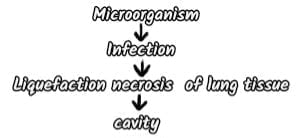
A lung abscess is a collection of pus within the tissues of the lungs ” liquefaction necrosis “. The main pathological changes are necrosis and liquefaction with inflammation in the surrounding lung tissue. 

Lung abscess is of 2 types :

  • Primary lung abscess that develops in normal lungs. The most common cause is the aspiration of infected material.
  • Secondary lung abscess develop due to some other diseases of the lungs.

Causes of lung abscess

The microorganisms commonly isolated from lungs in lung abscess are streptococci, staphylococci, and various gram-negative organisms. The organism is introduced into the lungs by the following mechanism.

Aspiration of infected foreign material

  • When any infected foreign body is inhaled or eaten up then it directly goes to the right lung because the right lung is vertical and the left lung is horizontal causing lung abscess.

Bacterial infection

These are caused by bacteria, infective conditions can be pneumonia developing into a lung abscess.

Bronchial obstruction

Any tumor formation in the bronchus can cause obstruction and can lead to lung abscess.

Pathology of Lung abscess

Clinical Features lung abscess

The Sign and symptom shown during lung abscess is the clinical feature shown such as : 

  • Fever,
  • Malaise,
  • Loss of weight,
  • Cough,
  • Purulent expectoration
  • Hemoptysis in half the cases.
  • Clubbing of the fingers 
  • Toes appear in about 20% of patients.
  • Secondary amyloidosis may occur in chronic long-standing case.

Lung  Abscess in Children 

Lung abscess in children is most frequently a complication of bacterial pneumonia especially those due to 5. aureus, and K. pneumonia. Sometimes the abscess may rupture into the pleural space leading to pyopneumothorax. 

The Child may show  anorexia, fever, lethargy, pallor, and cough with foul-smelling expectoration. Diagnosis is confirmed by plain X-ray,

an ultrasound or CT scan of the chest.

The Treatment of the child is to give appropriate antibiotics to which the organisms are isolated from the sputum or which should be administered for 4 to 6 weeks. Physiotherapy is carried out for effective drainage of the pus. Surgical resection of the involved area of the lung is indicated if medical therapy is not effective. 

What are treatment options for Lung abscesses?

Antibiotic therapy 

  • Clindamycin (600 mg IV on 8 h)  it shows a higher response rate than penicillin duration of fever and at a time sputum.
  • Some bacteria are resistant to penicillin so alternative medications used are the combination of penicillin and clavulanate or a combination of penicillin and metronidazole.

Alternative therapy 

  • Piperacilin/tazobactam 3.375 gr IV on 6 h or Meropenem 1 gr IV on 8 h.

The effectiveness of these antibiotics is seen in 3 – 4 days. The condition of the patient improved by 4-7 days. A complete recovery from lung abscess is seen in two months. 

During overall treatment, bronchoscopy is taken to diagnose the improvement in lung abscess infection.

Diet and physiotherapy  

Hypercaloric diet, correction of fluids and electrolytes, and respiratory rehabilitation with postural drainage 

If the abscesses is greater then 6 cm then the recovery from the above treatment method is difficult. The patient should be considered for surgical therapy. 

Surgical  Therapy 

There are two methods used for treatment of lung abscess are chest tube drainage and Surgical resection of lung abscess with the surrounding tissue.

85 % of patients go for chest tube drainage only 10 % of patients go for surgical resection because the complication rate of drainage is about 16% and mortality is about 4%. 

Complications are pyopneumothorax, empyema, necrotic detritus, bronchopleural fistula, and bleeding.


Recent Post