Manual Muscle Testing of Hip Joint
Table of Contents
MMT of Hip Joint
Manual Muscle Testing of the Hip Joint is recorded as numerical scores ranging from zero(0), which says no activity, to five(5), which represents “normal.” The hip flexion, hip extension, hip abduction, and hip adduction are covered here. If you want to see other joint movements, then kindly visit other posts, too.
Hip Flexion
Action Range of Motion : 0 to 125 degrees.
During MMT of hip flexion, the primary muscles involved in flexion of the hip joint are the Psoas major and iliacus. MMT also involves the various Secondary muscles involved in the Flexion of the hip joint, such as the Rectus femoris, Sartorius, Tendon fasciae latae, Pectineus, Adductor brevis, adductor magnus (superior fibers), and Gluteus medius (anterior fibers).
Grade 5/5 to +3/5
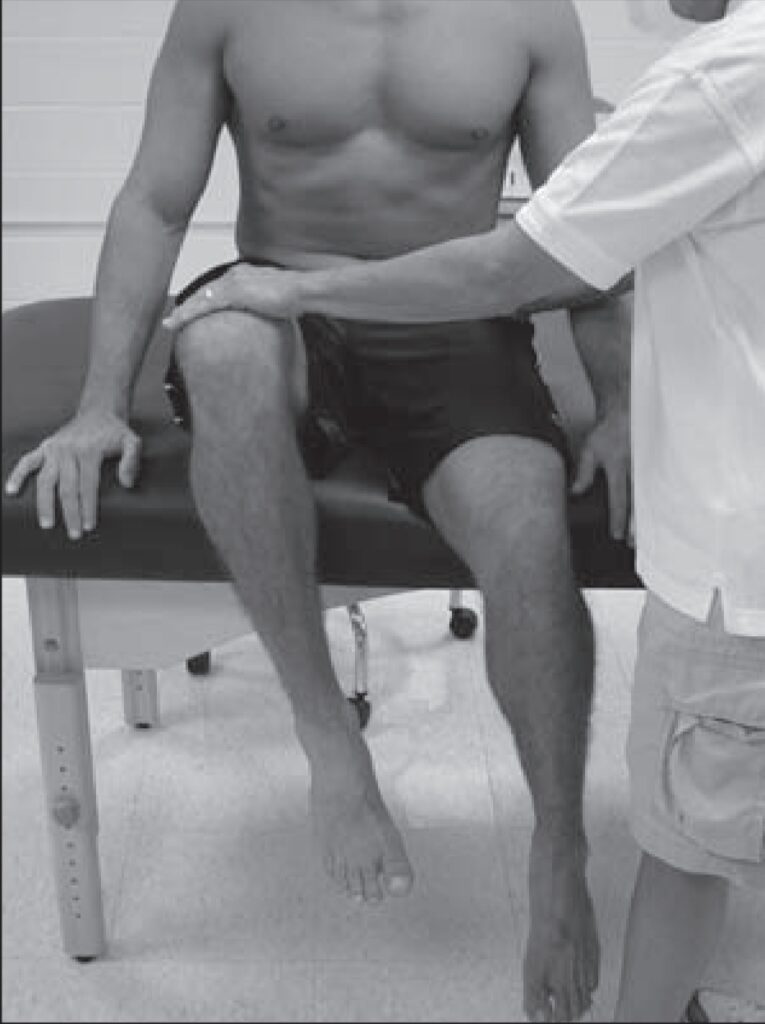
Subject position: Seated on the edge of a table with the arms resting by the sides and the hands on the table for stability.
Stabilization: The clinician stabilizes the opposite side of the pelvis.
Resistance is applied over the distal thigh just proximal to the knee joint in a downward direction.
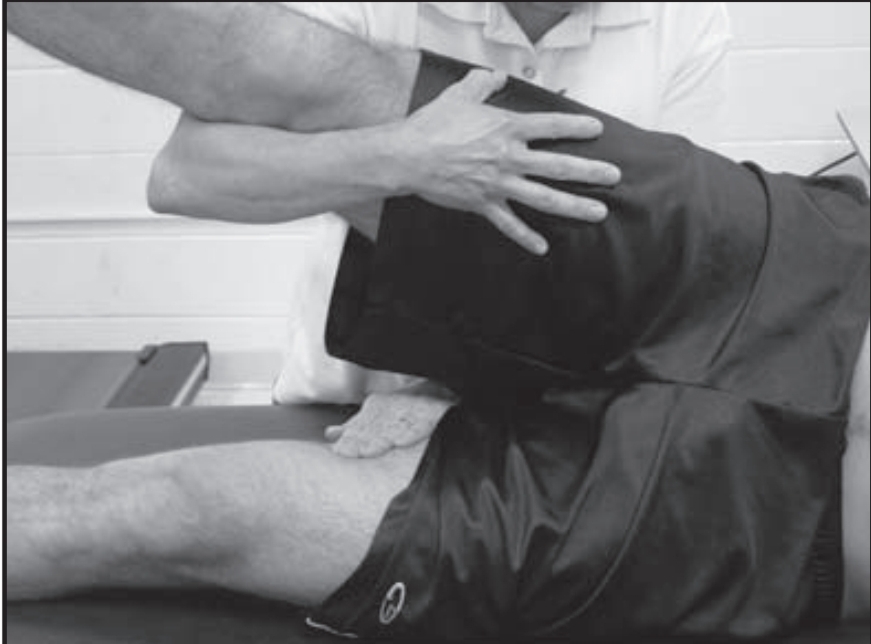
Grades 3/5 to +2/5:
Subject position: Sidelying with the tested limb resting on a powder board with the hip in neutral and the knee flexed to 90 degrees or with the clinician supporting the tested limb
Stabilization: The clinician stabilizes the opposite side of the hip against the table.
The subject can flex the hip through the maximal range of motion without resistance.

Grades 2/5 to −2/5
The subject is able to flex the hip through the maximal range of motion.

Grades 1/5 to 0/5
The hip flexors are palpated just distal to the inguinal ligament on the medial side of the sartorius as the subject attempts to flex the hip.
Hip Extension
Active Range of Motion : 0 to 15 degrees (hyperextension}
During MMT of hip extension, the primary muscles involved in the extension of the hip joint are Gluteus maximus, Semitendinosus, Semimembranosus, and Biceps femoris. MMT involves the various Secondary muscles in the extension of hip joint such as the Adductor magnus (inferior fibers) and gluteus medius (posterior fibers).
Grades 5/5 to +3/5
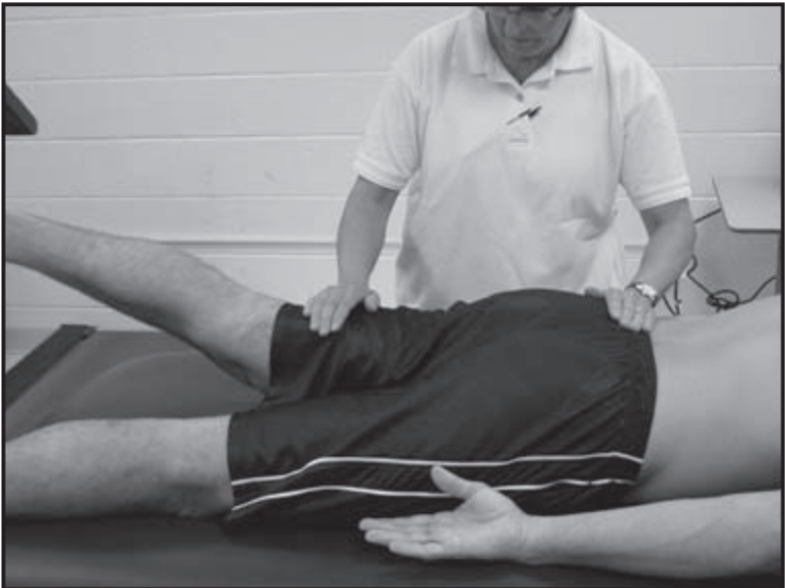
Subject position: Prone on a table with the arms by the sides and the lower extremities extended.
Stabilization: The clinician stabilizes the pelvis against the table.
Resistance is applied on the posterior thigh just proximal to the knee in a downward direction (toward the floor)
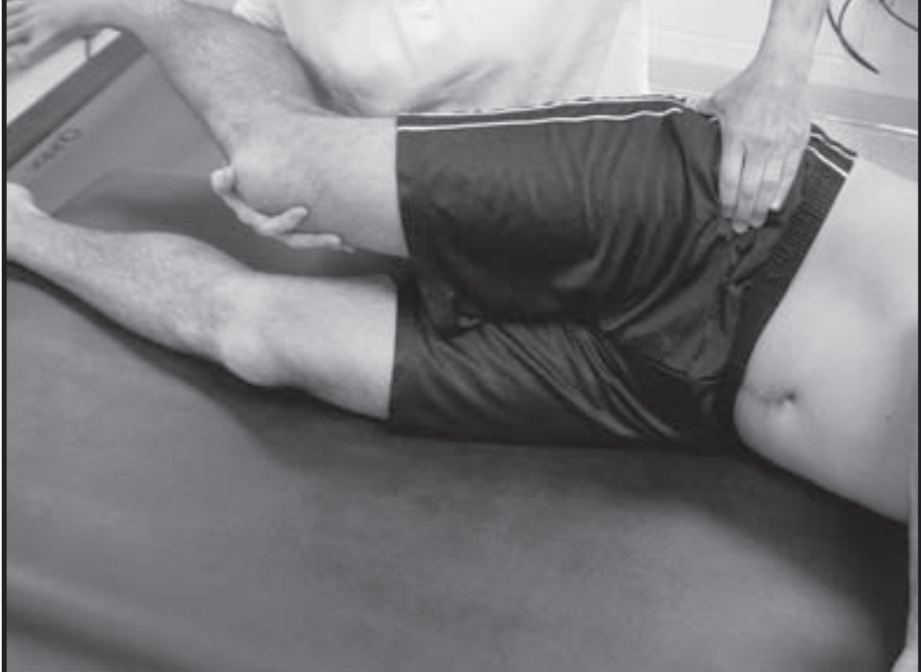
Grades 3/5 to +2/5
Subject position: Sidelying with the tested limb on top supported on a powder board or by the clinician. The knee is positioned loosely in extension and the bottom hip and knee are flexed for stability.
Stabilization: The clinician stabilizes the pelvis against the table.
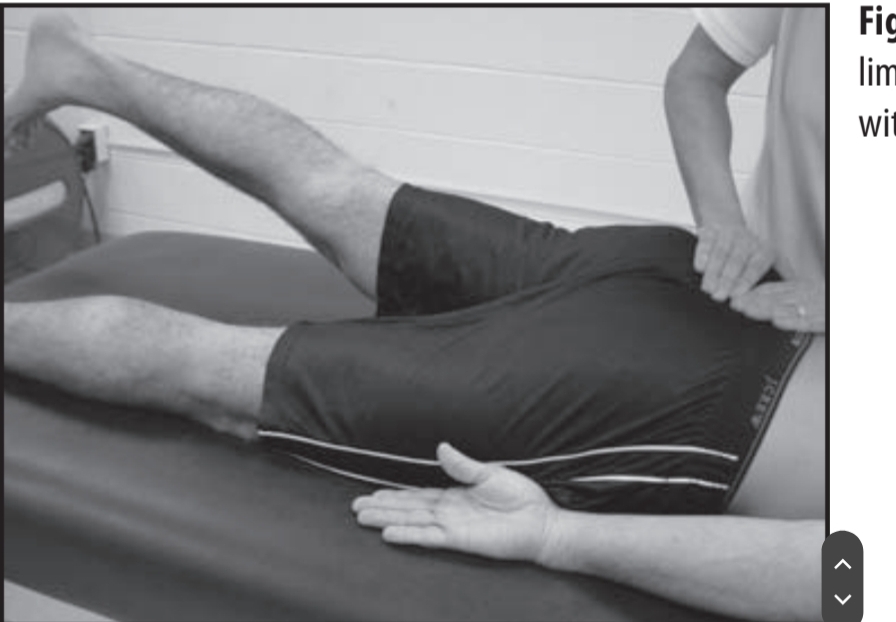
Grades 2/5 to −2/5
The subject extends the hip through the maximal range of motion
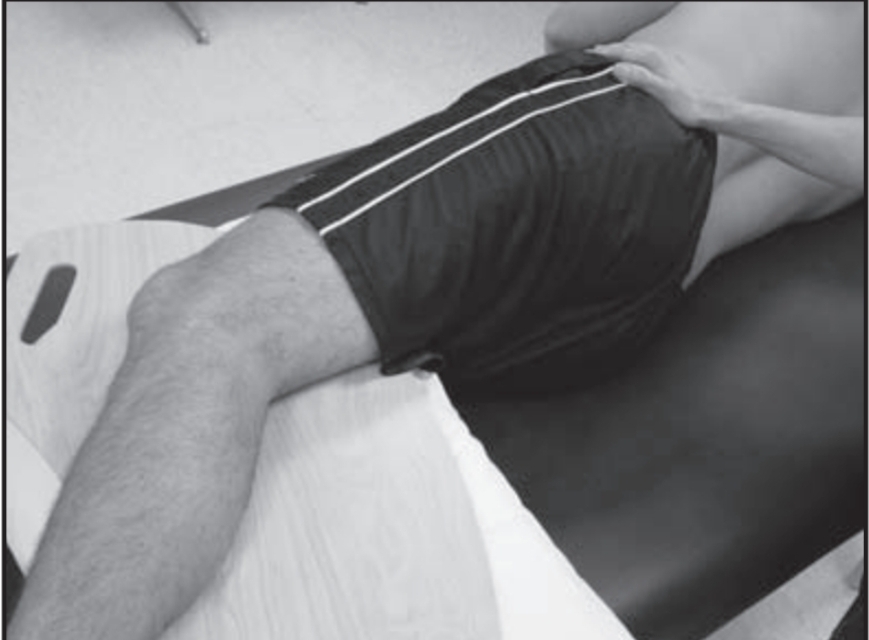
Grades 1/5 to 0/5
The proximal hamstrings are palpated at the ischial tuberosity.
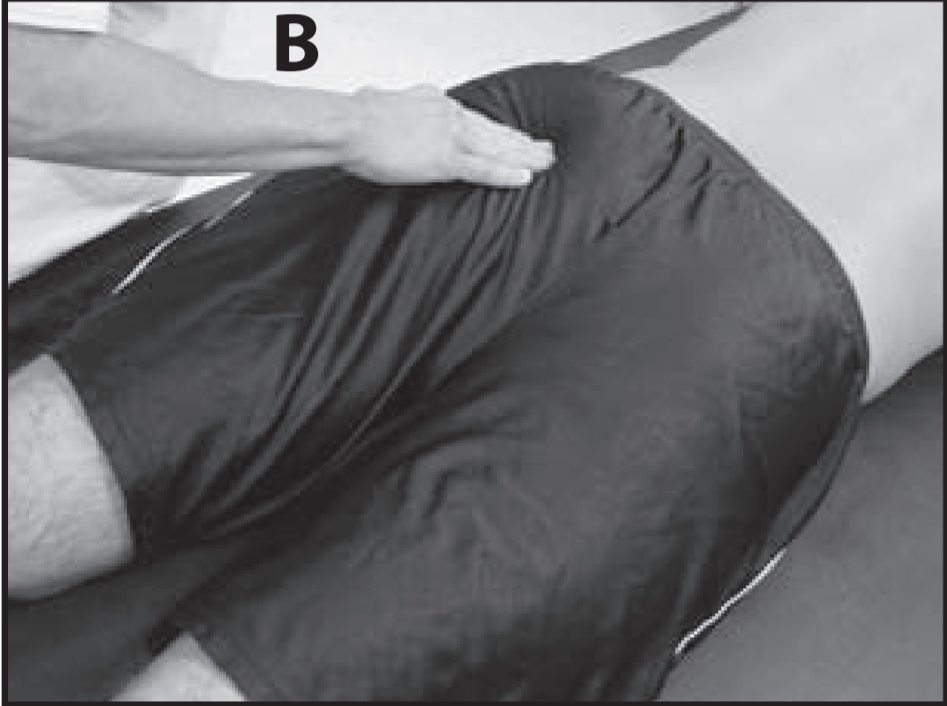
Hip Abduction
Active Range of Motion : 0 to 45 degrees
During MMT of hip Abduction, the primary muscles involved in extending the hip joint are the Gluteus medius and Gluteus minimus. MMT also involves various Secondary muscles in abducting the hip joint, such as the Upper fibers of the gluteus maximus, Tensor fasciae latae, Obturator internus, Gemellus superior and inferior, and Sartorius.
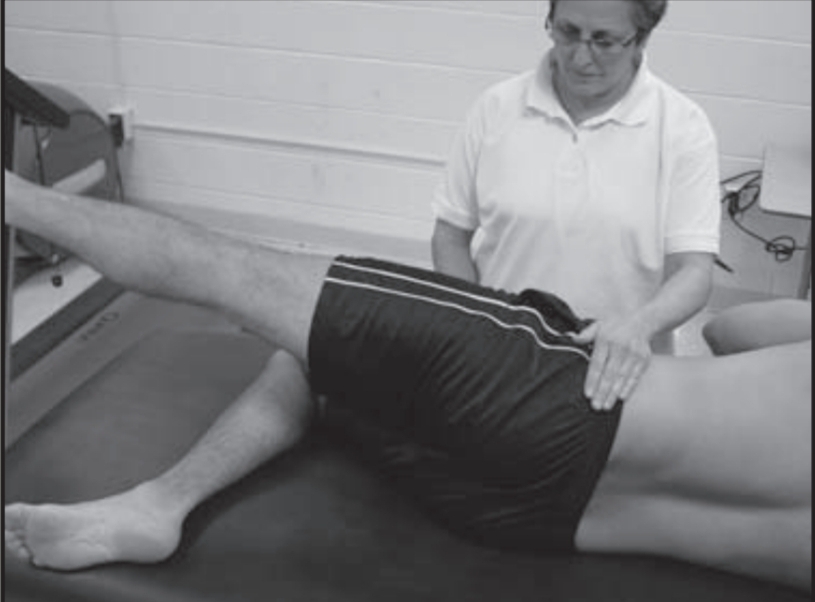
Grades 5/5 to +3/5
Subject position: Sidelying with the bottom hip and knee flexed for stability; the tested limb lies on top with the hip and knee extended and in neutral.
Stabilization: The clinician stabilizes the pelvis.
Resistance is applied on the lateral aspect of the thigh just proximal to the knee joint.
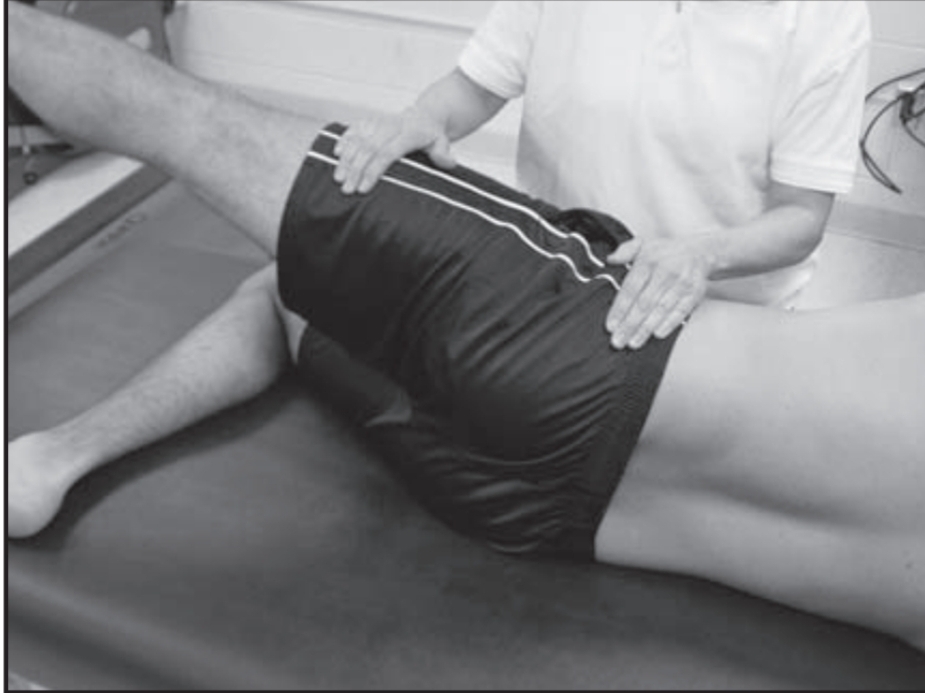
Grades 3/5 to +2/5
Subject position: Supine with the tested limb in extension resting on a smooth surface or supported by the clinician. Stabilization: The clinician stabilizes the pelvis
The subject abducts the hip through the maximal range of motion without resistance
Grades 2/5 to −2/5
The subject abducts the hip through the available range of motion.

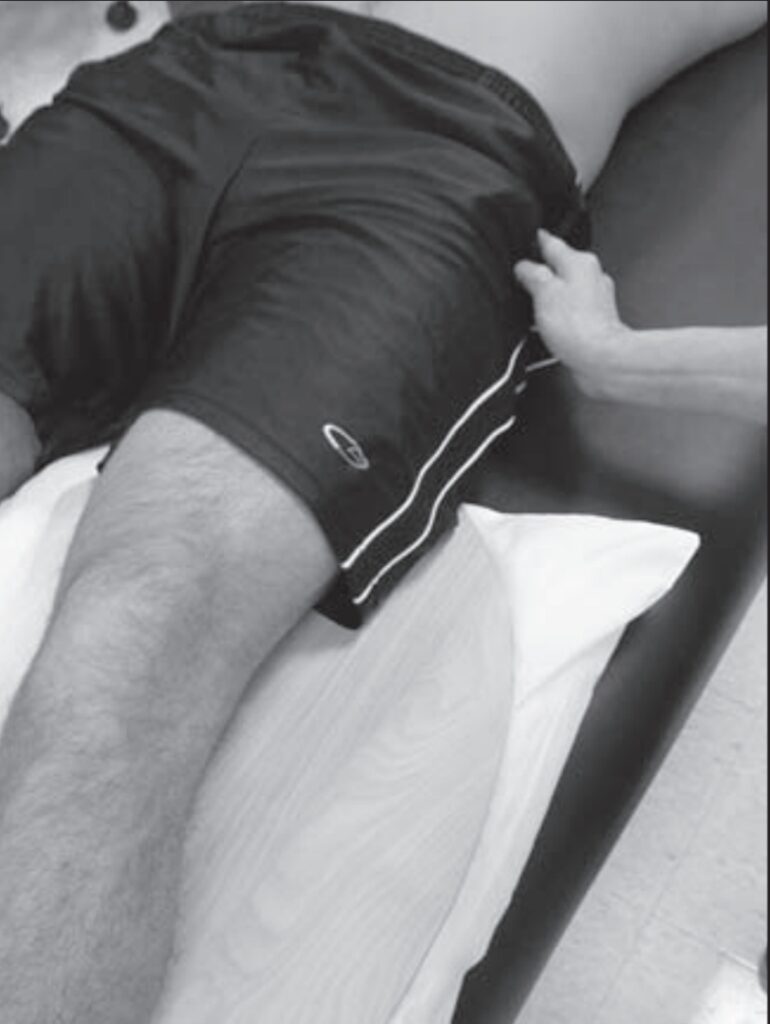
Grades 1/5 to 0/5
The gluteus medius is palpated on the lateral aspect of the hip just superior to the greater trochanter as the subject attempts to abduct
Hip Adduction
Active Range of Motion :0 to 30 degrees
During MMT of hip Adduction, the primary muscles involved in the adduction of the hip joint are the Adductor magnus, Adductor longus, Adductor brevis, Pectineus, and Gracilis. MMT involves various Secondary muscles in the adduction of the hip joint such as Upper fibers of Obturator externus • Inferior fibers of the gluteus maximus.
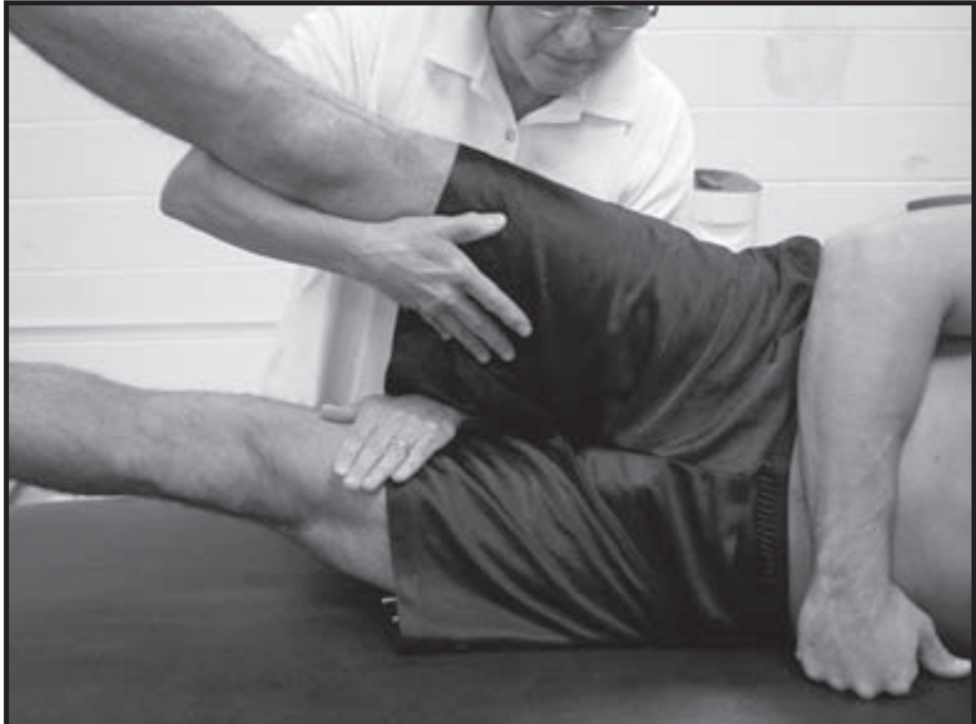
Grades 5/5 to +3/5:
Subject position: Sidelying with the tested limb resting on the table and the nontested limb supported by the clinician in a position of 25 degrees of abduction.
Stabilization: The pelvis is stabilized by the clinician against the tabletop.
Resistance is applied proximal to the knee joint on the medial aspect of the thigh into abduction.
Grades 3/5 to +2/5
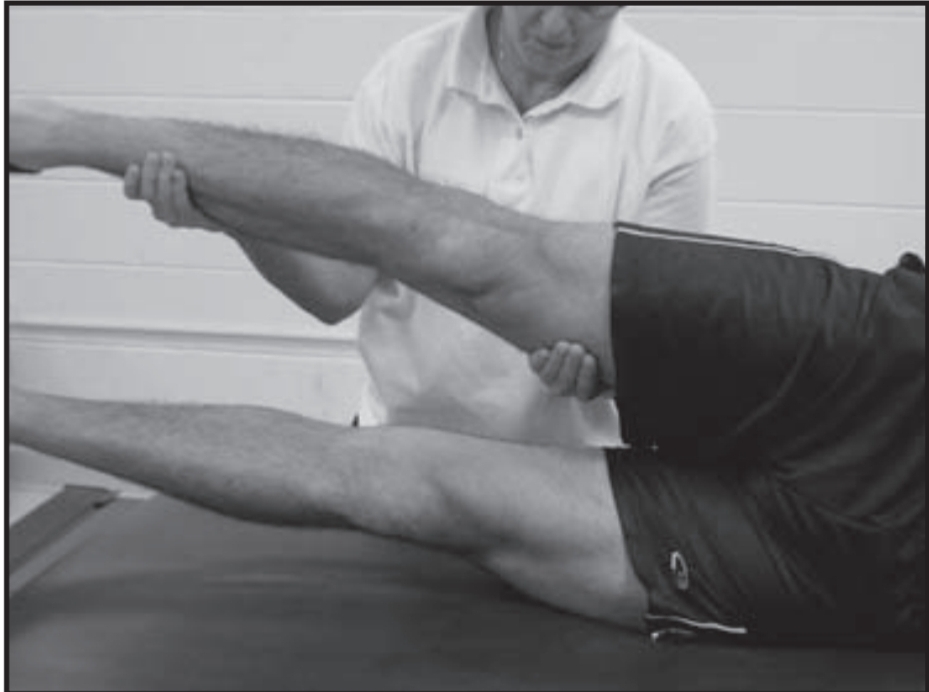
Subject position: Supine with the tested limb supported by the clinician in a slight amount of abduction and the non-tested limb resting in 25 degrees of abduction. Stabilization: Stabilization is achieved through the weight of the pelvis/ trunk on the tabletop
The subject adducts the hip through the maximal range of motion without resistance.
Grades 2/5 to −2/5
The subject adducts the hip through the maximal range of motion.
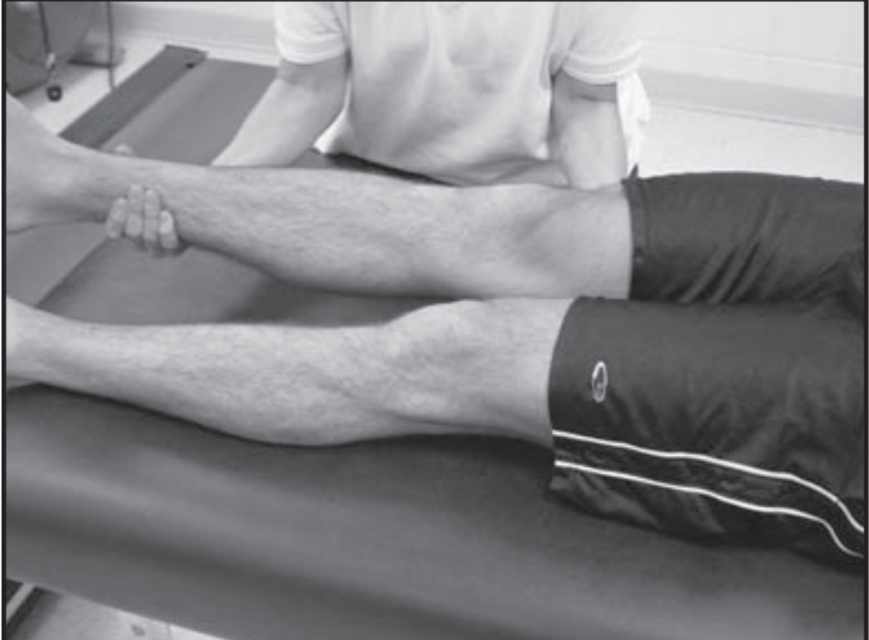
Grades 1/5 to 0/5
The adductor longus is palpated on the medial aspect of the thigh just inferior to the pubic arch, the adductor magnus is palpable along the medial aspect of the thigh (middle to lower portion), and the gracilis can be palpated along the medial aspect of the knee as the subject attempts to adduct the limb. (Shown: Palpating the adductor magnus.)