
Osteoporosis
Table of Contents
Definition
Osteoporosis is a bone disease where a progressive loss of bone protein causing a decrease in density (mass per unit volume) of a normally mineralized bone. It is called a silent epidemic because it remains undetected till the patient sustains a hip, rib, or spine fracture.
Osteoporosis is the most common skeletal disorder in the world, next only to arthritis, and very common in the perimenopausal age group. Osteoporosis is underdiagnosed and under-treated in Asia and the Indian subcontinent, particularly in rural areas, due to the low provision of technologies like DXA, which are required to make the diagnosis.
It was officially recognized as a disease by WHO in 1994. In every 1 in 2 women, 1 in every 4 men suffer an osteoporosis-related fracture once in their lifetime.
What are the Causes of Osteoporosis?
The most common cause of osteoporosis is in perimenopausal women and aging. Other than these we have other causes too.
Disuse
• Prolonged bed rest or inactivity.
- Prolonged casting or splinting.
- Paralysis, space travel, etc
Diet
- Calcium, protein, and vitamin C are low in the diet.
- Chronic alcoholism.
- Anorexia nervosa.
Drugs: Whose prolonged use causes osteoporosis are heparin, methotrexate, ethanol, glucocorticoids, etc.
Idiopathic variety is seen in the adolescent and middle-aged male population.
The genetic role is seen in osteogenesis imperfecta.
Chronic illnesses like rheumatoid arthritis, cirrhosis, sarcoidosis, renal tubular acidosis, etc.
Neoplasm-like bone marrow tumors (myeloma, lymphoma, leukemia).
Endocrine abnormalities: Hyperparathyroidism, increased levels of glucocorticoids, estrogens, etc
Aging process: The rate of bone resorption is greater than bone formation in aging process.
Clinical Features
- The patient complains of acute pain in the middle or low thoracic or high lumbar region. Sudden movement, sitting, sneezing, coughing, etc. increases pain. Rest relieves it.
- The most common symptom of osteoporosis is back pain secondary to vertebral compression.
- In some cases, fractures of the axial skeleton may be seen with trivial trauma.
- The patient shows wrinkled skin and loses vertebrae height, leading to progressive height loss.
- Fractures become common in this condition; the most prone area is the neck of the femur, long bone, wrist, and ankle.
- Backache is the most common presentation in osteoporosis.
Types of osteoporosis
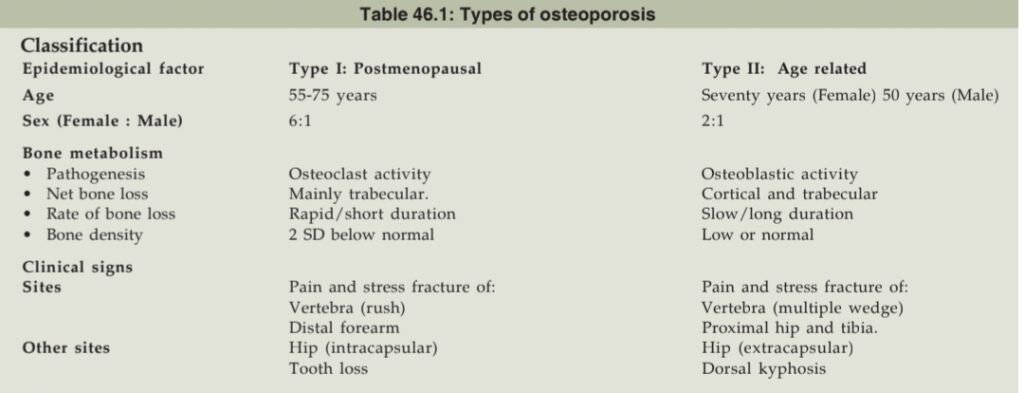
There are two types of osteoporosis. Type 1 is postmenopausal and type 2 age related.
Postmenopausal
Age-related
Diagnosis
Radiograph changes seen in the spine are:
- Loss of vertebral height due to symmetric transverse compression.
- Biconcave central compression (Codfish spine) due to the pressure of the bulging disk into the bodies.
Other bones
- Ground glass appearance due to generalized rarefaction.
- Singh’s index is the grading of the trabecular pattern of the neck of the femur from 1-6.
- Metacarpal index, etc.
- Pathological fractures. Densitometry Techniques for bone mass measurement
- Single photon absorptiometry is used to assess the amount of cortical bone mineral in the appendicular skeleton.
- The mineral status of the axial skeleton is assessed by dual photon absorptiometry (DEXA) and quantitative CT scan.
.• Total body neutron activation analysis to determine the calcium content of the entire body.
Transiliac bone biopsy: It is an important diagnostic tool in patients of more than 50 years in postmenopausal diseases.
Blood chemistry: Serum calcium, phosphorus, and alkaline phosphatase levels are usually normal
What is osteoporosis treatment?
The most preferred osteoporosis treatment is categorized into general measures, exercises, diet and drug therapy. Preventing osteoporosis is a lot easier than treating it.
General measures
- High protein and calcium-rich diet.
- Adequate rest
- Muscle relaxants and supports like belts, collars, etc. for symptomatic relief of pain.
- Spinal orthosis when the patient is erect and mobile
Exercises
Exercises like walking and light aerobics are beneficial.
- Posture exercise: Wall arch, back bending and wall sliding postural exercises help to improve posture and overcome a hunched back.
- Fall prevention is of utmost importance.
The basic preferences of patients are as follows ;
Calcium supplements in the dose of 1000-1500 mg/ day and vitamin D analog (0.25 mg BD or vitamin D in the dose of 600–2800 IU/day).
First Preference
Perimenopausal and early postmenopausal (first 5 years) estrogen replacement therapy (0.625 mg/ day).
Second Preference
For the next ten years, SERMS (e.g., Raloxifene). They are known to decrease estrogen’s dreaded side effects (like causing an increased incidence of uterine or breast cancers), while maintaining their beneficial effects (like increasing bone mineral density), decreasing menopausal symptoms, cardioprotective activity, etc. SERMS are known to act by selectively blocking certain estrogen receptor sites, hence their name.
Third Preference
Alendronate (10 mg/day). This is preferred next due to its proven efficacy in decreasing hip fractures.
Fourth Preference
Calcitonin 200 IU puff/day intranasal or 100 IU subcutaneously. This is found to be very effective in reducing the pain due to crushed fractures of the vertebra.
Fifth Preference
Combination of the above drugs. However, despite the several options, the final choice is of the treating physician, weighing all the necessary factors.
Prevention of Osteoporotic Fractures
The following measures help prevent osteoporotic fractures:
- Anti-fall measures for old persons at home by evaluating and correcting home hazards and encouraging exercises and other physical activities.
- Vitamin D (700-800 IU) with or without calcium (1200 mg/day) daily doses for all persons > 60 years of age.
- To prevent hip, spine, and non-vertebral fractures bisphosphonates in varying doses (E.g. Alendronate 70 mg/week, Ibandronate 150 mg/month, Risedronate 35 mg/week) are recommended.
- In post-menopausal women with osteoporosis, raloxifene is used.
- Calcitonin can be used to prevent recurrent vertebral fractures