Manual Muscle Testing Of Shoulder joint
Table of Contents
MMT of Shoulder joint
MMT(manual muscle testing) of shoulder joint are recorded as numerical scores ranging from zero (0), which represents no activity, toΒ five (5), which represents a βnormalβ or best-possible response to the test or as great a response as can be evaluated by aΒ manual muscle testing.
The shoulder flexion and shoulder extension are covered here if you want to see other movement of shoulder joint such as adduction and abduction then visit other post too.Β
Shoulder Flexion
Active Range of Motion : 0 to 180 degrees.Β
During MMT of shoulder flexion theΒ Primary muscle involve in flexion of Shoulder joint are Anterior deltoid, Coracobrachialis (up to 90 degrees of shoulder flexion). MMT lead to involve the various Secondary muscleΒ in flexion of Shoulder joint such asΒ Middle deltoid ,Pectoralis major ,Biceps brachii.Β
Grades 5/5 to +3/5:
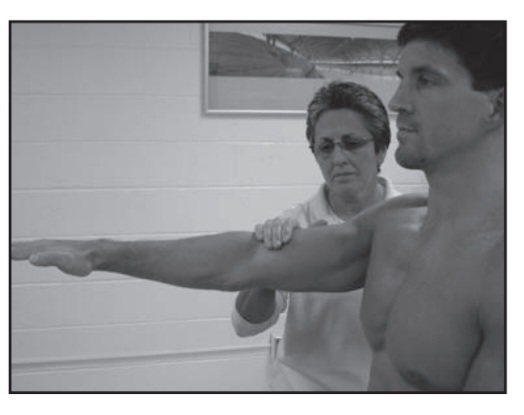
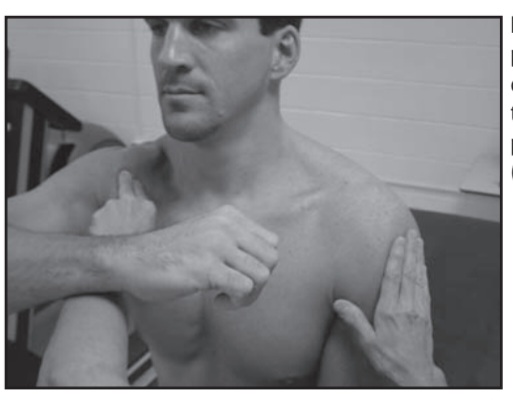
Subject position: Sitting with the shoulder flexed to 90 degrees, palm facing down.
Stabilization: The clinician stabilizes the opposite scapula
Resistance is applied in downward direction just proximal to elbow joint.

Grades 3/5:
The subject flexes the shoulder to at least 90 degrees without resistance.
Β

Grades 2/5 to β2/5:
Subject position: Sidelying with the upper extremity supported on a smooth
surface and in neutral rotation with elbow in flexion.
Stabilization: The opposite shoulder is stabilized by the weight of the body
against the table.
The subject flexes the shoulder through the maximal range of motion.

Grades 1/5 to 0/5:
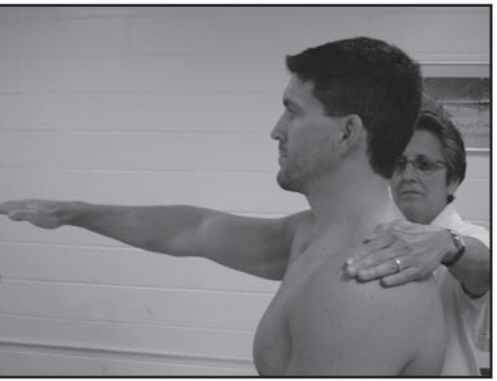
The anterior deltoid is the palpated inferiorly to lateral third of the clavicle. The coracobrachialis is palpated in the axilla along the inferior border of pectoralis major muscle. (Shown: Palpating the anterior deltoid.)

Shoulder Extension
Active Range of Motion : 180 to 0 degrees
During MMT of shoulder extension the Primary muscle involve in extension of Shoulder joint are Latissimus dorsi ,Teres major, Posterior deltoid. MMT lead to involve the various Secondary muscle involve in extension of Shoulder joint are Long head of the triceps brachii.
Grades 5/5 to +3/5:
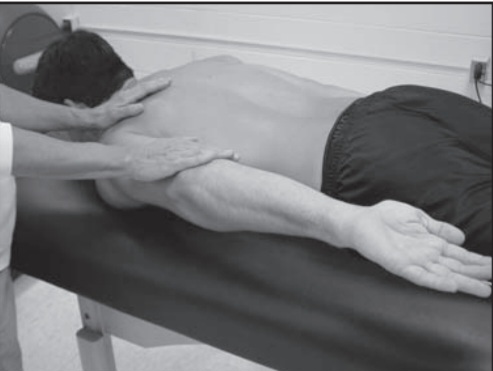
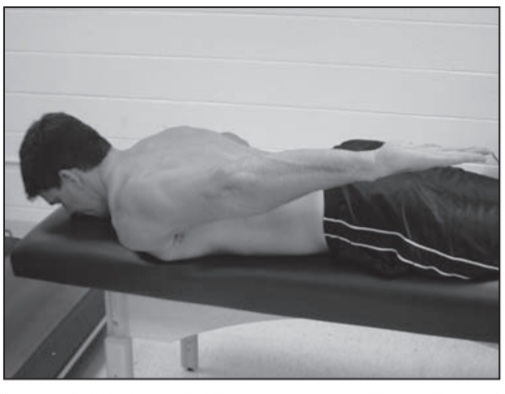
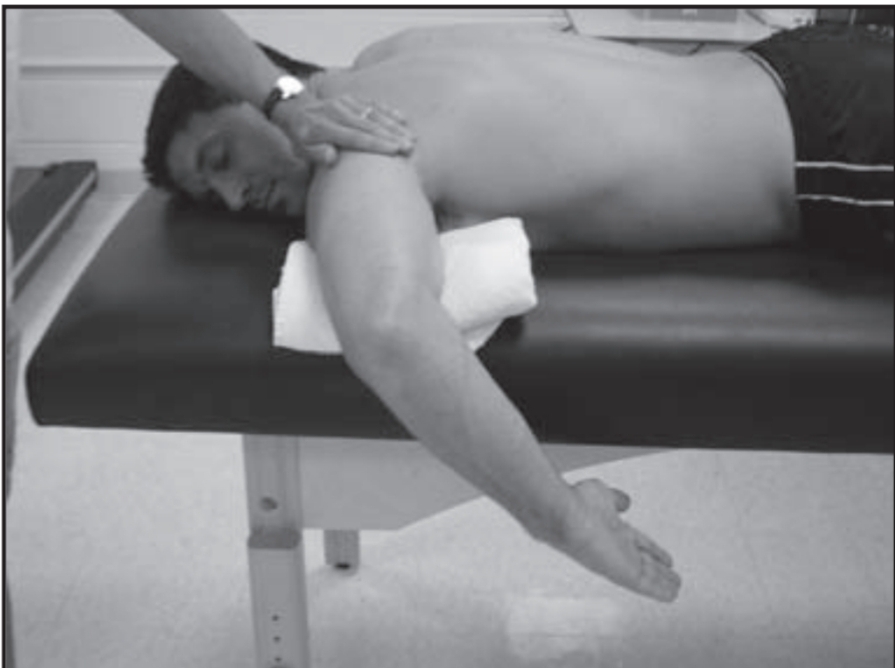
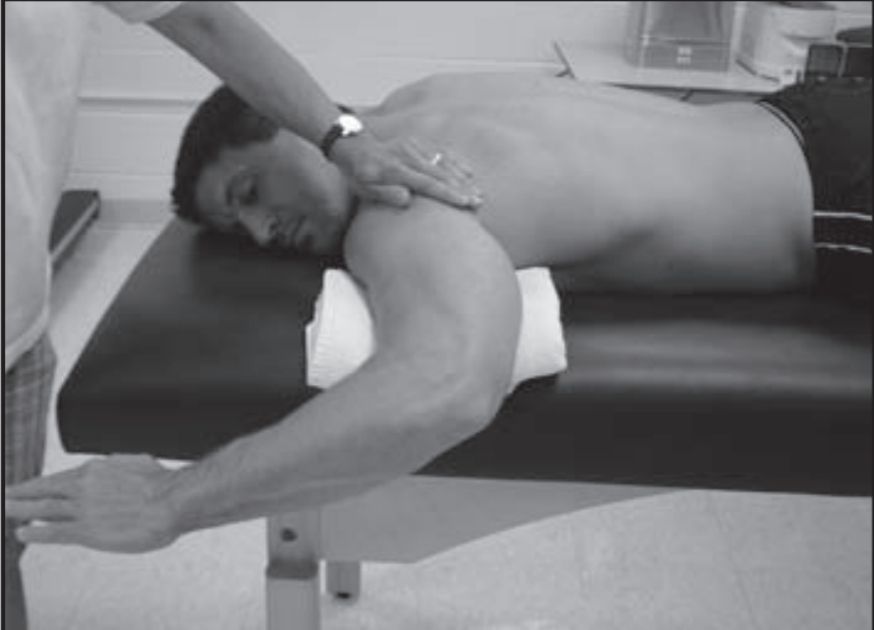
Subject position: The subject should be prone with the arms at the sides and
with the palm facing up toward ceiling.
Stabilization: The weight ofΒ thorax against the table.
Resistance is applied at the elbow in a downward direction toward the floor.

Grade 3/5:
Β The subject lifts arm up toward the ceiling through maximal range of motion without resistance.

Grades 2/5 to β2/5:
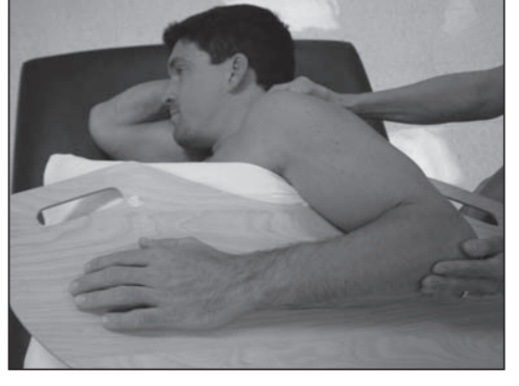
Subject position: Sidelying with the upper extremity supported on a smooth
The surface and in neutral rotation with the elbow in flexion.
Stabilization: The opposite shoulder is stabilized by the weight of the body
against the table.
The subject extends the shoulder through the maximal range of motion

Grades 1/5 to 0/5:
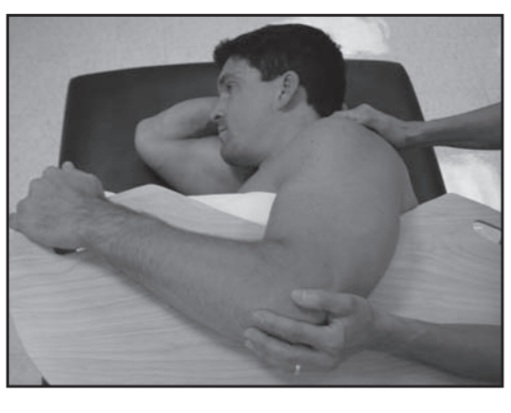
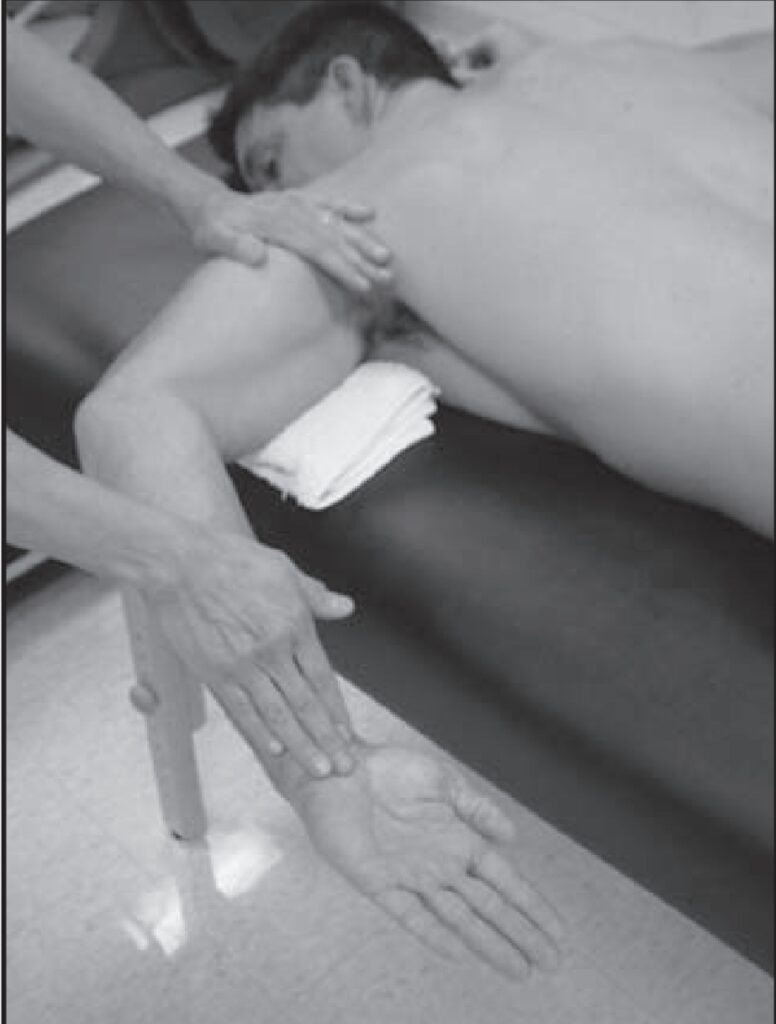
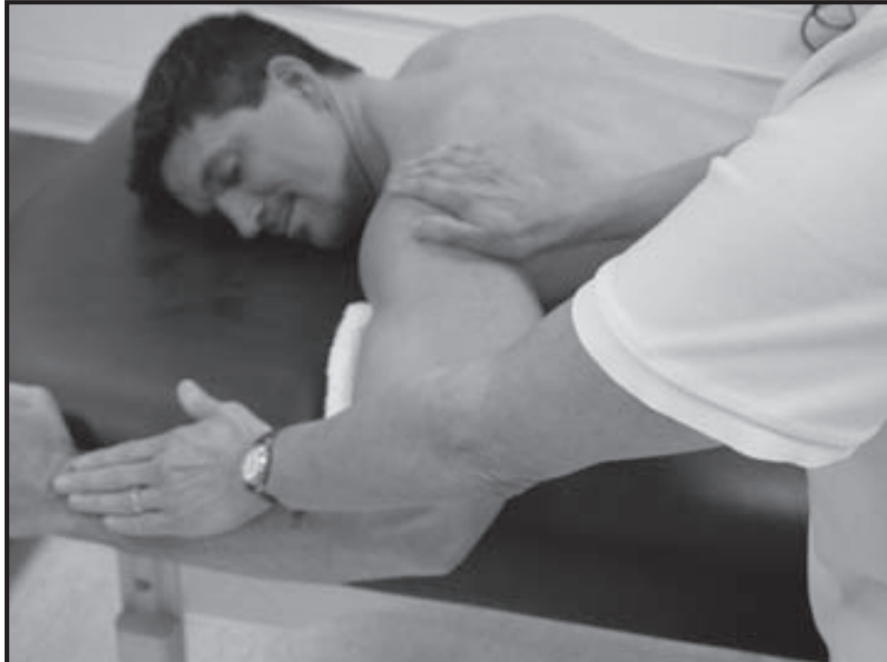
The latissimus dorsi is palpated inferiorly and lateral to inferior angle of scapula on the side ofΒ thoracic wall as the subject attempts to extend the shoulder. The teres major and posterior deltoid are palpable at the lateral border of the scapula just below the axilla and just superior to the axilla, respectively.
(Shown: palpating the latissimus dorsi)

Internal (Medial) Rotation
Active Range of Motion : 0 to 90 degrees
Prime Muscles involved Subscapularis ,Pectoralis major,Teres major,Latissimus dorsi.
Grades 5/5 to +3/5:
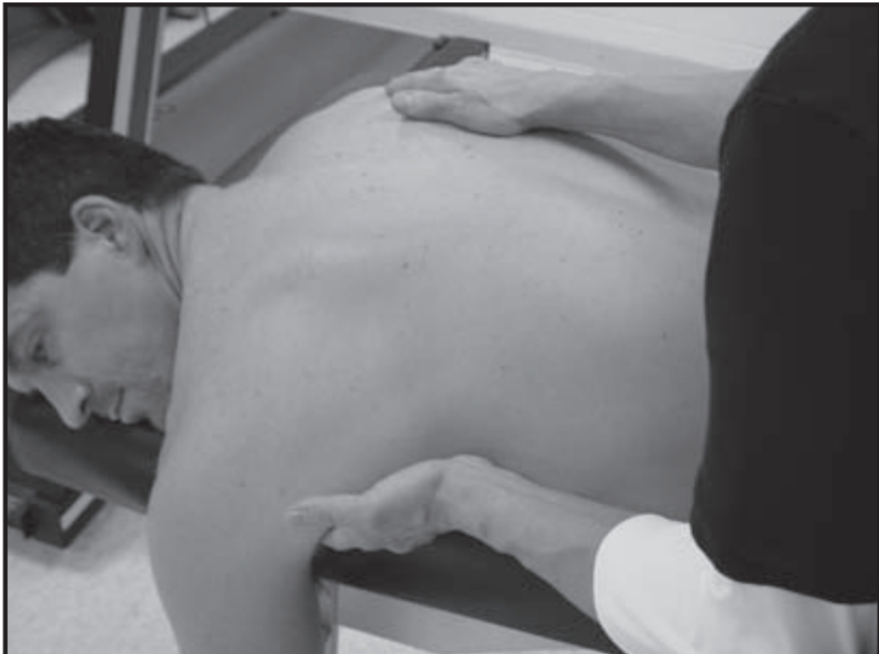
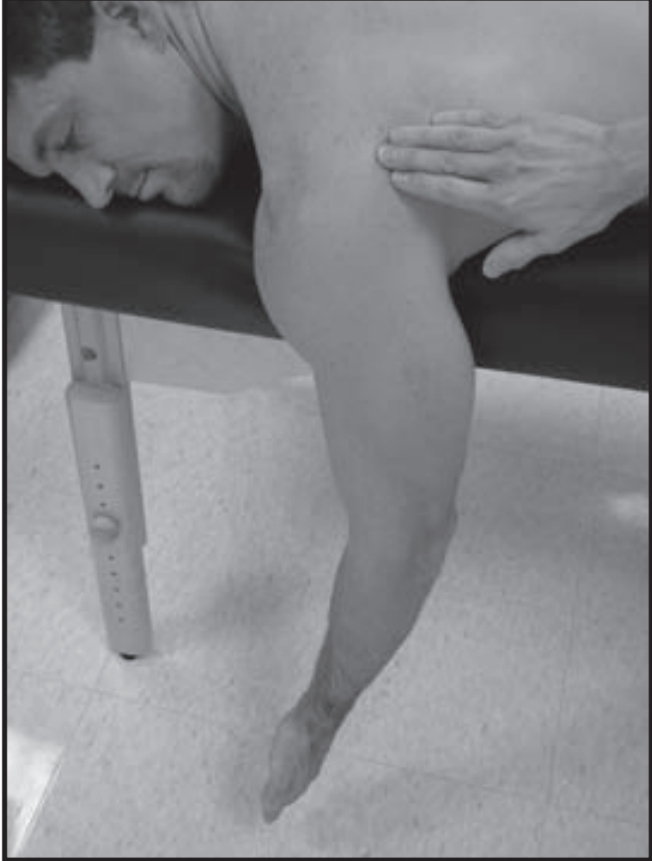
Subject position: Prone with the shoulder abducted to 90 degrees and the elbow flexed over the edge of the table. The head should be rotated to tested side.
Stabilization: The clinician stabilizes humerus and thorax.
Resistance is applied to the flexor surface of forearm just proximal to the wrist.

Grades 3/5 to +2/5
The subject internally rotates shoulder through the maximal range of motion without resistance.

Grades 2/5 to β2/5
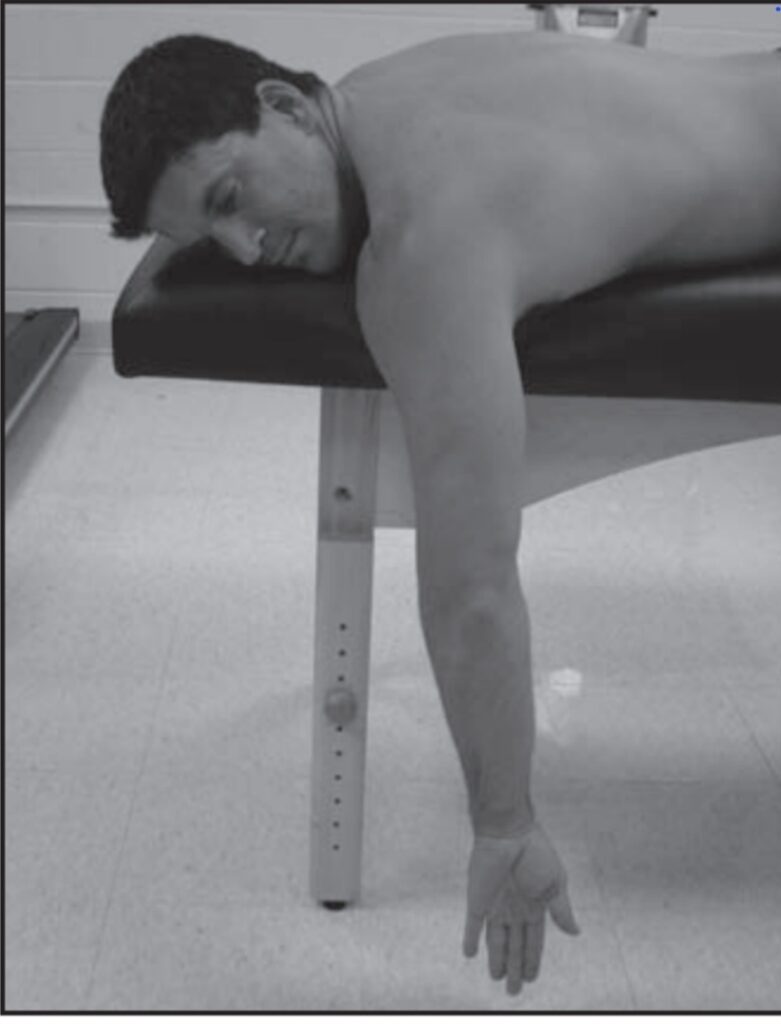
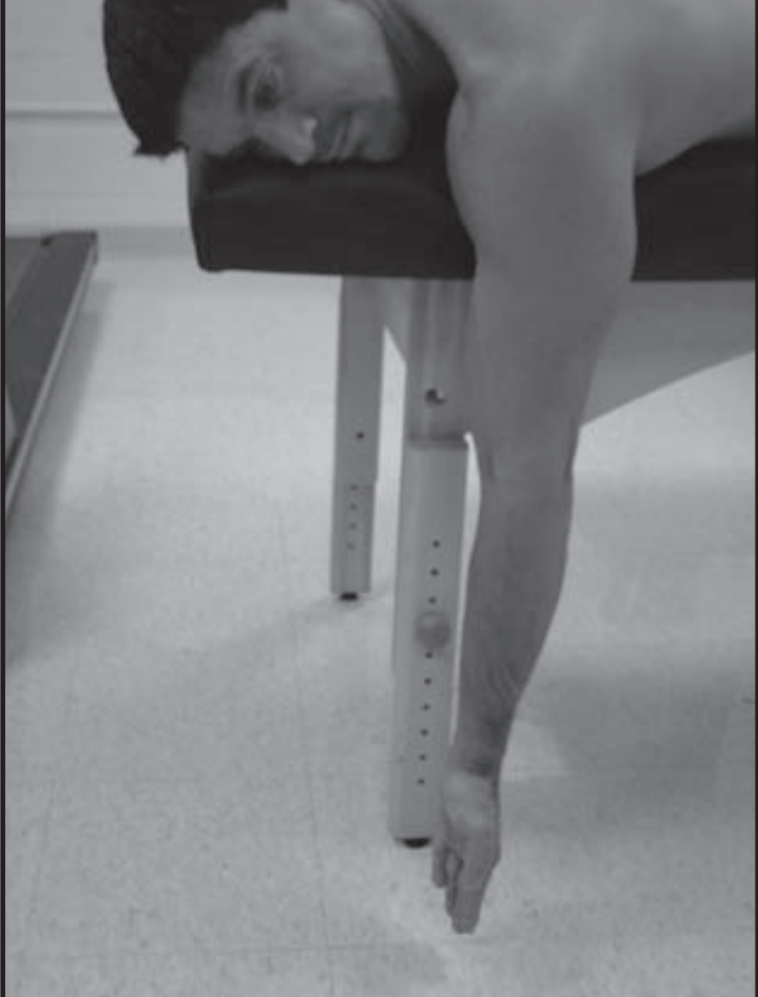
Subject position: Prone with the tested arm hanging freely over the edge of the table with the palm facing the table. The head should be rotated to tested side.
Stabilization: The weight of the trunk on the table.The subject internally rotates the shoulder so that the palm faces away from the table. The thumb should initiate the movement.

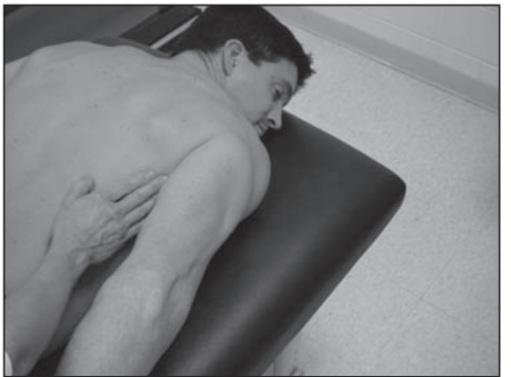
Grades 1/5 to 0/5
The subscapularis is palpated on costal surface of the scapula just deep to the latissimus dorsi muscle as the subject attempts to internally rotate shoulder.

External (Lateral) Rotation
Active Range of Motion (ROM): 0 to 90 degrees.
Prime muscles involved are , Infraspinatus ,Teres minor, Posterior deltoid.
Grades 5/5 to +3/5
Subject position: Prone with the shoulder abducted to 90 degrees and the elbow flexed over the edge of the table. The head should be rotated to tested side.
Stabilization: The clinician stabilizes the humerus and the thorax.
Β Resistance is applied to the extensor surface of the forearm just proximal to the wrist.Β Β

Grades 3/5 to +2/5
The subject externally rotates shoulder through the maximal range of motion without resistance.

Grades 2/5 to β2/5
Subject position: Prone with the tested arm hanging freely over the edge of the table with the palm facing the table. The head should be rotated to tested side.
Stabilization: The weight of the trunk on the table.
Β

Grades 1/5 to 0/5
The infraspinatus is palpated inferiorly to the spine of the scapula and the teres minor is palpated along the lateral border of the scapula superior to the inferior angle of the scapula as the subject attempts to externally rotate the shoulder.
(Shown: Palpating the teres minor.)

Recent Post
Sharp Pain in the Heel of My Foot: Causes and Treatment
Sharp Pain in the Heel of My Foot: Causes and Treatment Pain in the heel of my foot is one of the most common foot
Why my heel hurts when i walk : Possible Reasons and Fixes
Why my heel hurts when i walk : Possible Reasons and Fixes Heel pain can make everyday activities difficult. Many people notice discomfort while getting

8 best pain killers for muscle pain
8 best pain killers for muscle pain Pain is one of the most common health complaints worldwide, and pain killers are often the first solution

Immediate Gout Pain Relief Fast in 24 hours
Immediate Gout Pain Relief Fast in 24 hours Gout is a form of inflammatory arthritis caused by elevated serum uric acid levels, leading to the
5 Effective knee pain exercises at home
5 Effective knee pain exercises at home Knee pain exercises at home are a simple way to reduce pain, ease stiffness in an aching knee,

Why My Knee Hurt and Fix It?
Why My Knee Hurt and Fix It? Knee hurt is a common problem that can affect your daily routine, especially when walking, running, or climbing