
WATER-SOLUBLE vitamins consist of a large number of substances. These include ascorbic
acid and the B-complex vitamins. The water-soluble vitamins are absorbed quickly in the body and the amounts not utilised are excreted in the urine.
Some of the water-soluble vitamins are partly lost in cooking procedures. This factor has to be kept in mind while meeting their requirements.
Vitamin B-Complex
Six members of this group, namely, thiamin, riboflavin, niacin, pyridoxine, folic acid and vitamin B12 are included in the RDA,. A diet, which provides adequate amount of these six vitamins, also, carries enough of the other members of this group.
Thiamin
Thiamin (also known as vitamin B1 and aneurin) was first isolated in 1926 from rice polishings by Jansen and Donath. They isolated 100 mg of the crystals from 100 kg of rice polishings. Subsequently, it was synthesised in 1936 by R.R. Williams and is now available in market in form of thiamin hydrochloride.
Functions:
The basic function of thiamin as a coenzyme is related to release of energy from glucose and its storage as fat, thus it makes energy available for normal growth and function of the body. Thiamin pyrophosphate, the coenzyme form of thiamin, is necessary for catalysing the oxidation of carbohydrates in the body. This reaction releases energy in system.
Thiamin is needed to maintain normal function of three systems in the body, gastrointestinal, nervous and cardiovascular system.
- Gastrointestinal System
Thiamin helps to produce energy needed for the cells of smooth muscles and secretory glands. In its lack, there is lack of muscle tone and deficient gastric secretions; as a result there is poor appetite, indigestion, constipation and poor stomach function.
- Nervous System
The central nervous system need glucose as energy source for its function. When there is a lack of thiamin, the energy is not released and nerves are unable to work, with loss of response and alertness. The result is apathy, fatigue and irritability. If deficit continues, nerve tissues may be damaged causing pain and finally paralysis.
- Cardiovascular System
If energy supply is not continuous, due to lack of thiamin, the heart muscle weakens and may lead to heart failure. The blood vessel walls become weak, vessels may dilate and fluid may accumulate in lower part of legs.
Food Sources
Plant sources
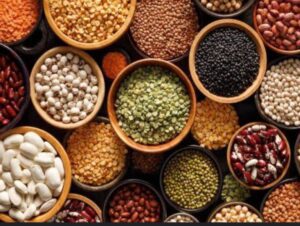
Pulses, nuts, oilseeds and whole grain cereals, Leafy green vegetables. Parboiled rice and fresh peas are good sources of the thiamin
Animal foods
milk, eggs, fish and meat are fair sources

Cereal
The main source of thiamin in Indian dietary is cereals but refining of cereals reduces thiamin content with most of thiamin being lost in polishing.

Chapatis
Chapatis made form whole wheat flour, when eaten as a staple, provide 50 per cent of the day’s thiamin needs.

Dal
The dal eaten with it, provides 25 per cent of the thiamin needed. Seventy-five per cent of the thiamin is lost when wheat flour is refined to manufacture maida.
Under ordinary conditions of cooking, most of the thiamin losses occur due to solution and not
because of heat-inactivation. If cooking water is not discarded, most of the thiamin (85–95 per cent) is retained.

Effect of Deficiency
- Anorexia
- Nausea
- Vomiting
- Mental depression,
- Moodiness
- Irritability
- Forgetfulness
- Confusion
- fear
Riboflavin
Riboflavin, a more heat-stable factor, was discovered after thiamin. It was isolated from yeast by Warburg and Christian. Kuhn and coworkers synthesised it in 1935. It was formerly known as vitamin B2 or vitamin G.
For example, prolonged exposure of milk to direct sunlight may decrease the riboflavin content of
milk considerably.
Functions:
The primary form of riboflavin is as an integral part of the coenzymes flavin mononucleotide (FMN) and flavin-adenine dinucleotide (FAD). Riboflavin functions as vital part of coenzymes in both energy production and tissue protein building
Food Sources:
- Milk
Milk is a rich source of riboflavin. So also are products derived from milk such as yoghurt (curds), butter milk, milk powder and concentrated milk . There is no riboflavin in butter and ghee because the vitamin is water-soluble and remains in the water extract during the removal of butter from milk or curds
- Liver and kidney of animals and birds are also good sources of riboflavin.
- Pulses, green leafy vegetables, eggs, and meat contain a fair amount
- Cereals, roots and fruits are poor sources of riboflavin
Effect of Deficiency:
- Photophobia(fear of
light). - Cheilosis, angular stomatitis, naso-labial dyspepsia and scrotal dermatitis( The lips become inflamed, cracks are observed at the corners of the mouth and the tongue is swollen, red and sore)
Niacin
Goldberger in 1915 observed the existence of a pellagra-preventing factor, which he related to vitamins B . He found that the same factor cured black tongue in dogs. In 1937 Elvehjem and coworkers discovered that nicotinic acid was effective in curing black tongue in dogs. Smith and others found that nicotinic acid cured pellagra in humans. Thus a known substance (nicotinic acid) was identified as vitamin. Cowgill suggested that term ‘niacin’ be used for nicotinic acid to avoid association with nicotine of tobacco.
Functions:
Niacin functions in body as a component of two important co-enzymes NAD and NADP. The full name is nicotinamide adenine dinucleotide and it’s phosphate derivative respectively. These coenzymes are involved in tissue respiration and synthesis and the breakdown of glucose to produce energy. Niacin works in close association with riboflavin and thiamin in the cell metabolism system that produces energy. It is necessary for growth.
Souces:
groundnuts
cereals
Milk, eggs, vegetables and fruits contain very small amount of niacin. Brewer’s yeast is a very
concentrated source of niacin.
Effect of Deficiency:
- Lack of appetite
- diarrhoea
- dizziness
- insomnia
- irritability
- pellagra
- fear
Pyridoxine
Three naturally occurring pyridine derivatives (pyridoxine, pyridoxal and pyridoxamine) are known as vitamin B6
Functions:
Vitamin B6 is a co-factor for several enzymes connected with the metabolism of amino acids. It is also believed to have a role in the formation of antibodies.
Sources
Data on vitamin B6 contents of foods are limited. However, pulses, wheat and meat are known to be rich sources, while other cereals are fair sources. Vegetables and fruits are relatively poor source.
Deficiency:
The symptoms of vitamin B6 deficiency—such as peripheral neuritis, anaemia, glossitis, cheilitis and seborrheic dermatitis are similar to those of other B vitamins. Hence extent of pyridoxine deficiency in India is not known.
Vitamin B12
Vitamin B12 or cyanocobalamin was the last member of the B vitamins discovered in 1948. It contain cobalt and phosphorus and is red in colour. It is found only in animal food and higher plant are unable to synthesise it.
Functions:
It promotes normal growth and development. It’s helps with certain types of nerve damage, and treats pernicious anaemia. It is essential component of several coenzymes, which are needed in synthesis of nucleic acids. Its metabolism and use in body is closely related to folic acid. It is essential for the normal functioning of all cells, especially those of bone marrow, the nervous system and gastrointestinal tract.
Sources:
The richest sources are liver, and organ meats. Milk, eggs, muscle meat and fish are
good sources. Plant foods do not contain vitamin B12. It is not stable to heat and light; hence processed
foods are not good sources. For example, there is 10 per cent loss in pasteurisation and 40 to 90 per
cent loss in evaporation of milk.
Deficiency:
Uncomplicated deficiency is characterised by symptoms such as sore tongue, weakness, loss of weight, tingling of extremities, , mental ,apathy and other nervous abnormalities.
When there is lack of intrinsic factor, essential for the absorption for the vitamin, pernicious anaemia
results, in which there is degeneration of spinal cord. There is a low level of vitamin B12 in blood
and inability of new RBCs to develop normally resulting in megaloblastic anaemia. The condition can
be cured by injecting vitamin B12-intramuscularly.
Ascorbic Acid (Vitamin C)
Ascorbic acid closely resembles glucose in structure. The vitamin is white, crystalline, odourless
compound readily soluble in water. It is a strong reducing agent. It is comparatively stable in an acid
medium but is destroyed by the action of heat, oxygen and catalysts such as copper.
It is now made synthetically and synthetic product is relatively inexpensive
Functions:
Ascorbic acid performs a number of important functions in the body. It is a part of cementing material which hold the body cells firmly in place. Thus it’s plays an important role to build and maintain strong tissues in general, especially connective tissues (bone, cartilage, dentin, collagen, etc). Blood vessel tissue depends on vitamin C to form strong capillary walls.
Sources:
- Amla (nellikai, also called Indian gooseberry) is one of richest sources of ascorbic
acid, which contains 600 mg/100 g of fruit. Guavas and cashew apples contain 200 to 300 mg/
100 g. - Citrus fruits such as oranges, sweet lime, grape-fruit and pomelo are also excellent sources of
ascorbic acid - Drumsticks also have high ascorbic acid content.
- Leafy vegetables such as drumstick leaves, amaranth, cabbage, which are more frequently available,
are excellent sources of vitamin C - Sprouted pulses such as Bengal gram and green gram are good sources and have proved to be of
value during drought and famine conditions.
Deficiency:
If ascorbic acid is not present in sufficient quantity, the cementing material is not
formed in adequate amounts. Tiny breaks occur in the walls of very small blood vessels and haemorrhages result. The tissues of gums become tender and often bleed. In severe cases, soft tissues around joints become swollen and are painful. There is general weakness, lack of appetite and thickened and scaly skin. Spongy gums and haemorrhages in body tissues are other symptoms of scurvy; these can be reversed by including ascorbic acid rich foods in diet.