
How to manage diabetes mellitus with diet?
Table of Contents
Diet therapy for diabetic patient
Diabetes is a chronic, degenerative disease that affects the way body uses food. In normal digestion, body converts sugars, starches and other substances into glucose, which is carried by the blood to every cell in the body. The glucose is used with the help of insulin (a hormone made in the pancreas) to produce energy for every action–pumping blood to writing to physical movements of our body .
Diabetics are unable to produce insulin, make too little or are unable to use it.
Diabetes is not a disease, which can be cured. It can only be kept under control by the patient with the help of the nutritionist assisted by the physician. If not kept under control, a number of complication occur. These include:
- loss of sensation in peripheral nerve, resulting in injury, infection and amputation of lower extremities
- Eye disorders leading to blindness
- Thickening of arteries and
- Kidney dysfunction.
Proper care of diabetes is essential to prevent or at least reduce incidence of complications. It
is vital that the patient learn all about the disorder and its management, for health care in diabetes is basically self-care.
A proper nutrition plan is the foundation of successful diabetes management. Control of diabetes
rests on three factors: diet, exercise and insulin.
Nutritional Care
It is the cornerstone of diabetic therapy.
Energy
Energy needs are same as for other individuals. The aim is to attain and then maintain a healthy
weight for the body size and type. If an obese patient loses weight, it leads to improved glucose
tolerance. Ideally 55 – 70 per cent calories should be mainly from complex carbohydrate. The aim is to control the blood glucose and lipid levels.
Fibre:
It is observed that substituting highly refined carbohydrates in the diet with foods, containing complex carbohydrates and fibre, benefits both type I and type II diabetics. Such diets improves glucose tolerance control, often decreases insulin requirements and tends to lower serum cholesterol and triglyceride values. It also helps to control weight and lower blood pressure.
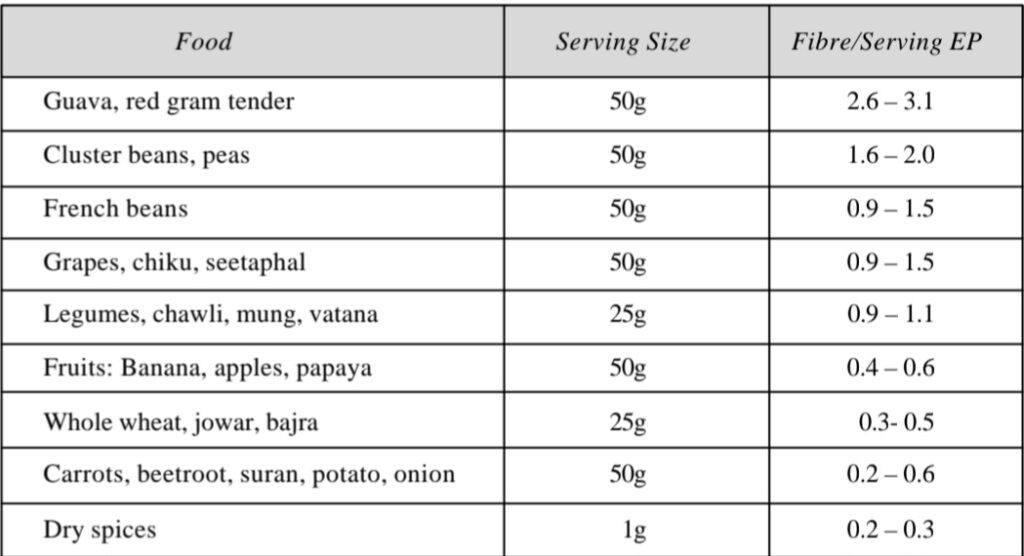
Intake of fruits is beneficial for diabetics. The soluble fibres (pectin, gums, hemicelluloses) present
in fruits increase transit time, slow glucose absorption and lower serum cholesterol. Fibre content of
common foods is given in table 1.1.
Lipids:
In diabetic diet, the total fat should be 20 to 30 per cent of the total energy. Of these
saturated fats contribute about a fourth (7-10%), monounsaturated half (10-13%) and polyunsaturated about a fourth (8-10%) of the total energy. Cholesterol content of the diet should be less than 300 mg per day.r day.
In a 2000 calorie diet, calories from fat would thus be 400 to 600, which amounts to about 45 to 65 grammes of fat in the diet, a third of it is taken in hidden form.
Proteins :
The recommended amount of protein is 0.8g/kg of ideal body weight. Adolescent children, pregnant or nursing mothers need increased intake up to 15 to 20 per cent of total energy.
Sweeteners:
Use of artificial sweeteners in reasonable amounts is acceptable to control total calorie intake.
Sodium:
A moderate sodium intake of 1 gram/1,000 calories is recommended, because many
diabetics are hypertensive or have hypertension. Foods containing sodium such as pickles, papads, and
baked food containing baking powder should be avoided.
Vitamins and Minerals:
Requirements are similar to those of other individuals. There is no need for supplements
Alcohol:
Alcohol is not a food and its use places an additional burden on system. Its use is not advisable especially when oral hypoglycemic agents are to be taken as parts of the therapy.
How do we translate the above guidelines into a diabetic diet prescription?
Suppose diabetic person is 50 years old, who is involved in light activity.
His healthy weight is 55 kg.
Total energy needed : 55 × 30 = 1,650 calories
Proteins : 0.8/kg or 0.8 × 55 = 44.0 g, rounded to 45 g.
45 × 4 = 180 calories from proteins (11%).
Fats: 28% or 16.50 × 28 = 462 calories/9 = 51g fat
CHO : 1650 – (180 + 462) = 1008/4 = 252g (61%)
Diet Plan:
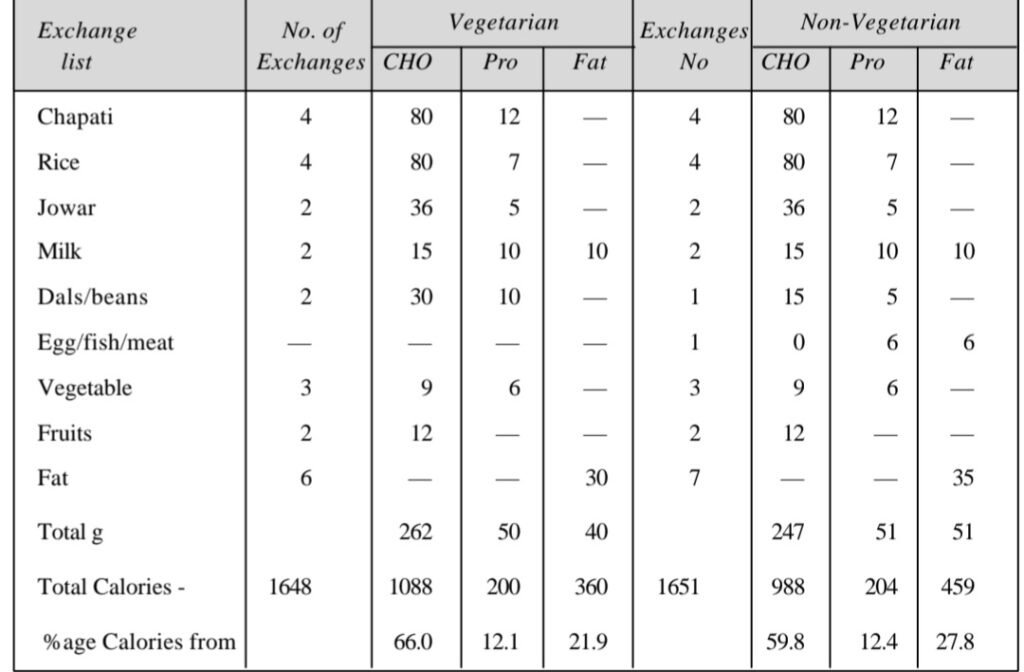
The diabetic has to follow the diet plan through the rest of her/his life. Hence the meal plan should be based on her/his normal schedule, meal pattern, food acceptance, food preparation methods and facilities available. It should also take into account the cultural – religious factors. Meal plans should be realistic, attractive and flexible, within the limits of the diet prescriptions. Meals should be as similar to the family meals as possible.
Meal Distribution:
It is important to distribute the carbohydrate foods in the meals through out the day. Avoid taking too high an amount of carbohydrates at any one meal. The type I diabetics need three meals and two or three snacks each day. As these persons use insulin, carbohydrate intake should coincide with the action time of the insulin used.
Type II diabetics or NIDDM patients, who do not need insulin, can take the three large meals at 7-8 am, 12-1 noon and 7-8 pm; in addition a snack at 4-5 pm and fruit after supper may be eaten around 10 pm before retiring.
Acute Complications
Hypoglycemia
Blood glucose less than 50 mg/dl
- When a diabetic participates in games or increased activity without taking food, hypoglycemia may occur.
- When a diabetic takes an overdose of insulin or OHA, and does not eat at the scheduled time, there is a decreased supply of glucose, which results in fall of blood glucose level. When the blood glucose level falls below 50mg/dl, hypoglycemia occurs.
- Hypoglycemia is accompanied by a feeling of weakness, giddiness and fainting, if not attended to promptly.
- If person is conscious, he/she should be fed sugar, hard candy, fruit juice, sugar containing carbonated beverage or syrup, which give quick relief from symptom. If person is unconscious, intravenous glucose should be injected immediately.
- Diabetic should carry sugar. hard candy or glucose tablets, for use when needed. A diabetic should carry a medical identity card indicating that she/he is diabetic and should be given Intravenous glucose if she/he is unconscious due to hypoglycemia.
Acidosis and Coma:
Type I diabetics are in danger of suffering from acidosis.
It is caused by severe lack of insulin and stress. There is an increase in lipolysis (breakdown of fats for energy) and production of fatty acids. Liver oxidises fatty acids to meet energy needs. In diabetic state, liver oxidises fatty acids and produces acetone, acetoacetate and beta-hydroxybutyrate.These tend to spill over into urine causing ketonuria.
Prevention is essential and involves ensuring that carbohydrate is distributed in the daily meal to fit in with type of insulin, its dosage and time of injection. Thus by treating early symptoms promptly, coma can be prevented. In older patients (NIDDM), the cause must be identified and treated quickly. It is very important to prevent dehydration.