
Human Skeleton

Table of Contents

Introduction

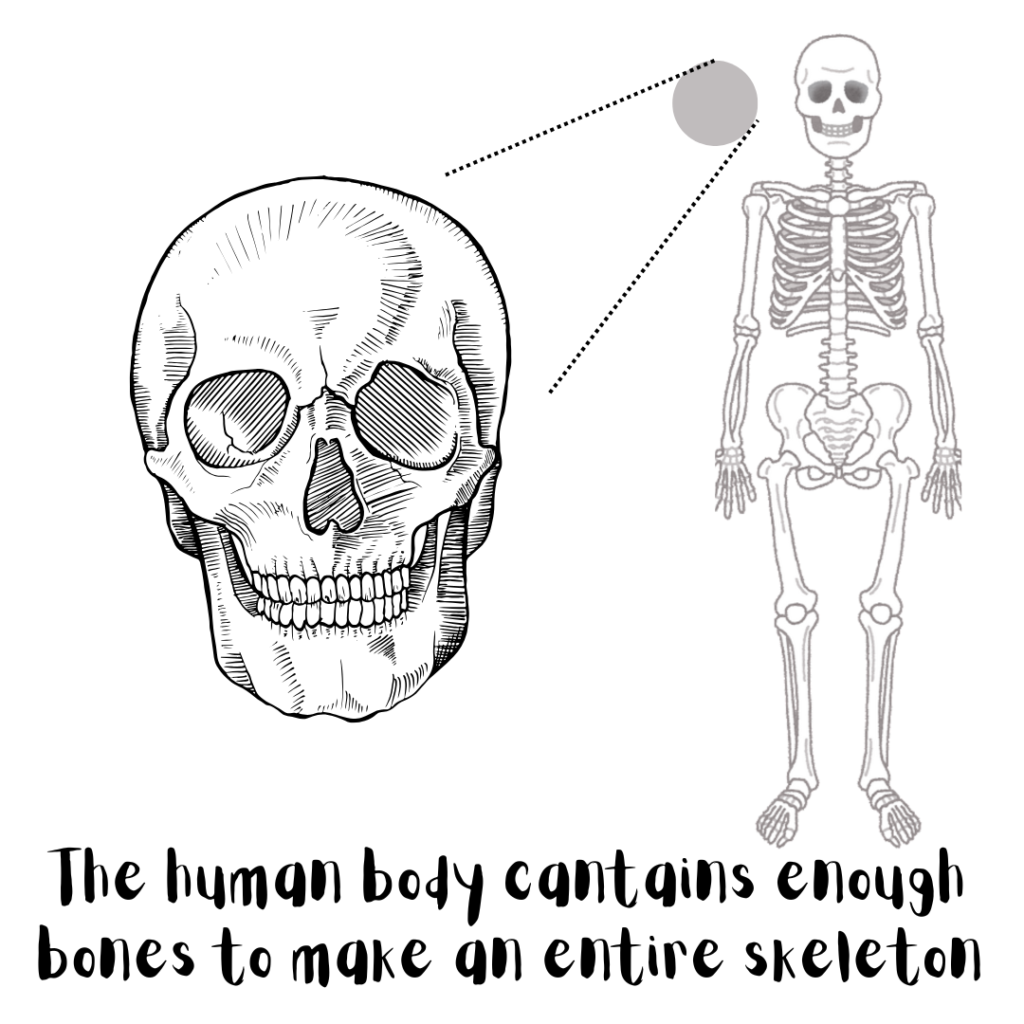
The human body is made up of different shapes and sizes of bone arranged in systematic and schematic ways, and this is called the Human skeleton or Skeleton system. It constitutes up to approximately 15% of total body weight and is one of the largest systems in the body.ย 

The skeleton’s bones and joints are organized to provide basic stability and facilitate the required functional mobility. The human skeleton is composed of 206 bones and is categorized into two basic types:
1. Axial skeleton โ€“ It is composed of 80 bones and forms the upright axis of the whole body.
2. Appendicular skeleton โ€“ It is composed of 126 bones which mainly include both the shoulder and the hip girdles and the long bones of both the upper and lower extremities.

Skeleton system
Fig.1.1. full diagram of Human skeleton

Types of bones

There are 206 bones in the skeleton system which are shaped and sized according
to their functions.
1. The long bones (e.g., femur, tibia): These serve as levers to facilitate muscular action.
2. Short bones: These are generally found where only limited movements are required. Mainly, these bones provide strength and
stability to the strong muscular action by providing a stable base (e.g., tarsal bones).
3. Flat bones: These are composed of a thin layer of cancellous bone covered on both sides by a parallel layer of compact bones, (e.g., skull, scapula, pelvic bones). The scapula provides free but stable mobility to the shoulder and arm, whereas the skull and the pelvis protect vital soft organ systems.
4. Irregular bones: These are irregular in shape with small bony appendages, e.g., vertebrae. These bones provide stable flexibility to the trunk while protecting the spinal cord.
5. Sesamoid bones: These are small rounded or triangular bones that develop in the substance of a tendon or fascia to protect and facilitate muscular action, e.g., patella โ€“ a typical resemblance to the “sesame seedโ€™.

ย 

Composition of a bone

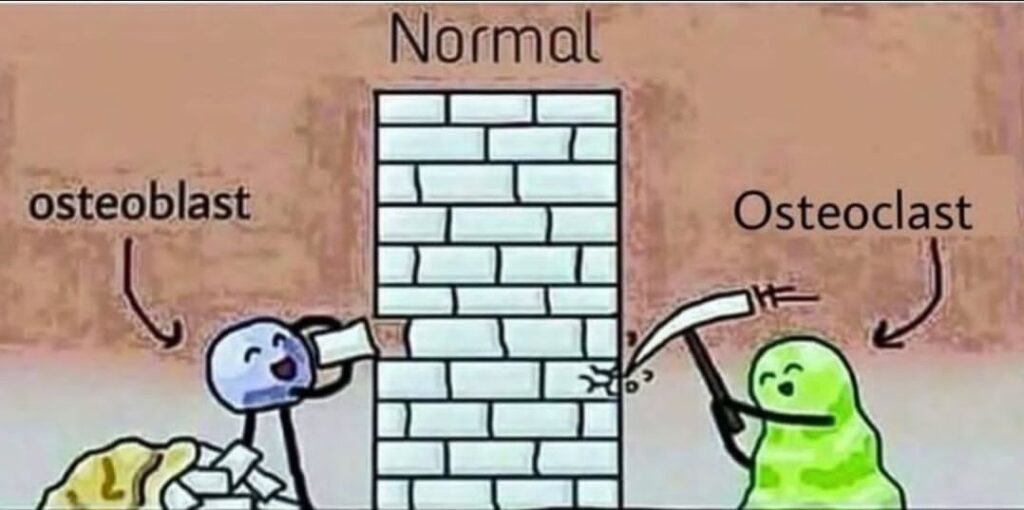
The structural unit of a lamellar bone is Osteon, which consists of a series of concentric laminations surrounding the central longitudinal bone cells.
There are three types of bone cells:

1. Osteoblasts โ€“ bone-forming cells
2. Osteoclasts โ€“ bone-distroying cells
3. Osteocytes โ€“ resting cells that can act as both osteoblasts and osteoclasts as per the need.

ย 

Osteoporosis
Fig.1.2. Bone cells

A bone in the human skeleton consists of two major portions: cortex and medulla.

Cortex

The outermost hard layer of bone is called the cortex. It gives shape, strength, and
protection from injury and has a smoother covering layer (periosteal layer) which also gives attachment to muscles, tendons, and ligaments. It allows the remodeling of bone throughout life.

Medulla

The softer inner lining of the bone within the medullary cavity is called the medulla. The medulla is a storehouse of important minerals, calcium, and a major seat where the RBCs and WBCs originate.

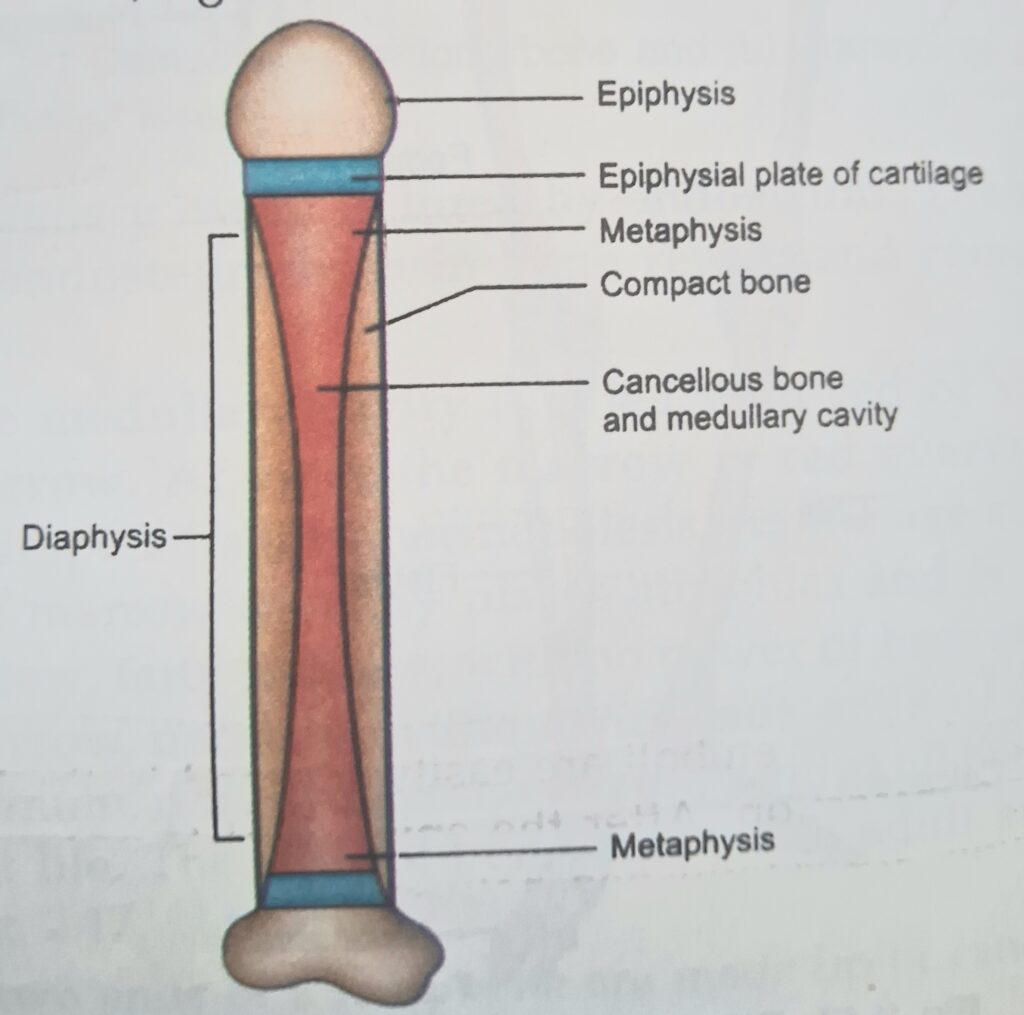
The general structure of a long bone

ย Epiphysis

In growing children, the long bone consists of two ends known as epiphysis. It forms a support for the joint surface. It is susceptible to developmental problems (epiphyseal dysplasia), degenerative changes, injury, and avascular necrosis due to ischemia.

Diaphysis

A large part of the long bone or shaft constitutes diaphysis. It is made up of strong cortical bone but due to mechanical disadvantage, it always remains susceptible to fracture with angulation. The process of healing is slow as compared to metaphysis. It may develop dysplasias or infection

ย Metaphysis

ย The portion of the bone adjacent to each epiphysis is known as metaphysis. It is made up of cancellous bone where the process of healing is fast. It is susceptible to bone infection, dysplasia and tumours.

Growth plate

The thin plate of growth cartilage, one at each end called the โ€˜growth plateโ€™. At the time of maturity, this growth plate fuses with metaphysic. The rest of the bone is covered with periosteum which provides attachment to tendons, ligaments, and muscles.

ย 

The structure of long bone
Fig1.3. Structure of long bone

Blood supply to a long bone

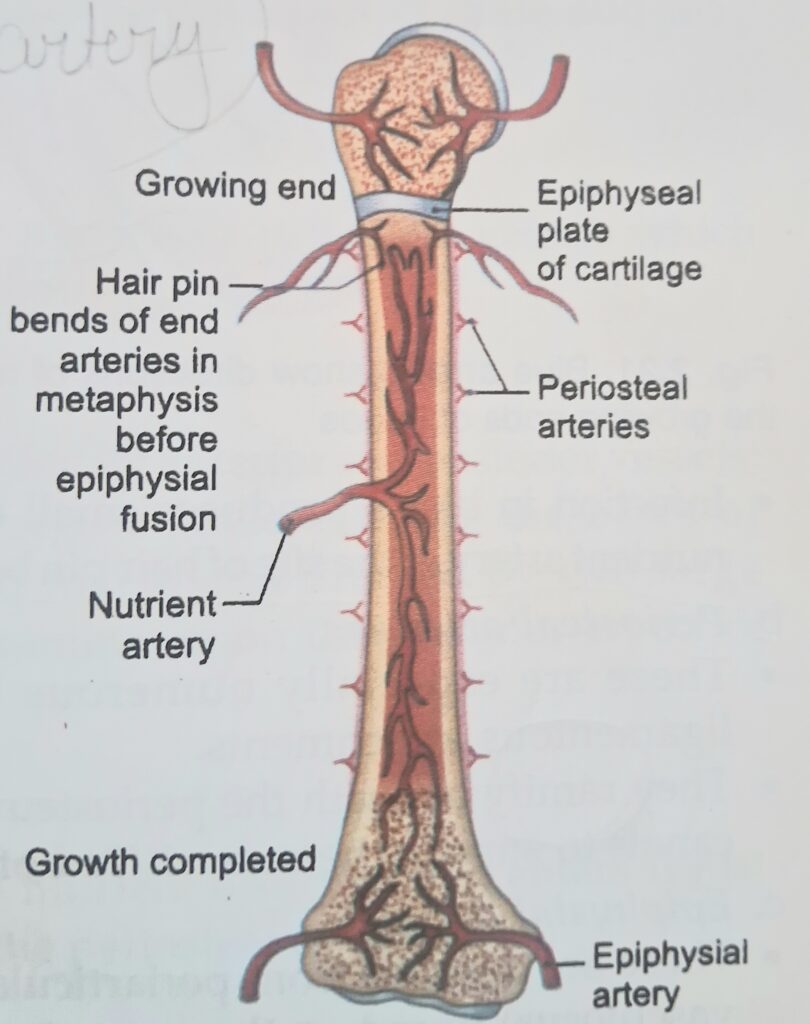
The blood supply to a long bone is derived from four vessels:

Metaphyseal vessels: The numerous small vessels enter the metaphysis along the line of attachment of the joint capsule.

Nutrient artery: Nutrient artery provides nourishment to the long bone which enters the bone around the middle of the shaft. Then each one further divides into a number of parallel vessels towards the respective metaphysis.

Epiphyseal vessels: The epiphysis provides independent nutrition to the epiphysis or epiphyseal site.

Periosteal vessels: These vessels supply the periosteum of bone.

The diagram of blood supply in bone
Fig1.4.Blood supply in long bone

Nerve supply of boneย 

The human skeleton is customized so that nerves accompany the blood vessels. Most of them are symptoms and vasomotor function. A few are sensory, distributed to the articular ends of the periosteum of long bones, to the vertebra, and large flat bones.ย 

What is the function of the Human skeleton?

  1. The skeleton system gives shape and support to the body and resists any forms of stress
  2. A skeleton made of bones protects all vital organs ( brain, spinal cord, abdominal viscera) of the body from injury and trauma.
  3. They serve as levers for muscular actions.
  4. The bone in the human skeleton manufactures blood cells which is an essential component in blood steam.
  5. Bone Marrow also contains reticuloendothelial cells which are phagocytic and take part in the immune responses of the body.
  6. The bones are the reservoir in the body and contain 97% calcium and phosphorus.
  7. The Human skeleton is an important organ for the support of the body for the attachment of muscles and tendons.
  8. Recently, ย studies say the skeleton contributes to whole-body homeostasis.
Recent post