What are infant primitive reflexes ?
Infant primitive reflexes are automatic, involuntary movements that are naturally present during the early stages of a baby’s development. These primitive reflexes are controlled by the developing nervous system and help newborns respond to specific sensory stimuli before voluntary movements become established. They also provide useful information about an infant’s neurological and motor development. Common examples include the Moro reflex, which produces a characteristic response to sudden changes in movement or stimulation, and the grasp reflex, which causes the baby to automatically close the fingers when the palm is touched. In this article, we are going to explain the major infant primitive reflexes briefly.
Moro Reflex: An Important Infant Primitive Reflex
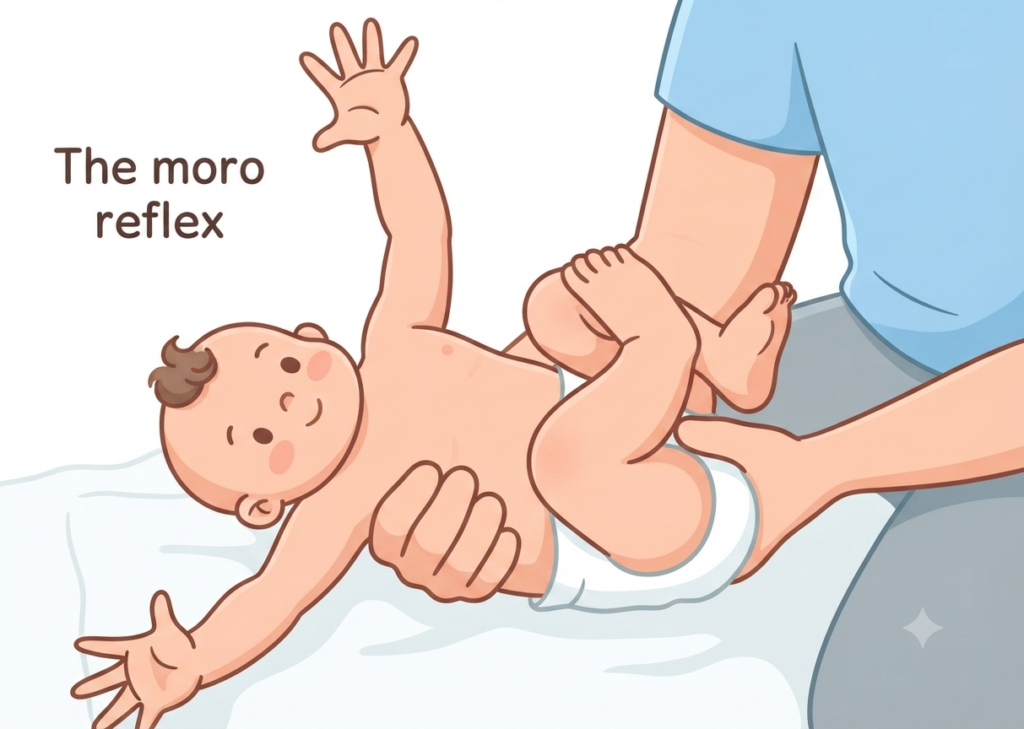
The Moro reflex is one of the important infant primitive reflexes observed in newborns. It is commonly known as the startle reflex and occurs when an infant experiences a sudden change in balance, unexpected movement, or a sensation of falling. The reflex develops during late pregnancy, usually by around 28 weeks of gestation, and typically disappears between 4 and 6 months of age as the infant’s nervous system matures.
The Moro reflex has an important protective and communicative function. The sudden movements and crying associated with the response can alert caregivers when the infant experiences an unexpected disturbance. It also represents an early neurological response that prepares the infant to react to a perceived loss of support.
How the Moro Reflex Is Elicited ?
The Moro reflex can be assessed by supporting the infant securely and producing a brief, controlled backward movement of the head, creating a sensation of falling. An unexpected loud sound may also trigger the response. The examination should be performed carefully to ensure that the infant remains properly supported and safe.
A typical Moro reflex occurs in two successive stages:
- First phase – Extension and abduction: The infant rapidly moves both arms outward and away from the body. The fingers usually straighten and spread, while the legs may also extend. The infant may open the mouth, show a startled facial expression, or begin crying.
- Second phase – Flexion and adduction: Shortly afterward, usually within 1–2 seconds, the infant brings the arms inward toward the chest in an embracing movement. The hands commonly close, and the legs move into a flexed position. This inward movement is considered the characteristic “embracing” phase of the reflex.
Clinical Assessment of the Moro Reflex
When assessing infant primitive reflexes, clinicians evaluate the symmetry, completeness, and strength of the response. A normal Moro reflex should occur on both sides of the body with relatively equal movement and should demonstrate both extension-abduction and flexion-adduction phases.
An asymmetric or absent Moro reflex may indicate an underlying neurological or musculoskeletal abnormality. For example, reduced movement on one side may occur with a brachial plexus injury such as Erb palsy, particularly when the C5–C6 nerve roots are affected. A clavicle fracture can also cause an unequal response because pain may restrict movement of the injured arm. Neurological conditions causing weakness on one side of the body, including hemiparesis associated with cerebral injury, may likewise result in an asymmetric Moro response.
Overall, the Moro reflex is a valuable component of the neurological examination of newborns and young infants. Its presence, quality, and symmetry provide useful information about early neurological and musculoskeletal function and contribute to the assessment of normal infant primitive reflexes.
Abnormal Moro Reflex Presentations
The Moro reflex is an important infant primitive reflex, and changes in its timing, intensity, or symmetry may indicate underlying neurological or developmental abnormalities.
- Persistent Moro reflex: The reflex normally disappears by approximately 4–6 months. Its continued presence beyond this period may be associated with neurodevelopmental difficulties. Some children with a retained reflex may show an increased startle response, sensory sensitivity, anxiety, difficulties maintaining attention, or reduced impulse control.
- Absent or diminished Moro reflex: A weak or missing response in a newborn may suggest impaired neurological function. Possible causes include severe birth-related oxygen deprivation, intracranial bleeding, or congenital abnormalities of the nervous system. If the absent reflex occurs together with generalized muscle weakness or hypotonia, disorders such as spinal muscular atrophy, congenital muscle diseases, or chromosomal conditions may need consideration.
- Exaggerated Moro reflex: An unusually pronounced or easily triggered response can occur in conditions such as neonatal opioid withdrawal, low blood glucose, low calcium levels, or certain intracranial disorders. Affected infants may respond strongly to minimal stimulation, with repeated or prolonged startle movements.
Asymmetric Tonic Neck Reflex (ATNR)
The asymmetric tonic neck reflex (ATNR) is one of the important infant primitive reflexes observed during early neurological development. It is commonly known as the “fencing reflex” because the infant’s posture can resemble the stance of a fencer. The reflex begins to develop during the later stages of pregnancy, at approximately 35 weeks of gestation, and usually becomes integrated by around 3 to 4 months after birth.
To assess the ATNR, the infant should be lying comfortably on their back in a calm state. The examiner gently turns the infant’s head toward one side and observes the limb response for approximately 10 to 15 seconds. The maneuver should then be repeated with the head turned to the opposite side.
When the reflex is present, the arm and leg on the side toward which the infant’s face is turned tend to extend, while the arm and leg on the opposite side flex. This creates the characteristic fencing-like posture associated with the ATNR.
The ATNR plays an important role in early motor and sensory development. As the infant turns their head, the reflex brings the corresponding hand into view, helping support early hand-eye coordination. It may also contribute to the infant’s awareness of the two sides of the body and help establish the foundations for coordinated, cross-body movements that later become important for skills such as crawling.
The ATNR response can be described as either obligatory or facultative. In an obligatory response, the infant’s limbs move into the reflex position and remain relatively fixed. With a facultative response, the infant shows a tendency toward the reflex posture but can voluntarily move beyond or overcome it.
Abnormal or Persistent Asymmetric Tonic Neck Reflex
As with other primitive reflexes, the ATNR is expected to become less prominent as voluntary motor control develops. If an obligatory ATNR continues beyond approximately 4 to 6 months, it may interfere with the development of symmetrical movement and important motor milestones.
A persistent ATNR may make it difficult for an infant to:
- Bring both hands together at the midline while exploring toys or objects
- Reach across the body to pick up an object
- Roll smoothly from the back onto the stomach
- Develop balanced and symmetrical sitting
- Coordinate alternating movements of the arms and legs during crawling
Because the extended arm can restrict movement, a persistent ATNR may interfere with rolling and other emerging mobility skills. Difficulty maintaining a symmetrical posture may also affect later activities that require coordinated use of both sides of the body.
A retained or unusually persistent ATNR can be associated with neurological conditions such as cerebral palsy, including spastic hemiplegia and quadriplegia. In affected children, the reflex may remain active beyond the expected period of infancy and contribute to asymmetric postures and abnormal movement patterns.
Research has also reported a higher frequency of persistent primitive reflexes, including ATNR, among some children with autism spectrum disorder. In these cases, retained reflex activity may occur alongside differences in motor coordination and sensory processing. However, the presence of a persistent ATNR alone does not establish a diagnosis and should be interpreted as part of a broader neurological and developmental assessment.
Babinski Reflex (Plantar Reflex)
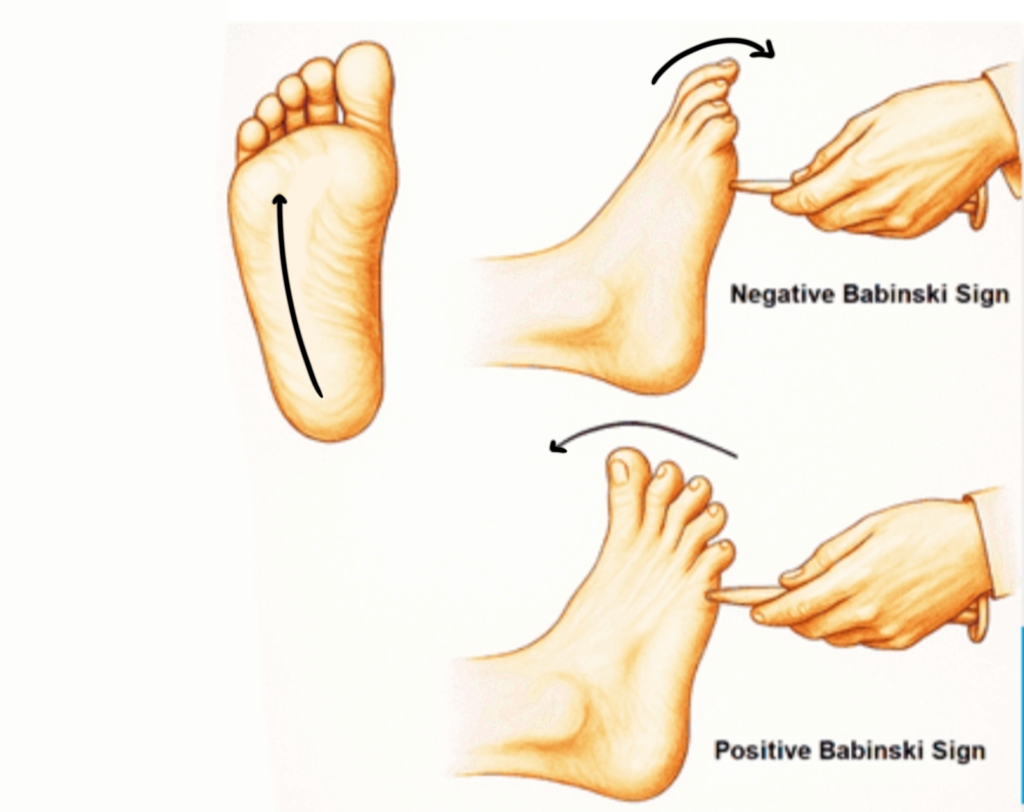
The Babinski reflex is one of the important infant primitive reflexes used to assess early neurological development. It is tested by gently stroking the outer sole of the infant’s foot from the heel toward the toes.
A normal infant response is upward movement of the big toe, along with fanning of the other toes. This occurs because the corticospinal pathways are still developing and have not reached full maturity.
The Babinski reflex is normally present at birth and usually becomes integrated by 12–24 months as the nervous system matures. During assessment, the infant should remain relaxed, and the examiner should use a firm but non-painful stimulus. The response should be documented for toe movement, toe fanning, symmetry between both feet, and the infant’s age.
Abnormal Babinski Reflex
The Babinski reflex is a normal finding in infants because their nervous system is still developing. However, an absent, unequal, or unusually weak response may require neurological assessment. Normally, this reflex decreases as the corticospinal pathways mature and should generally disappear by around 24 months. If a strong Babinski response continues beyond this age, especially with muscle stiffness, ankle clonus, or delayed walking, it may indicate an abnormality of the nervous system, including conditions such as cerebral palsy. Other primitive reflexes, including the Moro reflex and grasp reflex, can also be examined to assess neurological development.
Primitive Reflexes: Grasp Reflex
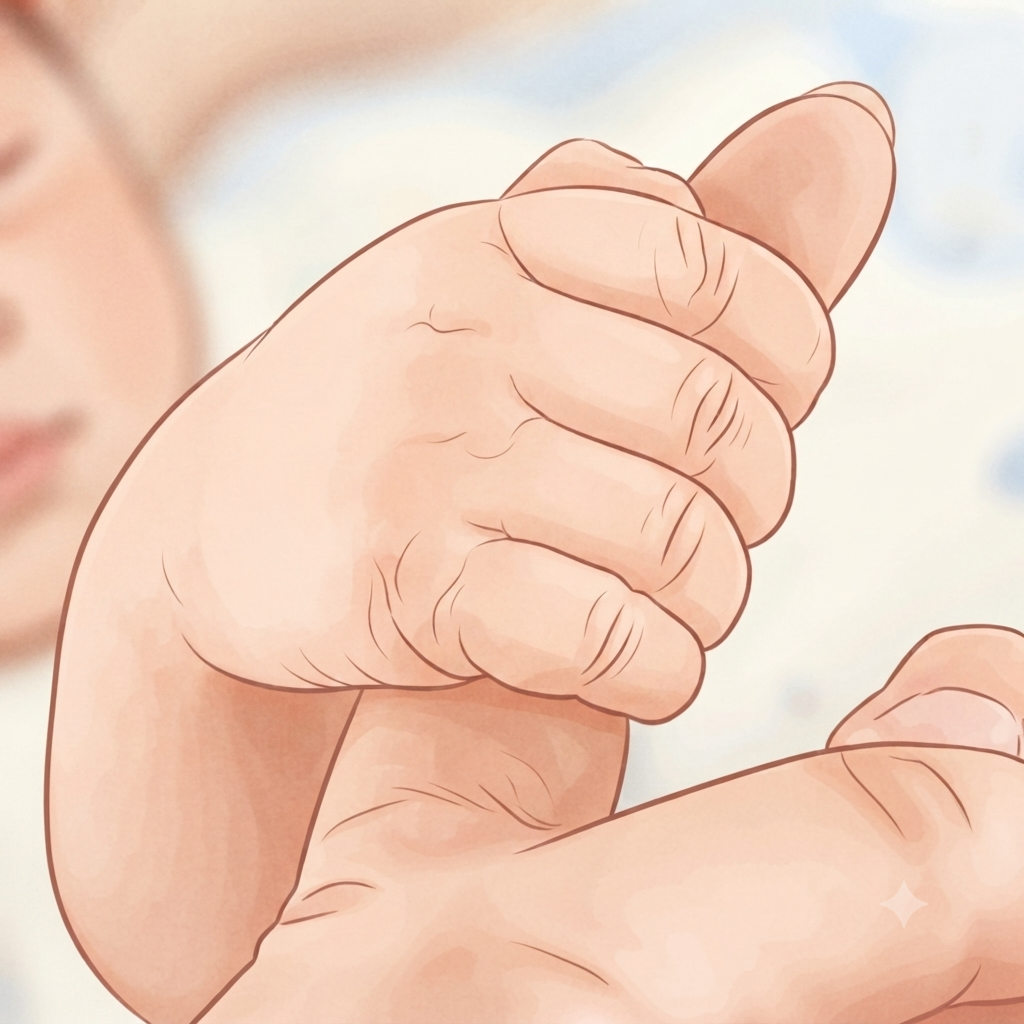
The grasp reflex is one of the important primitive reflexes present in newborns. It is an automatic response that causes the fingers or toes to curl when the palm or sole is stimulated. This reflex helps assess early neurological and motor development.
Palmar Grasp Reflex: When an infant’s palm is gently touched, the fingers automatically close around the stimulus. This reflex develops before birth and normally fades by about 4–6 months, as voluntary hand movements become stronger. A weak, absent, unequal, or persistent response may indicate an underlying neurological or nerve-related problem.
Plantar Grasp Reflex: Stimulation of the sole near the toes causes the toes to bend downward. This is another primitive reflex that develops before birth and generally disappears by 9–12 months, allowing better control needed for standing and walking.
Overall, the grasp reflex is a useful indicator of neurological maturation. Abnormal persistence or asymmetry should be evaluated along with other developmental findings.
The sucking and swallowing reflexes are important primitive reflexes that allow newborns to obtain nutrition and coordinate feeding safely. These reflexes develop during fetal life and depend on coordinated activity of the mouth, pharynx, brainstem, cranial nerves, and respiratory system.
Sucking Reflex
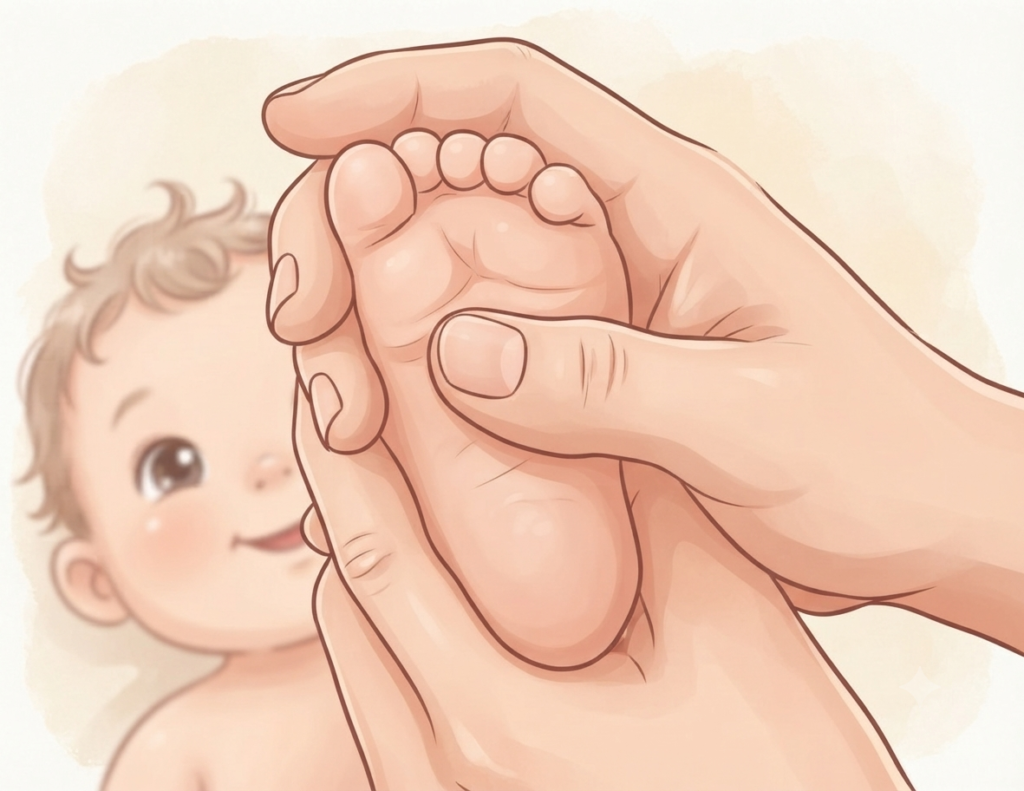
The sucking reflex is triggered when the hard palate or posterior part of the tongue is stimulated. This produces repeated, rhythmic sucking movements that help the infant take milk during breastfeeding or bottle-feeding.
The reflex begins to develop at approximately 32–35 weeks of gestation and becomes more mature by around 37 weeks, when sucking, swallowing, and breathing can work together effectively.
To assess the reflex, a clinician may gently place a clean gloved finger or pacifier inside the infant’s mouth and observe the sucking response. Important features include:
- Strength of sucking
- Rhythm and regularity
- Coordination with breathing
Swallowing Reflex
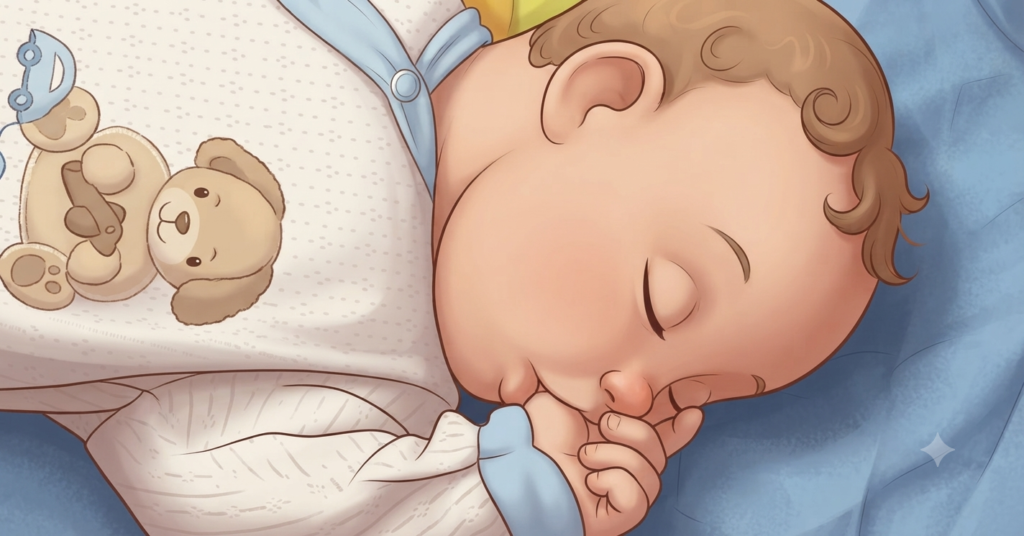
The swallowing reflex works together with sucking to move milk from the mouth through the pharynx and esophagus while protecting the airway. During swallowing, several structures act in a carefully coordinated sequence.
The soft palate rises to prevent material from entering the nasal cavity. The larynx moves upward, while the epiglottis moves backward to help protect the entrance to the airway. At the same time, the upper esophageal sphincter relaxes, allowing the swallowed material to pass into the esophagus.
This process involves several cranial nerves, including CN V (trigeminal), CN VII (facial), CN IX (glossopharyngeal), CN X (vagus), and CN XII (hypoglossal), together with brainstem centers responsible for coordinating swallowing.
Stepping Reflex
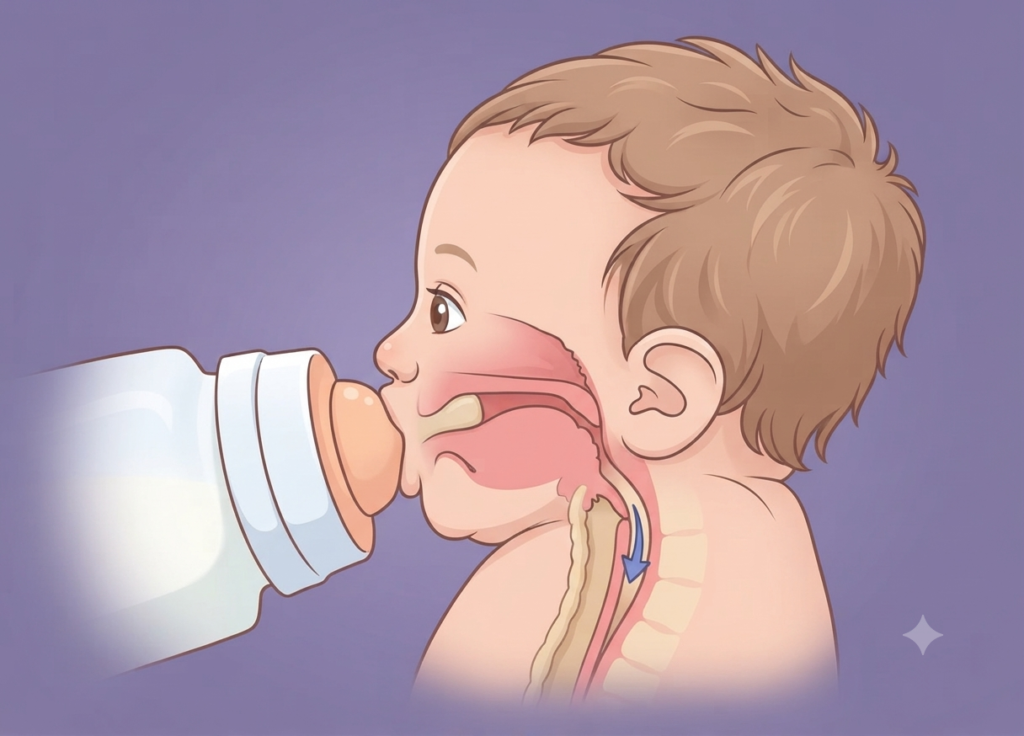
The stepping reflex, sometimes referred to as the walking or dance reflex, is one of the infant primitive reflexes observed from birth. It usually becomes less noticeable and disappears by approximately 2 to 3 months of age. To assess this reflex, the infant is held securely in an upright position with support under the arms while the soles of the feet are allowed to contact a firm, level surface. When the infant is gently inclined forward, alternating movements of the legs may occur, producing a pattern that resembles walking.
The movement involves coordinated flexion of the hip and knee with dorsiflexion of the ankle on one side, followed by extension of the opposite leg. This alternating pattern represents an early form of the reciprocal movement used later during walking.
Although it looks like walking, the stepping reflex is not voluntary walking. It is an automatic motor response generated largely by immature subcortical neural pathways. As the infant’s nervous system matures and voluntary motor control develops, the reflex gradually fades. Months later, purposeful stepping and walking emerge as cortical control becomes more developed, with independent walking commonly occurring between approximately 10 and 15 months.
For examination, the infant should ideally be calm and alert. The examiner supports the baby in an upright position, places the feet on a stable surface, and observes the resulting leg movements. Assessment should consider whether the reflex is present, the regularity and quality of the steps, symmetry between both legs, and any additional movements involving the arms or trunk.
Abnormal Stepping Reflex
An absent stepping response in a newborn can sometimes be associated with significant hypotonia, lower motor neuron dysfunction, or spinal cord injury. However, the stepping response can vary considerably among healthy newborns, so its absence alone does not necessarily indicate neurological disease.
An asymmetrical stepping response, where one leg moves normally while the other shows reduced, absent, or abnormal movement, may warrant further evaluation. Possible causes include musculoskeletal abnormalities, nerve or spinal cord disorders, limb injury, or early manifestations of a neurological condition such as hemiparetic cerebral palsy.
Infant Primitive Reflexes: Galant Reflex
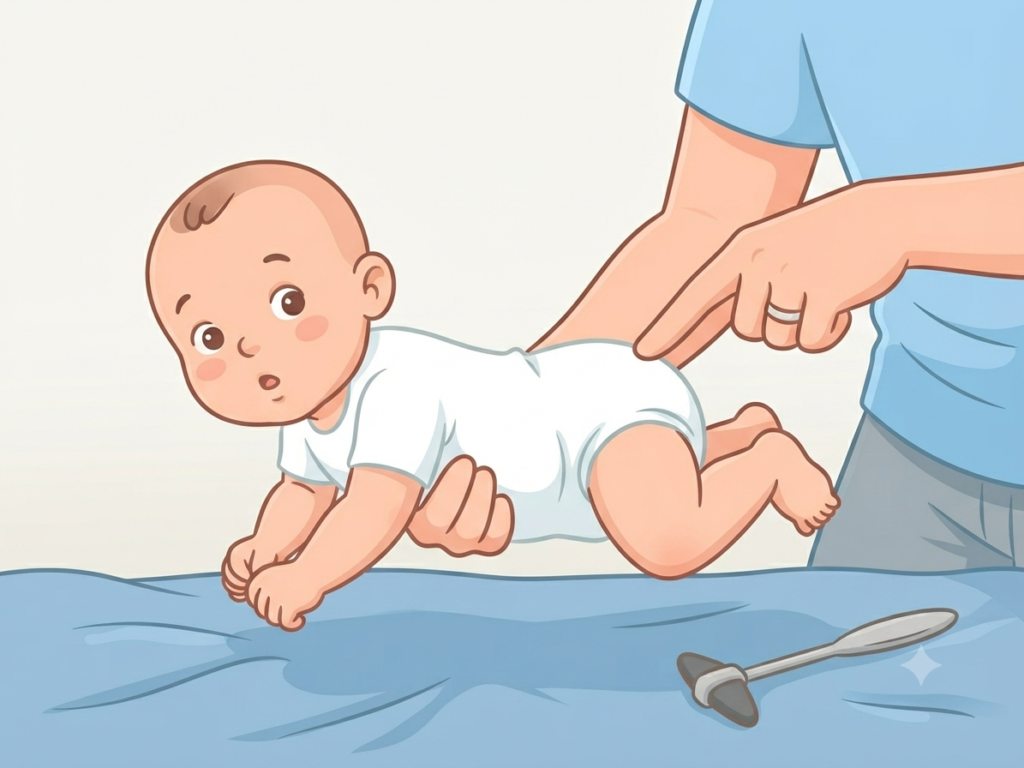
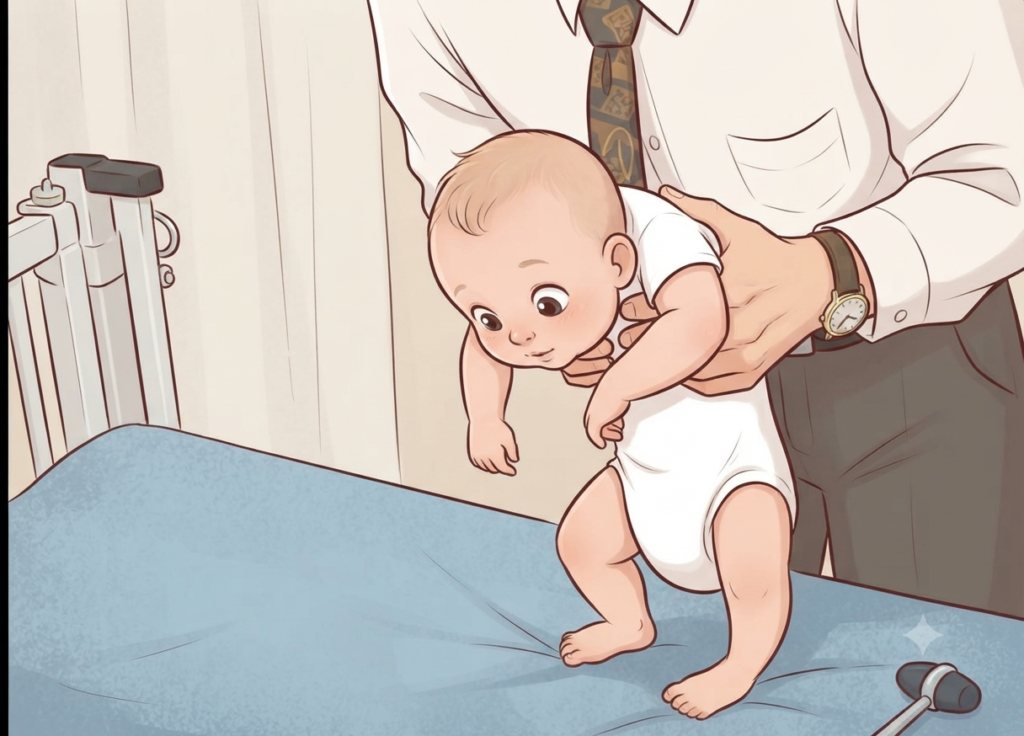
The Galant reflex, also called the truncal incurvation reflex, is another important example of infant primitive reflexes. It can be present from around 32 weeks of gestation and generally disappears between 4 and 6 months after birth.
To test the reflex, the infant is usually positioned in ventral suspension. The examiner gently strokes one side of the infant’s back, approximately 1 cm away from the spinal column, moving from the shoulder region toward the buttocks. A normal response is curving of the trunk toward the side being stimulated, accompanied by upward movement of the pelvis on that same side.
The Galant reflex is believed to have a role during fetal development and may assist with positioning and movement in response to pressure within the uterus during pregnancy and delivery.
Abnormal Galant Reflex
The Galant reflex is expected to diminish as neurological maturation progresses. An absent response may be associated with abnormalities involving the spinal cord or peripheral nerves and should be interpreted alongside other neurological findings.
Conversely, persistence of the reflex beyond the expected developmental period has been associated with difficulties such as bed-wetting, excessive movement while seated, reduced concentration, and challenges with fine motor activities. These associations should not be interpreted as diagnostic on their own; a complete developmental and neurological assessment is necessary.
Note: This version is fully rewritten in original wording while retaining the clinical meaning and naturally incorporating the main keyword “infant primitive reflexes