
MMT of Elbow joint

Table of Contents

MMT(manual muscle testing) ofΒ  Elbow joint are recorded as numerical scores ranging fromΒ zero (0), which represents no activity, toΒ five (5), which represents a β€œnormal” or best-possible response to test or as great a response as can be evaluated by aΒ manual muscle testΒ (MMT).

The elbow flexion and elbow extension are covered here if you want to see other the MMT of the shoulder joint such as shoulder flexion and shoulder extension then visit other posts too.Β 

Elbow Flexion

Active Range of Motion : 0 to 145 degrees

DuringΒ MMT of elbow flexion, theΒ  Primary muscles involved in the flexion of the Elbow Joint are the Biceps brachii, Brachialis, and Brachioradialis.Β MMT of Elbow joint involves the various Secondary muscles in the flexion of the Elbow joint such as the Pronator teres, Extensor carpi radialis longus, Flexor carpi radialis, and Flexor carpi ulnaris.

Grades 5/5 to +3/5

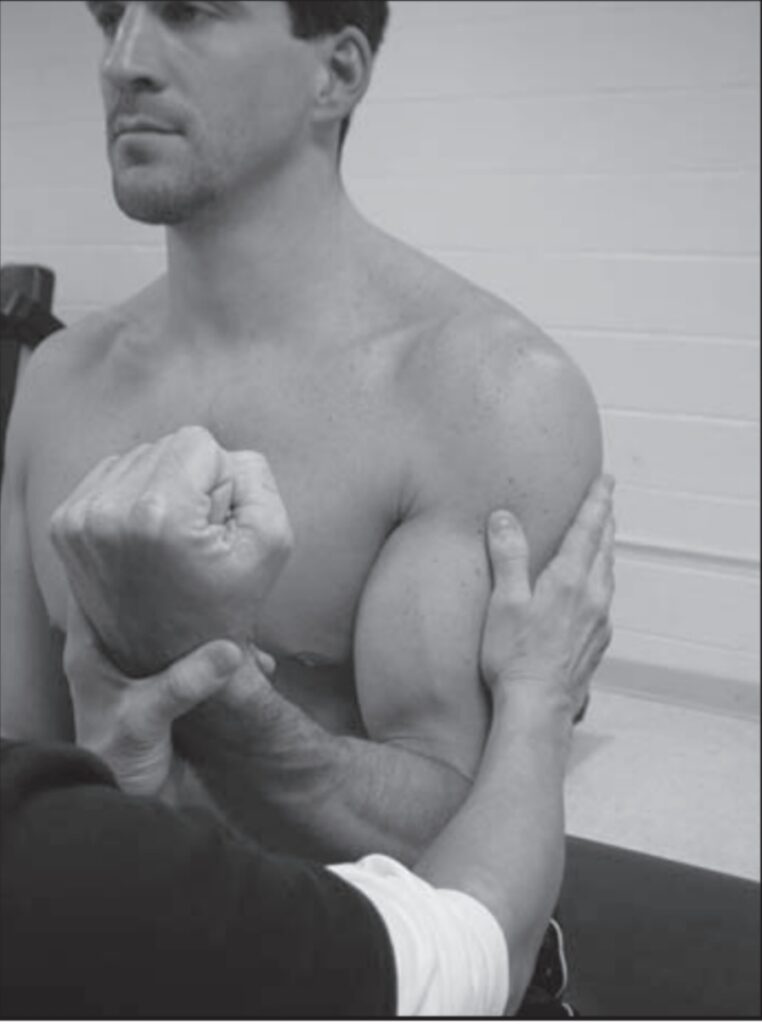
Subject position: Sitting, with the elbow flexed to 90 degrees andΒ pronated (brachialis),forearm supinated (biceps brachii), or in neutral (brachioradialis), depending on which muscle is being tested. General elbow flexion is tested with the forearm in supination.
Stabilization: The clinician stabilizes the upper arm against the trunk.

Resistance is applied on the anterior forearm just proximal to the wrist.

MMT of Elbow flexion Grades 5/5 to +3/5

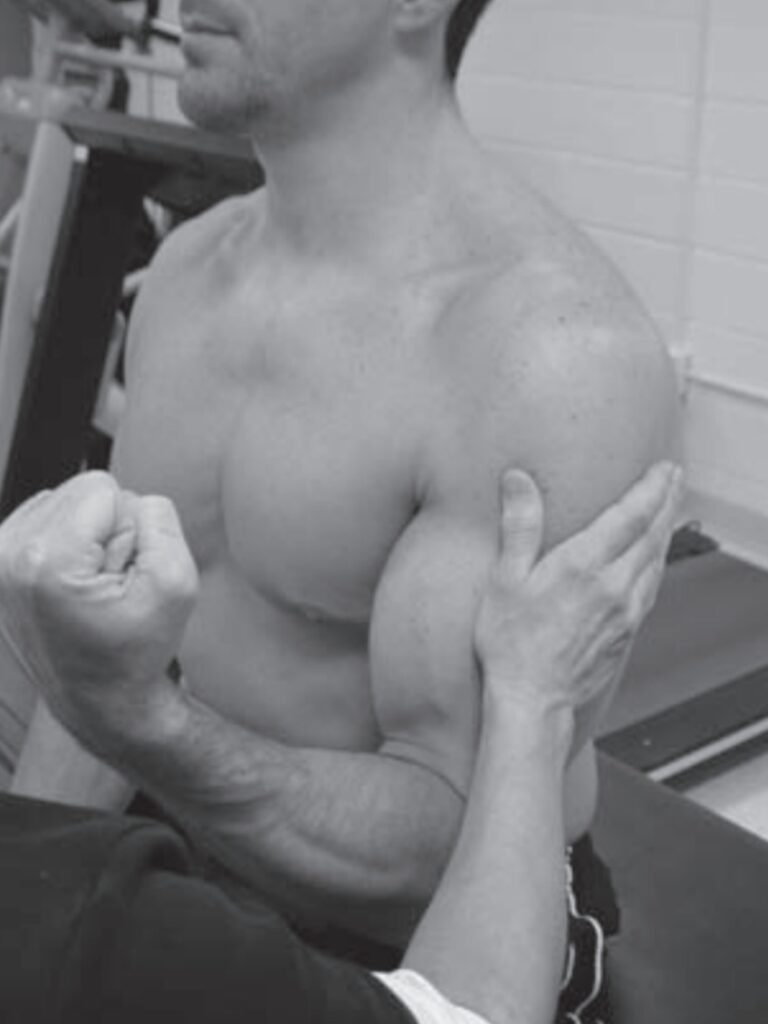
Grades 3/5 to +2/5

The subject flexes elbow through the maximal available range of motion(ROM) without resistance

MMT of Elbow flexion Grades 3/5 to +2/5

Grades 2/5 to βˆ’2/5

The subject flexes the elbowΒ  through maximal available range of motion(ROM).

MMT of Elbow flexion Grades 2/5 to βˆ’2/5

Grades 1/5 to 0/5

The elbow flexors are palpated on the anterior aspect of the arm just proximal to joint asΒ  subject attempts to flex elbow.

MMT of elbow flexion Grades 1/5 to 0/5

Elbow Extension

Active Range of Motion: 145 to 0 degrees (from maximal elbow flexion)

During MMT of elbow extension, theΒ Primary muscle involved in the extension of the elbow joint Triceps brachii, Anconeus. There is no involvement of any secondary muscle in the elbow joint.

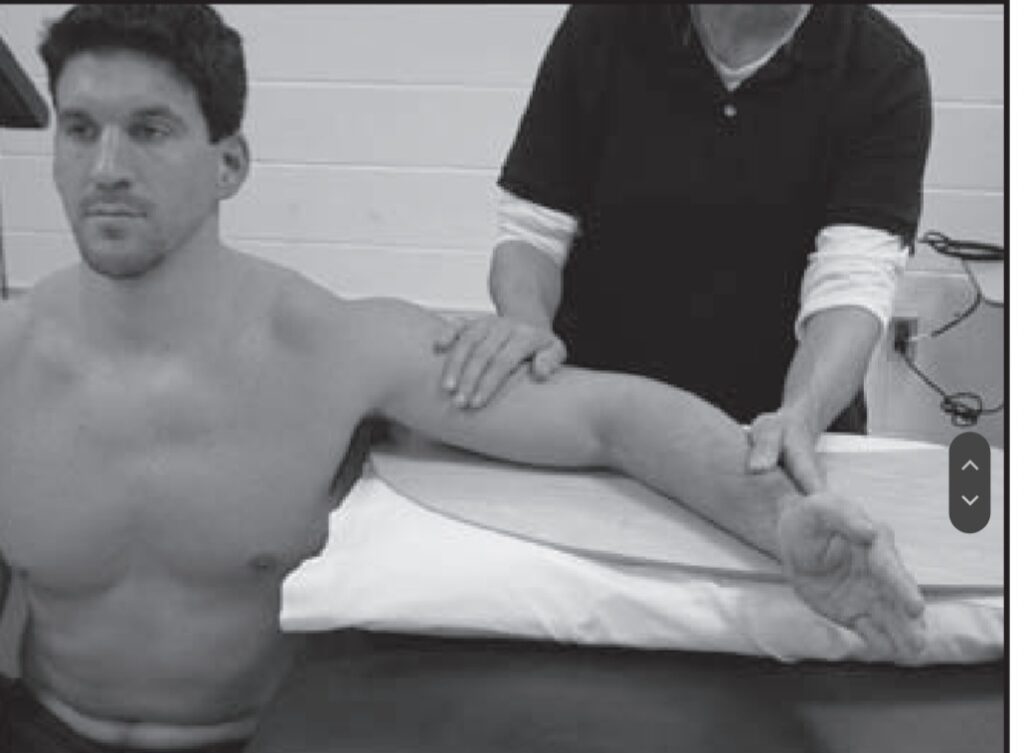
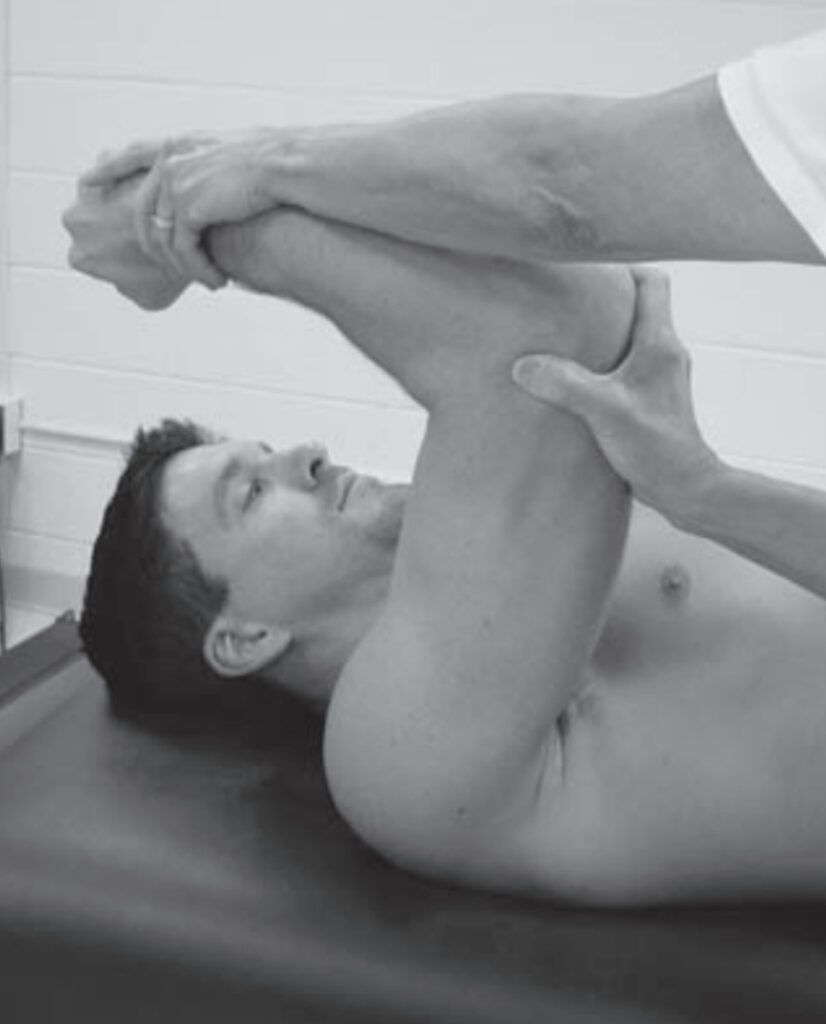
Grades 5/5 to +3/5

Subject position: Supine on a table with shoulder flexed to 90 degrees
and the elbow in maximal flexion.
Stabilization: The clinician stabilizes the upper arm.

The subject extends elbow as resistance is applied just proximal to wrist on proximal forearm.

MMT of elbow extension MMT of elbow extension Grades 5/5 to +3/5

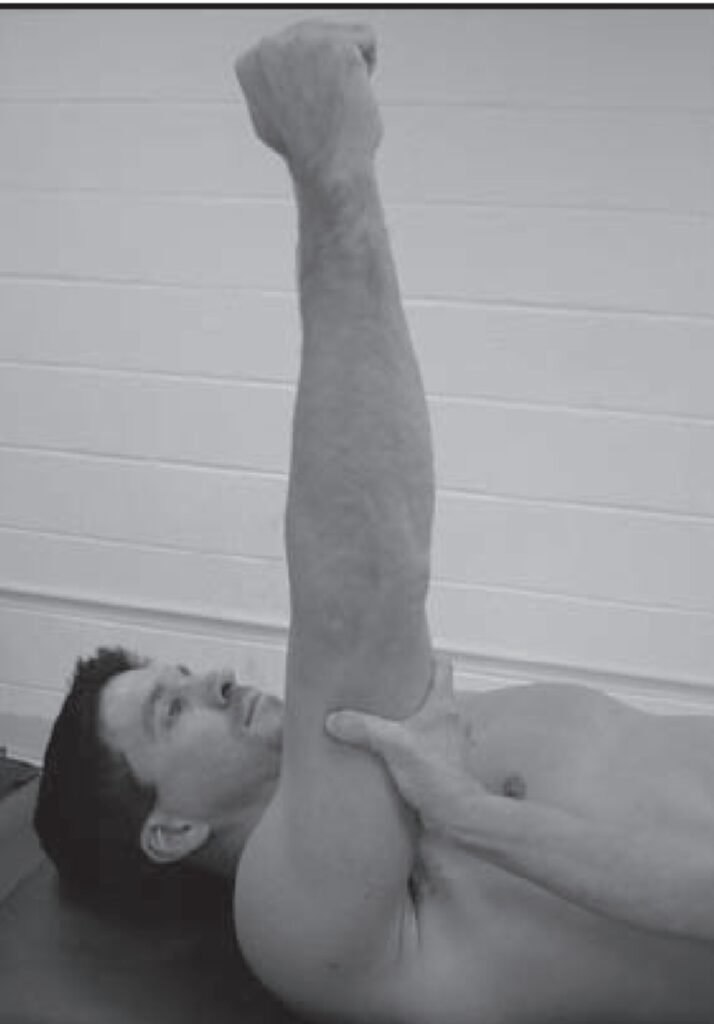
Grades 3/5 to +2/5

The subject extends the elbow through the maximal available range of motion without resistance

MMT of elbow extension Grades 3/5 to +2/5

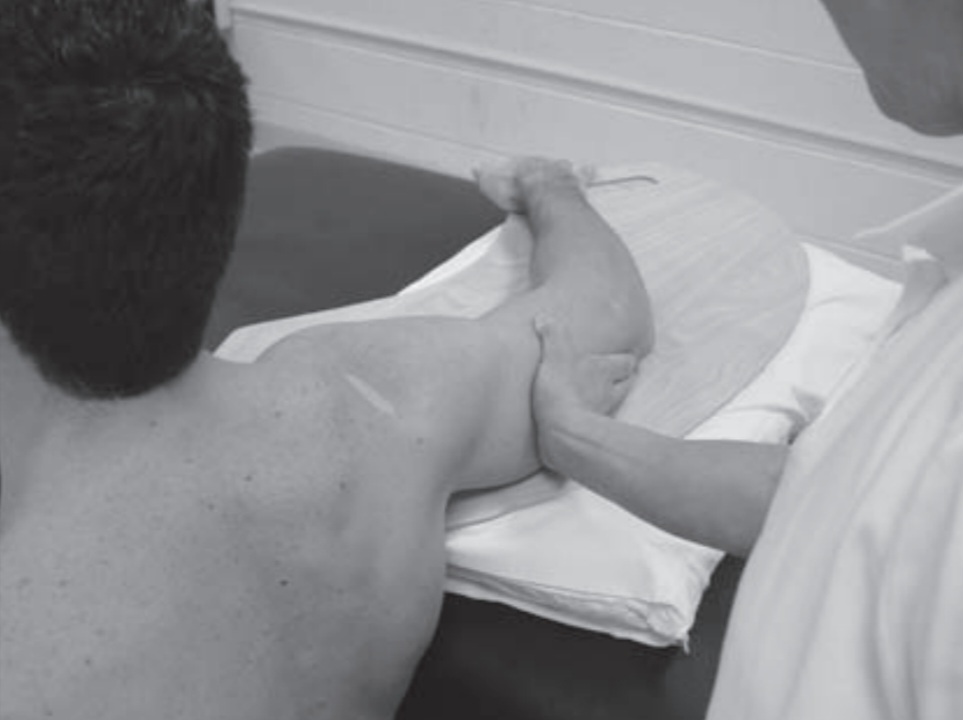
Grades 2/5 to βˆ’2/5

Subject position: Sitting with upper extremity resting on a smooth
surface. The shoulder should be in 90 degrees of abduction and internally
rotated with elbow in maximal flexion and forearm in neutral or
pronated.
Stabilization: The clinician stabilizes the upper arm.

MMT of elbow extension Grades 2/5 to βˆ’2/5

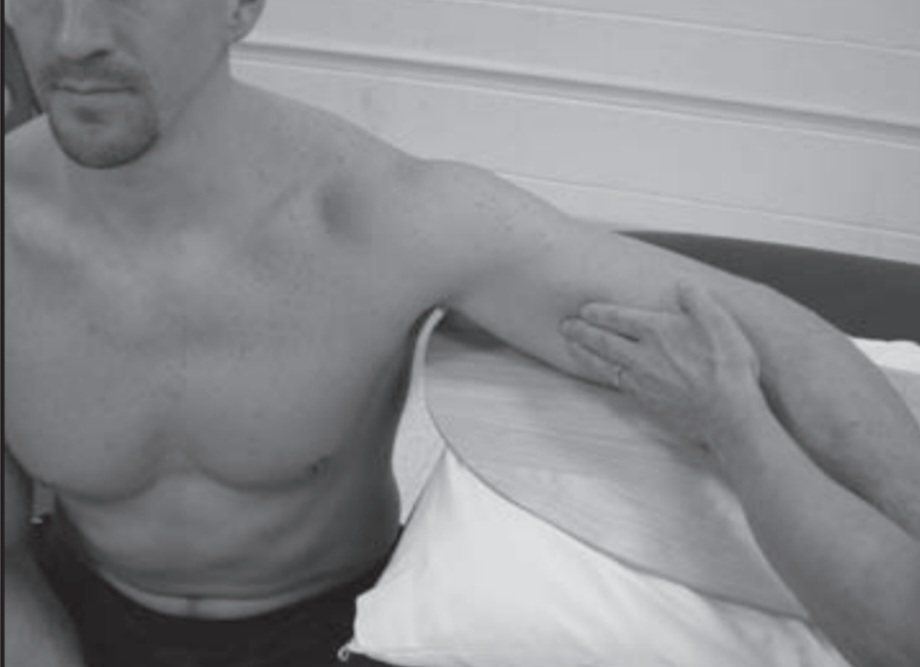
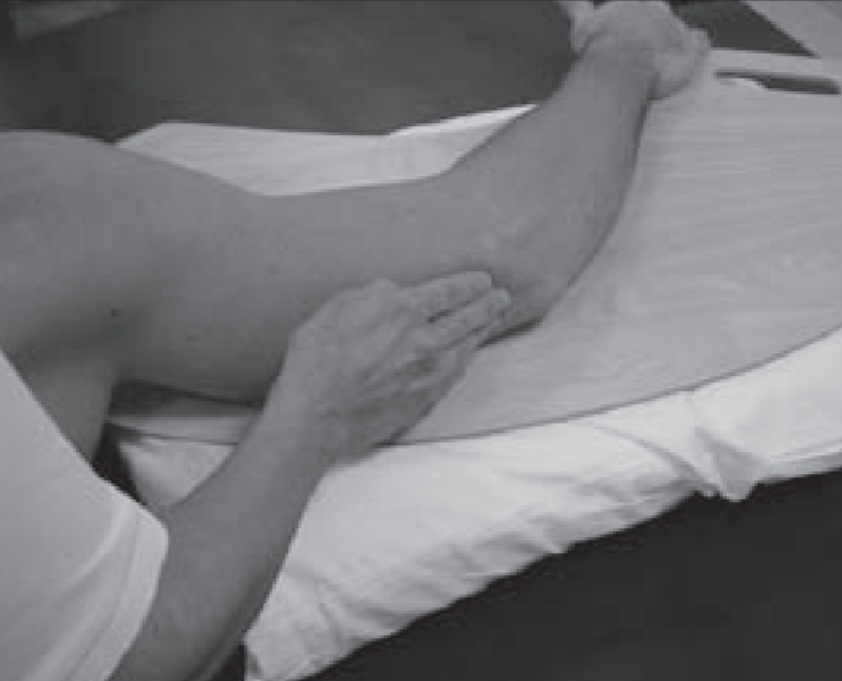
Grades 1/5 to 0/5

The elbow extensors are palpated on the posterior aspect of the arm just proximal to the olecranon.

MMT of elbow extension Grades 1/5 to 0/5
Important Topic