
Orthotics
-
 Dr.
Arpita Biswas
Dr.
Arpita Biswas
- Dr.Rahul Kr. Jha
- Disclaimer

Table of Contents
What Orthotics is?
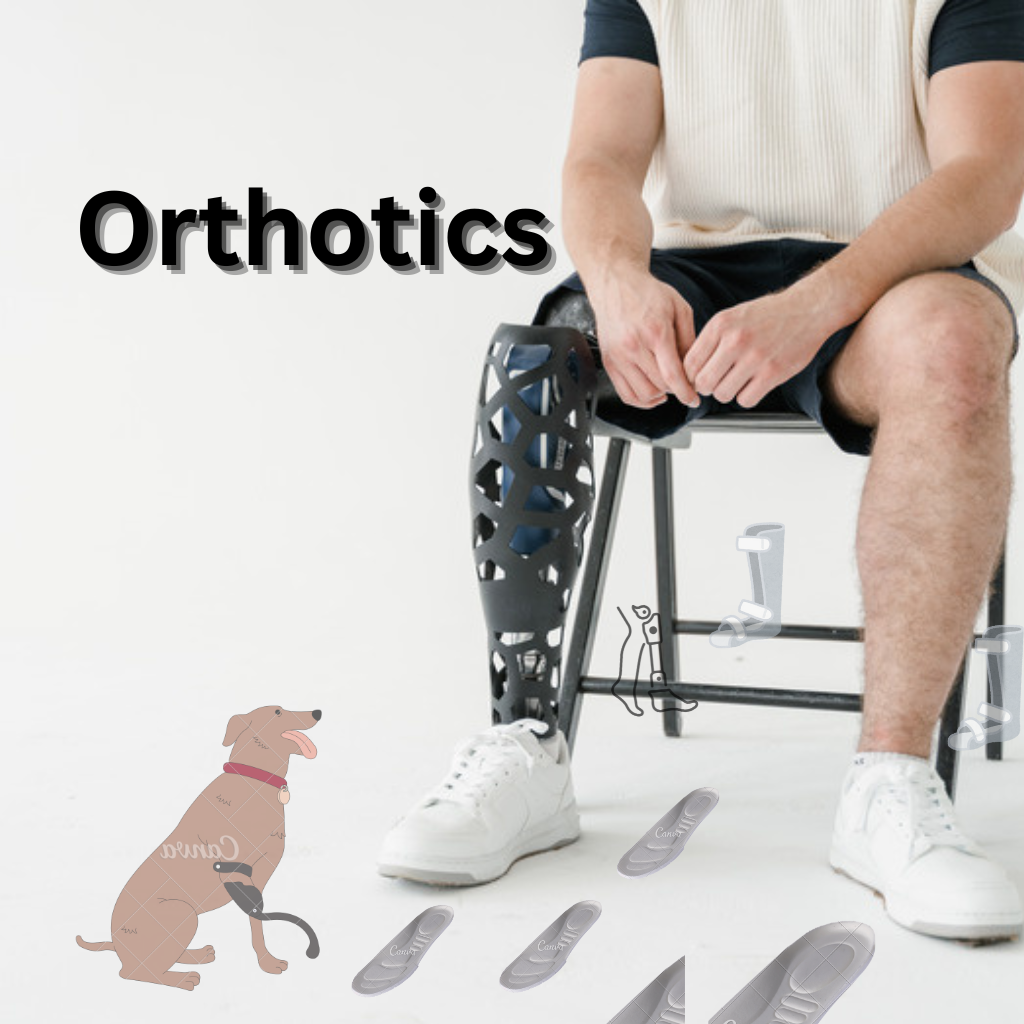
An orthotic is a device that restricts or assists motion or transfers stress from one body area to another. Other names of orthotics are splints and braces. The term orthosis is a noun, and the term orthotic is an adjective. The healthcare professional who designs fabricates, and fits orthoses for the limbs and trunk is called an orthotist. Proven studies and archaeological evidence confirm that orthotics have been used for at least four thousand years.
Types of orthotics
The types of orthotics are named based on the joints, the motions they control, or the city where they were developed such as
- Foot orthoses (FOs)
- Knee orthoses (KOs)
- Hip orthoses(HOs)
- Cervical orthoses
- Trunk orthoses
- Ankle-foot orthoses (AFOs)
- Knee-ankle-foot orthosis (KAFO)
- Hip-knee-ankle-foot orthosis (HKAFO)
- Trunk-hip-knee-ankle-foot orthosis (THKAFO)
They are categorized by upper limb, lower limb, Spine, and cervical orthotics .lets start with the Lower limb.


Lower limb
Shoes
The most commonly used orthotics are shoes which we wear in our daily lives. Shoes transfer body weight to the ground and protect the foot from the terrain and the weather. For the patient with an orthopedic disorder, footwear has two additional purposes:
(a) Reducing pressure on sensitive structures by redistributing force toward pain-free areas
(b) serving as the foundation for AFOs and more extensive bracing
Foot Orthoses(FO)
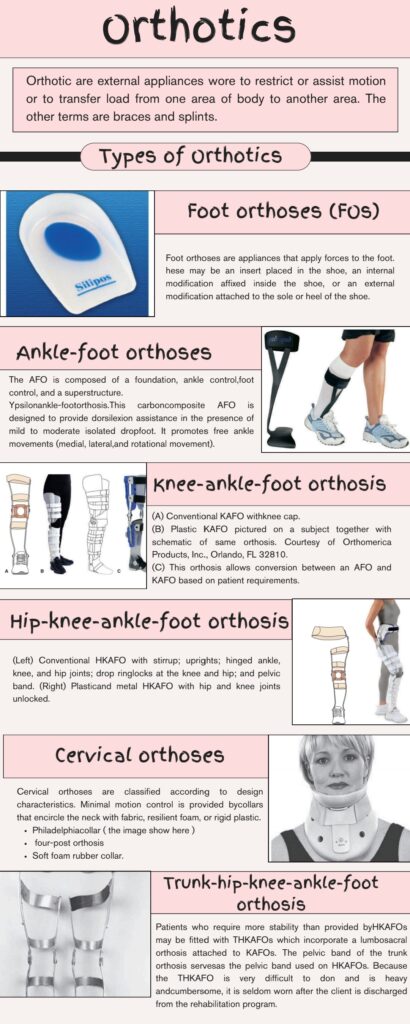
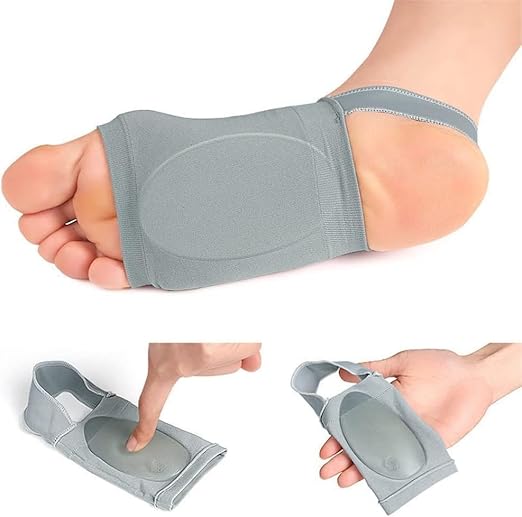
FO is inserted inside the shoe, an internal modification fixed in the shoe, or an external modification attached to the sole or heel.
Internal modification: They are made of soft materials, such as rubber or viscoelastic plastics, to reduce impact shock and shear, thus protecting painful or insensitive feet. Some examples are the metatarsal pad and scaphoid pad(It is positioned (middle) medial and plantar to the longitudinal arch. Scaphoid pad (right) glued to the inside of the shoe.
External modification: It involves material that can be added to the exterior of the shoe, such as a Rocker sole, A heel wedge, Sole wedges, or heel lift (It is a non-compressible lightweight material that provides slight plantarflexion and corrects for a leg length discrepancy of more than 1 cm; up to 1 cm can be accommodated inside a low-quarter shoe.)
Ankle-Foot Orthoses
The AFO is made of a shoe and a plastic or metal component with a footplate foundation, whether thermoplastic or carbon fiber. Some best AFO are Posterior leaf spring ankle-foot orthosis, Conventional ankle-foot orthosis with stirrup attachment, ToeOFF ankle-foot orthosis, Ypsilon ankle-foot orthosis and Plastic hinged ankle-foot orthoses.
Knee-Ankle-Foot Orthoses
The person with extensive paralysis/paresis or limb deformity can use KAFOs, which consist of a shoe, foundation, ankle control, foot control, knee control, and superstructure Two examples of knee joints (left and middle) and a drop ring lock (right).
Hip-Knee-Ankle-Foot Orthoses.
HKA FOs are not used very often because they are much more cumbersome to do than KAFOs, and if the hip joints are locked, they restrict gait to the swing-to or swing-through pattern. To pelvic band fitted when the patient is standing may be uncomfortable when the wearer rotates the pelvis when sitting. After injury or surgery, such as a total hip replacement, a hip rehabilitation orthosis can be used to minimize hip motions during healing,90 although preventing dislocation is not assured
Trunk-Hip-Knee-Ankle-Foot Orthoses
Patients who require more stability than provided by HKAFOs may be fitted with THKAFOs, which incorporate a lumbosacral orthosis attached to HKAFOs. The THKAFO is typically prescribed for those with SCI who require trunk control. Because the THKAFO is very difficult to do and is heavy, it is seldom worn after the client is discharged from the rehabilitation facility.


Upper limb
Upper limb orthotic devices commonly known as splints or braces can accommodate an existing deformity or improve the function of a particular body segment. These are prescribed for many reasons, such as post-surgical stabilization, accommodating a contracture, or improving the functional grasp of the hand.
Some names of braces are given below,
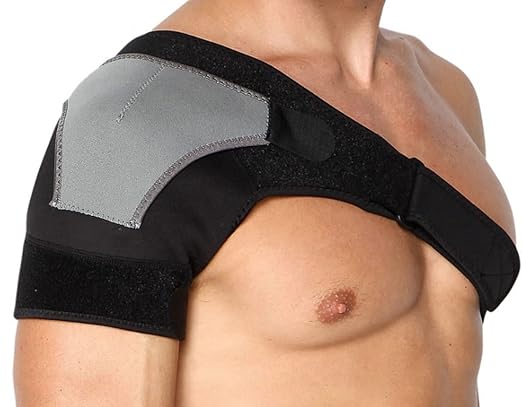
- Shoulder-elbow-wrist orthosis: Used after shoulder surgery (e.g., rotator cuff repair) to limit ROM, and stabilize the glenohumeral joint.
- Wrist-hand orthosis (also known as a cock-up splint): Used to prevent hand contractures or accommodate existing contractures.
- Safe position wrist-hand orthosis: This type of splint is prescribed for an individual with burns to their hand and wrist
- Radial nerve dynamic wrist-hand orthosis: The purpose of this orthotic device is to prevent contractures, and functional grasp is accomplished through springs or flexible straps that maintain the fingers and wrist in extension.


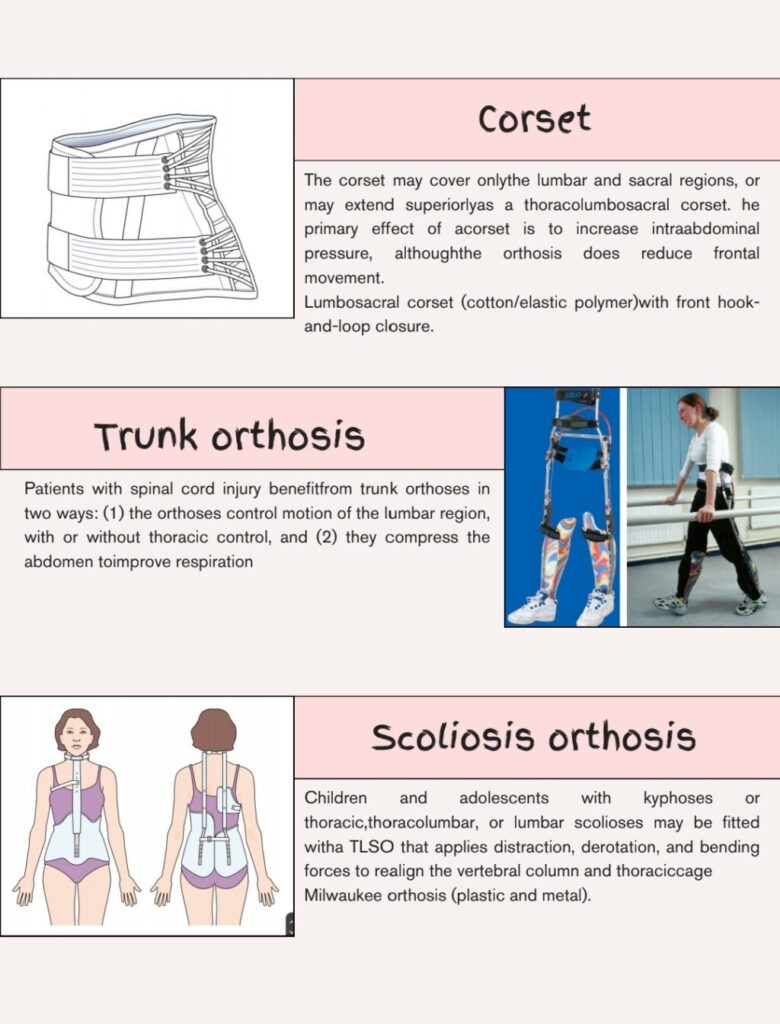
Trunk Orthoses
Trunk orthoses provide support to the thoracic spine, lumbar spine, sacrum, or a combination of multiple segments. combined both with lower-limb and cervical orthoses. The function of thoracolumbosacral orthoses is to reduce disabilities caused by low back pain, scoliosis, or other skeletal or neuromuscular conditions. Orthotics support the trunk by controlling spinal motion disorders.
Some common examples of Trunk orthosis are Corsets, Lumbosacral corsets, Lateral Control Orthoses, and Extension Control Orthoses.
Cervical Orthoses
This orthotic is used in cervical radiculopathy. Soft collars provide minor limitations to motion control, but similar to a knee sleeve brace, the collar can be used to reduce pain, likely resulting from the proprioceptive effect.


How orthotics works?
When any patient comes with any deformity he /she is advised to wear an orthotic but as a professional, we need to answer various questions regarding, how this will help in recovery and how it works.
Orthotics is designed with specific features that can change the location, magnitude, and timing of force acting. It helps to reduce internal and external forces exerted on various parts of the body. When any person wears an orthotic, these devices help them to be in the correct position which sends signals to the brain to change the movement. If there is the movement changes then slowly and wisely it affects the structure of body parts.
Some common conditions in which orthotics show positive response in recovery are given below,
- Osteoarthritis
- Flat feet
- Scoliosis
- Neck pain
- Low back pain
- Plantar fasciitis
- diabetic foot
- Various Sports injuries such as foot, ankle, wrist, or hand
- High arches
- Congenital foot deformity such as CTEV, Equinus, Cavus, etc.
- Hammertoe
- Fractures
- Traumatic injuries
Depending on the patient’s need the clinician advises the specific orthotic based on the condition.
How do orthotics benefit you?
The benefits of orthotics depend on other factors such as individual belief systems and the psychosocial aspects of the patient. Other than that the common benefits seen in patients are given below,
- Relief Pain
The first response seen in patients after wearing orthotics is relief of pain in the feet, ankles, legs, and other areas. Orthotics are beneficial in certain conditions, such as diabetes and arthritis.
- Protection from further injury
Orthosis helps equalize pressure in different parts of the body, automatically reducing the risk of injury like sprains and fractures. It supports parts like feet, knees, hips, and wrists, ankles.
- Improve the Comfort of the patient
In Foot pain patients we try to customize an orthotic that can provide support and cushioning to the patient as much as possible in the area of pain. It significantly reduces pain and discomfort.
- Improve posture
Poor posture is the major cause of various injuries and diseases and better posture isn’t just straightening your back. A correct posture can be attained by grounding up. We recommend various orthotics for certain common conditions.
- Improve Joint Function
Where its ankle joint, knee joint, wrist joint, and elbow joint functioning improve by using orthotics. In the foot, help reduce strain on your arches
- Enhanced athletic performance
Support and cushioning help the athlete to enhance their performance. Many athletes do not know the importance of correct mechanics of movement as soon as the mechanics improve the performance goes up by 2X.
SUBSCRIBE
subscribe to our newsletter and stay updated