
Pain
Table of Contents
Definition
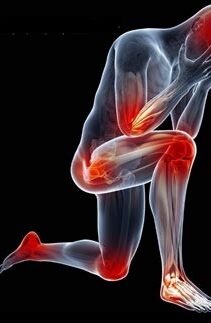
The word ‘pain’ is derived from the Latin word ‘poena’ which means penalty or punishment. This is a very common symptom and all of us must have experienced pain at some time or the other.
Basically, four types of pain are noticed-
1. Superficial,
2. Segmental,
3. Deep or visceral and
4. Psychogenic or central.

How many types of Pain?
1. SUPERFICIAL PAIN.
This occurs due to direct irritation of the peripheral nerve endings in superficial tissue. Such irritation may be by chemical mechanical thermal or electrical.
The superficial pain is sharp and can be pointed with a fingertip.
2. SEGMENTAL PAIN
This occurs due to irritations of a sensory nerve trunk or root. This is located in a particular dermatome of body supplied by the affected sensory nerve trunk or root.
3. DEEP PAIN
This pain occurs due to irritation of deep structures of body e.g. the deep fascia, the muscles, the tendons, the bones, the joints, and viscera. The pain sensation from the affected structure is conveyed to the brain. Either by somatic nerve or by autonomic nervous system. The deep pain is vague compared to the superficial pain and may be one of the various types which are described below. The deep pain is vaguely localized in comparison to the superficial pain.
The deep pain may be referred to as some other area of the body due to a common area of representation in the spinal cord (supplied by the same segment). The deep pain may cause involuntary spasms of the skeletal muscles supplied by the same spinal cord segment.
4. PSYCHOGENIC PAIN
In this condition pain arises from the brain, which may be a functional pain either emotional or hysterical or due to lesions in the thalamus or spinothalamic tract or due to causalgia.
What is the Nature of the pain?
(i) VAGUE ACHING PAIN
This is a mild continuous pain that has no other specific features
(ii) BURNING PAIN
It is almost like burning sensation caused by contact with a hot object. Burning pain is typically experienced in the case of peptic ulcer or reflux esophagitis.
(iii) THROBBING PAIN
It is type of throbbing sensation which is typically felt in case of pyogenic abscesses.
(iv) SCALDING PAIN
It is also a type of burning sensation that is particularly felt during micturition in the presence of cystitis, acute pyelonephritis, or urethritis.
(v) PINS AND NEEDLES SENSATION
It is typically felt in case of injury to the peripheral sensory nerve. As if pins and needles are being pricked in that area of skin supplied by the affected sensory nerve.
(vi) SHOOTING PAIN
It is typically felt in the case of sciatica when pain shoots along the course of the sciatic nerve.
(vii) STABBING PAIN
A sudden, severe, sharp, and short-lived pain. This is typically felt in the acute perforation of peptic ulcer.
(viii) CONSTRICTING PAIN –
This means as if something is encircling and compressing from all directions the relevant part. The pain is often expressed as an iron band tightening around chest. It is typical of angina pectoris.
(ix) DISTENSION
This type of pain is experienced in diseases of any structure encircled or restricted by wall e.g. a hollow viscus. When tension increases inside such hollow viscus it causes pain which is typically described by the patient as a feeling of distension or ‘ tightness’.
(x) COLIC
A colicky pain occurs when muscular wall of a hollow tube is attempting to force certain content of tube out of it.
(xi) TWISTING PAIN
A type of sensation as if something is twisting inside body. Such sensation is often felt in the case of volvulus of the intestine, torsion of the testis, or ovarian cyst.
(xii) ‘JUST A PAIN’
Often a patient may not describe his pain. He often says that ‘it is just a pain’ and cannot describe nature of the pain.
What is the pain which travel?
There is pain that travels from one part of the body to another part of the body. Pain may move from one place to the other and 3 types of such movements are noticed – (i) radiation, (ii) referred, and (iii) shifting or migration of pain.
RADIATION O F PAIN.
This means an extension of the pain to another site whilst the original pain persists at its original site. The radiation of pain has almost same character. A typical example is when a duodenal ulcer penetrates posteriorly. The pain in the epigastrium remains but at the same time, the pain spreads or radiates to the back.
REFERRED PAIN
When pain is felt at a distance from its source and there is no pain at the site of the disease, it is called a referred pain. Irritation or inflammation of the diaphragm causes pain at tip of the shoulder. Referred pain occurs when central nervous system fails to differentiate between visceral and somatic sensory impulses from same segment. In this case diaphragm is supplied by the phrenic nerve (C3, 4, and 5) and the cutaneous supply of the shoulder is also C4 and CS.
SHIFTING OR MIGRATION OF PAIN
In this condition, pain is felt at one site in beginning and then the pain is shifted to another site original pain disappears.
For how long the pain is?
This is often characteristic of certain diseases. Sometimes an interval of days, weeks, months, or even years may elapse between two painful attacks. Particularly in peptic ulcer, a periodicity is noticed and pain recurs in episodes lasting for 1 to several weeks, interspersed with pain-free intervals of weeks or months. Trigeminal neuralgia often shows such periodicity and pain-free intervals often last for months.
Management of Pain
Non-opioid treatment
Opioids are not always the treatment of pain. Explore other medications and non-drug treatments that anesthesiologist use to provide effective pain management.
- Physical therapy – A physical therapist or physician who specializes in physical medicine and rehabilitation may be able to create an exercise program that helps you improve ability to function and decreases your pain. Whirlpools, ultrasound, and deep-muscle massage may also help.
- Acupuncture – You may find relief from acupuncture, in which very thin needles are inserted at different places in the your skin to interrupt pain signals.
- Surgery – When other treatments aren’t effective, surgery can be performed to correct abnormalities in the body that may be responsible for your pain.
- Injections or nerve blocks – If you are having a muscle spasm or nerve pain, injection with local anesthetics or other medication can help short-circuit your pain.
Massage and other relaxation technique also gives an effective response.
How is chronic pain managed?
Some patients with chronic pain will simply not find relief with non-opioid medication or treatments like physical therapy. For them, there are new technique being developed that may relieve their pain and, in some cases, keep it from coming back.
Some of the latest high-tech methods for relieving chronic pain includes:
Radio waves – Radiofrequency ablation involves inserting needle next to nerve responsible for the pain and burning the nerve using an electric current created by radio waves.
Nerve blocks – Using X-ray imaging, pain medicine physicians can inject numbing medications that blocks or dampens pain and might even stop chronic pain from developing.
Electrical signals – Transcutaneous electrical nerve stimulation can provide short-term pain relief, especially for various types of muscle pain, by sending low-voltage electrical signals from a small device to painful area through pads attached to skin.
Spinal cord stimulation – When other methods fail, a pain medicine specialist might recommend spinal cord stimulation (SCS), which uses pacemaker-like device that replaces pain with a more tolerable sensation, typically a tingling or massage-like feeling.
Pain pumps – Special pumps can be implanted to allow patient to push a button and deliver pain medications to their spinal cord, bringing relief without side effects that often come with taking these drugs by mouth.
Opioids
Opioids, also called narcotics, are medication prescribed by doctors to treat persistent or severe pain. They are used by people with a chronic headaches and backaches, by patients recovering from surgery or experiencing severe pain associated with cancer, and by adults and children who have gotten hurt playing sport or who have been seriously injured in falls, auto accidents, or other incidents.
Some of the opioids used :
- Codeine
- Fentanyl
- Hydrocodone
- Oxycodone
- Oxymorphone
- Morphine
There are various side effects of opioids.
What are infant primitive reflexes ?
What are infant primitive reflexes ? Infant primitive reflexes are automatic, involuntary movements that are naturally present during the early stages of a baby’s development.
How to Cure Insomnia Naturally ?
How to Cure Insomnia Naturally If you’re struggling with insomnia, the good news is that effective treatment doesn’t always require medication. Research shows that several

Understanding your back problems at once
Understanding your back Problems at once Introduction Because you clicked on this article, it is likely that you have had firsthand experience of how frustrating
What is the best diet to lower LDL cholesterol?
What is the best diet to lower LDL cholesterol? Introduction If you are concerned about high cholesterol, especially elevated LDL (Low-Density Lipoprotein) cholesterol, making the
What is best diet for high cholesterol ?
What is best diet for high cholesterol ? Maintaining healthy cholesterol levels is essential for protecting the heart and reducing the risk of cardiovascular

Best 25 Heart Healthy Foods to Eat
Best 25 Heart Healthy Foods to Eat Heart disease remains one of the leading health concerns worldwide, but many risk factors can be managed through