
Myasthenia gravis

Table of Contents

What is myasthenia gravis?Β 

Myasthenia term means ” muscular weakness ” and gravis implies serious.

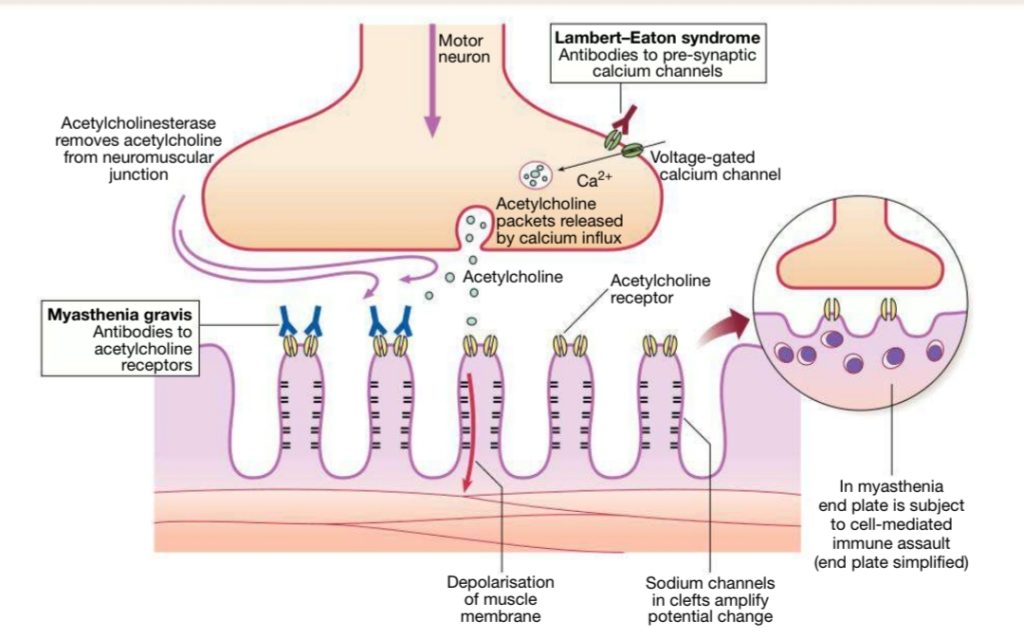
Myasthenia gravis is an organ-specific autoimmune disease. ) caused by antibodies to acetylcholine receptors in the post-junctional membrane of the neuromuscular junction. Which result in blockage of neuromuscular transmission and complement-mediated inflammatory response reduces the number of acetylcholine receptors and damages the end plate. It leads to fatigable
weakness and affects the ocular, facial, and bulbar muscles.

Myasthenia gravis : Antibodies to acetylcholine receptors
Fig 1 : In myasthenia gravis there are antibodies to the acetylcholine receptors on the post-synaptic membrane, which block conduction across the neuromuscular junction (NMJ)

Myasthenia gravis usually presents between the ages of 15 and 50 years and there is a female preponderance in younger patients. In older patient, males are more commonly affected. It tends to run a relapsing and remitting course.

What are the signs & Symptoms of Myasthenia gravis?

  • Weakness of the oculomotor muscles leads to central eye movement disorder.
  • Ptosis or diplopia
  • Weakness of chewing, swallowing, speaking, or limb movement.
  • Resting of the eyelids (looking downwards)
  • Cogan’s lid twitch sign( increased reflex elevation with up-gaze )
  • Any limb muscle may be affected, most commonly those of the shoulder girdle Example: the patient is unable to undertake tasks above shoulder level, such as combing the hair, without frequent rests.
  • Respiratory muscles may be involved and respiratory failure is an avoidable cause of death.l. Ventilatory support is required where weakness is severe or of abrupt onset
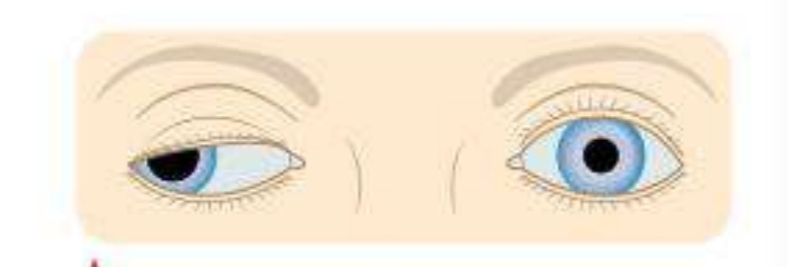
Ptosis
Fig 2 : Ptosis

How to diagnose Myasthenia gravis?

  • Tensilon test: Intravenous injection of the short-acting anticholinesterase
    edrophonium bromide.
  • Nerve conduction studies: Repetitive stimulation during nerve conduction studies may
    show a characteristic decremental response.
  • Serum testing: It is done for Anti-Acetylcholine Receptor Antibodies(AChR-Ab) present in blood .Β 

  • Enzyme-linked immunosorbent assay (ELISA)Β 
  • The Ice-Pack Test: This safe and straightforward bedside investigation. It also provides symptomatic relief from ptosis .

  • Repetitive Nerve Stimulation: Muscle response to these stimulations and these patterns are studied for identification of Myasthenia gravis.Β 

Treatment method for Myasthenia gravis ?

Acute treatments

Intravenous immunoglobulin
β€’ Lowers production of antibodies and rapidly reduces weakness
Plasma exchange
β€’ Removing antibody from the blood may produce marked improvement; this is usually brief, so is normally reserved for myasthenic crisis or for pre-operative preparation.

Long-term treatments

Glucocorticoid treatment
β€’ Improvement is commonly preceded by marked exacerbation of myasthenic symptoms, so treatment should be initiated in hospital
β€’ Usually necessary to continue treatment for months or years, risking adverse effects
Pharmacological immunosuppression treatment
β€’ Azathioprine 2.5 mg/kg daily reduces the necessary dosage of glucocorticoids and may allow their withdrawal. Effect on clinical features may be delayed for months.
β€’ Mycophenolate mofetil: less commonly used.
Thymectomy
β€’ Should be considered in any antibody-positive patients under 45 years with symptoms not confined to extraocular muscles, unless disease has been established for more than 7 years.
β€’ Likely to be required for thymoma.

Recent Post