
-
 Dr.
Arpita Biswas
Dr.
Arpita Biswas
- Dr.Rahul Kr. Jha
- Disclaimer

Table of Contents
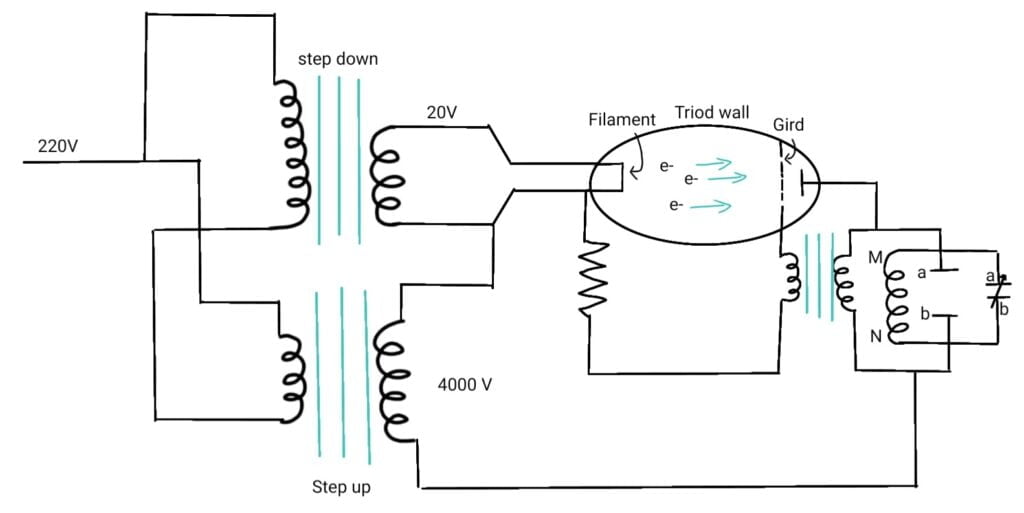


What is Short-wave diathermy?
A short-wave diathermy(SWD) current medical purpose frequency used is 27.12 MHz and the Wavelength – is 11m. In SWD, the current is generated in a machine circuit, which is in turn coupled to a patient (resonator) circuit used to treat the patient.
In Short -, diathermy produces one million impulses per second, each with a duration of 0.001 ms, beyond the range used for nerve stimulation. No discomfort or muscle contractions are produced when such a current is passed through the body. This type of current is alternating which does not have the danger of chemical burns on the body of the patient. Consequently, it is possible to pass through the tissue currents of a much greater intensity than can be used with low-frequency currents. The intensity of the current can be great enough to produce a direct heating effect on the tissues, similar to the heating effect of the current on any other conductor, and the term ‘diathermy ‘means ‘through heating’.
History of short-wave diathermy
The term “diathermy” has its roots in the Greek words dia meaning “through,” and therme meaning “heat.” Together, they describe the idea of “heating through tissues.” This simple yet powerful concept became the foundation of one of the most significant developments in electrotherapy.
In the early 1900s, a German physician named Dr. Karl Franz Nagelschmidt forever changed the course of physical medicine. In 1908, he discovered that high-frequency alternating current could be safely used to generate heat deep within body tissues. This heating effect helped relieve pain, stiffness, and muscle tension — marking the beginning of a new era in therapeutic treatment.
Dr. Nagelschmidt built his first machines using spark-gap oscillators, which produced frequencies of around 1 megahertz (MHz) — quite advanced for his time. His remarkable work gained recognition when he presented his findings at the 1910 Congress of Physical Medicine in Berlin, an event now remembered as the official birth of medical diathermy.
As technology advanced, researchers sought ways to make diathermy more effective and safer. This led to the invention of Short Wave Diathermy (SWD) in the 1920s, a technique that used radiofrequency energy with much shorter wavelengths — typically between 10 and 100 meters.
To prevent interference with radio transmissions, an international agreement standardized the medical frequency at 27.12 MHz (with a wavelength of about 11 meters). This advancement allowed therapists to heat deeper tissues more uniformly than the earlier longwave methods, making SWD an even more valuable tool in clinical care.
By the 1930s, Short Wave Diathermy had become a popular treatment across physiotherapy and rehabilitation centers. It was especially effective for conditions like joint stiffness, muscle spasms, and chronic inflammation.
In the 21st century, Short Wave Diathermy remains an essential component of physiotherapy and rehabilitation. It continues to help patients by reducing pain, relaxing muscles, improving circulation, and accelerating tissue healing.
How short-wave diathermy is applied?
In short-wave diathermy, the transfer of electrical energy to the patient occurs via an electrostatic or electromagnetic field. There are therefore two methods of application; the condenser/capacitor field and the endothermy method”.
Capacitor field method.
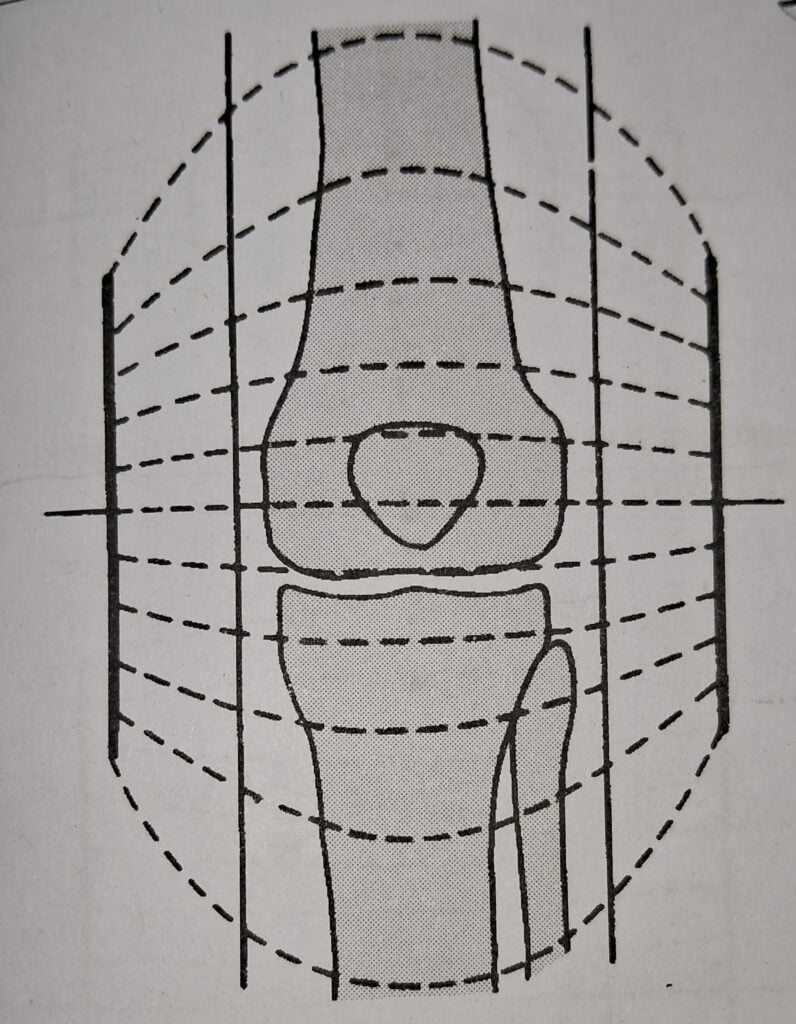
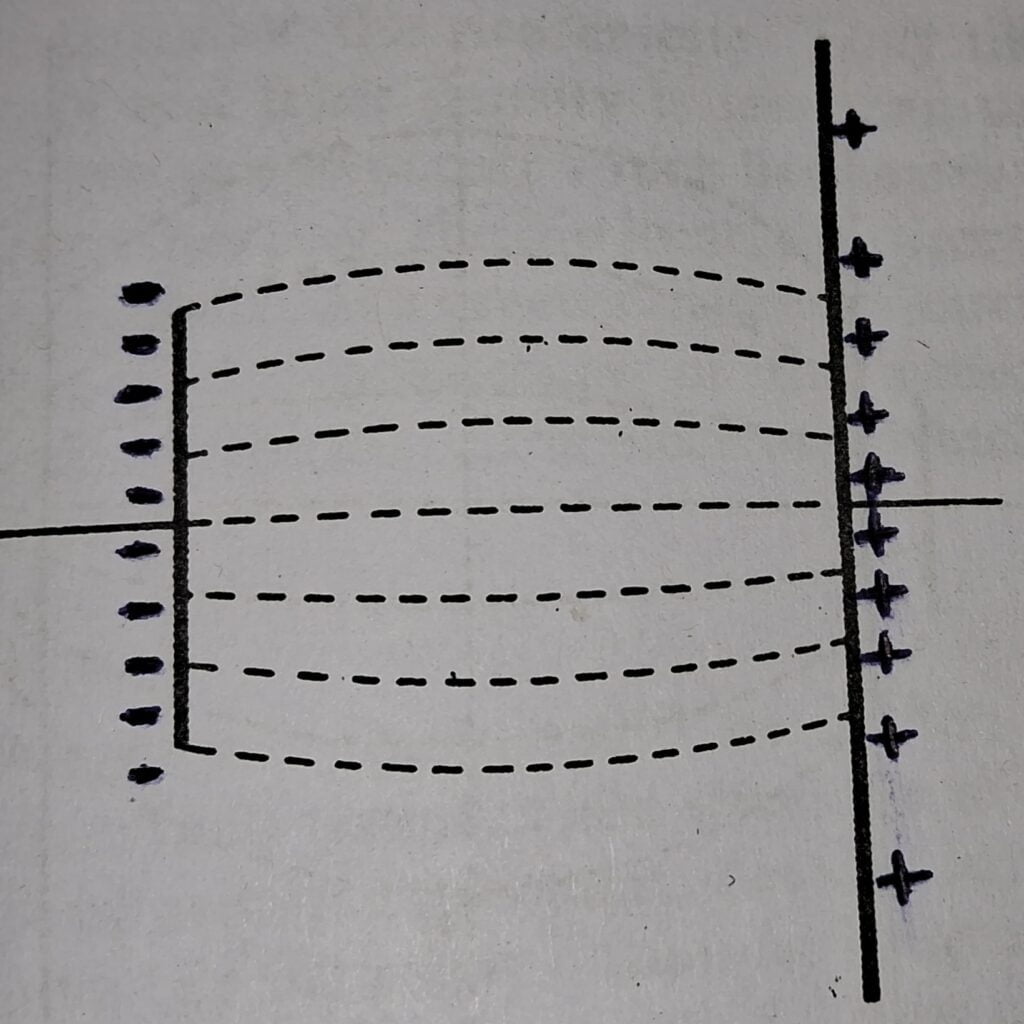
In this method, the electrode is placed on each side of the part to be treated and separated from the skin by insulating material. The electrodes act as the plates of a capacitor, while the patient’s tissues together with the insulating material separate them from the electrodes from the dielectric. When the current is applied in short-wave diathermy, rapidly alternating charges are set up on the electrode, giving rise to a rapidly alternating electric field between them. The electric field influences materials that lie within it
Differential heating of the tissues.
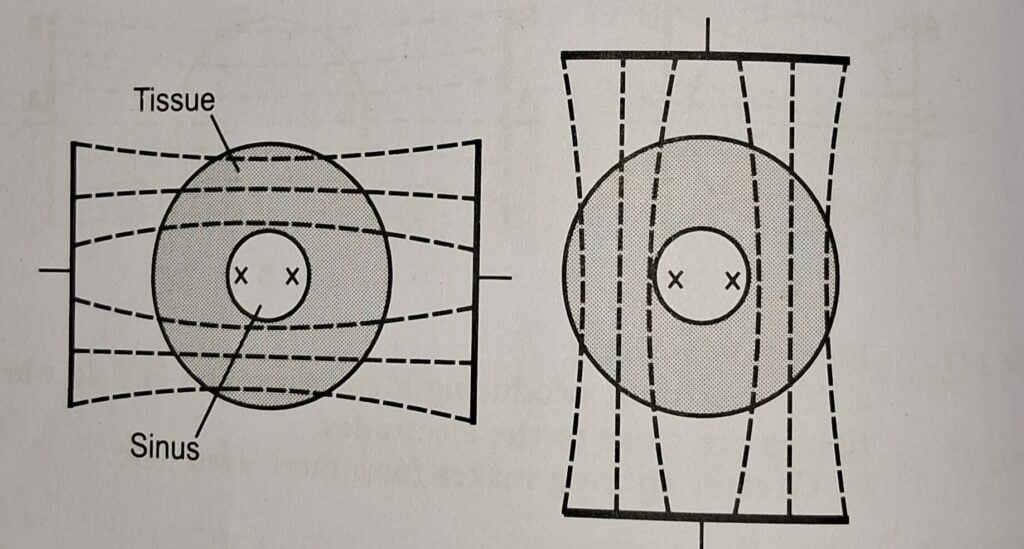
This is used for superficial tissue rather than deep tissues because the electric field in short-wave diathermy tends to spread between the electrodes so the density is usually greatest close to the electrodes. The lines of force pass more easily through the material of high than the low dielectric constant of about 80.


The principle at which Short-wave diathermy works
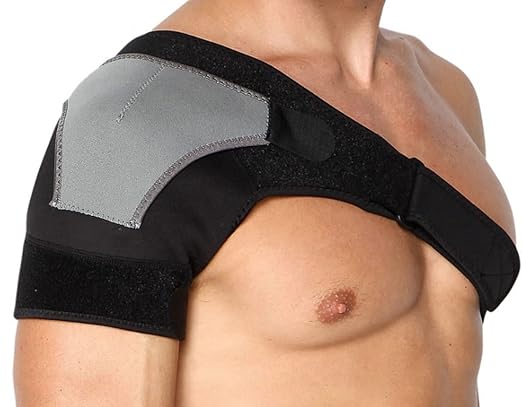
No ordinary mechanical device produces such a high frequency of current so, it is produced by the Capacitor and Inductor as it gets charged and discharged. As a result, it is from high-frequency current in short-wave diathermy.


How Short-wave diathermy Constructed?
- Short-wave diathermy system consists of two circuits:
– Patient circuit – Machine circuit
- There are two transformers in short-wave diathermy ;
Step – up transformer
Step–down transformer
- Source of AC
- Triode
Filament
Grid value
Plate
- Oscillator circuit


What is the Process used in Short-wave diathermy?
- A 200v AC passes the primary coil and EMF is induced in the secondary coils.
- An EMF of 20 v is set –up in a step-down transformer and produces current through the filament to the valve.
- The filament is heated, thermionic emission takes place, and current flows in the triode.
- An EMF of 4000v is set- up in a step-up transformer.
- The electron flows from the filament to the anode through the valve, through an oscillator circuit.
- The electron from the oscillator will induce EMF in coil MN in a direction that the electron moves to the gird of valve making it negative and thus blocking the flow of electrons in the triode.
- This leads to the dying of current in the anode circuit leading to self–induced EMF.
- Now when self–induced EMF dies away, the condenser again discharges through the oscillator coil, but in the opposite direction.
- The flow of current in the oscillator circuit induces EMF in MN such as electron move from M to N and grid loses its negative charge and anode current flow again.
- This sequence continues and each time condenser charges and discharges through the oscillator circuit producing a high-frequency current. ( SWD).
What size of electrode is used for Treatment?
The electrode that is used in short-wave diathermy should be relatively larger than the structure that is being treated. The electric field in short-wave diathermy spreads at the edges of the electrode, which lowers the density of the area. This provides less heating in the deep tissue than in the superficial tissue. Short-wave diathermy is less effective for deep tissue in these circumstances.
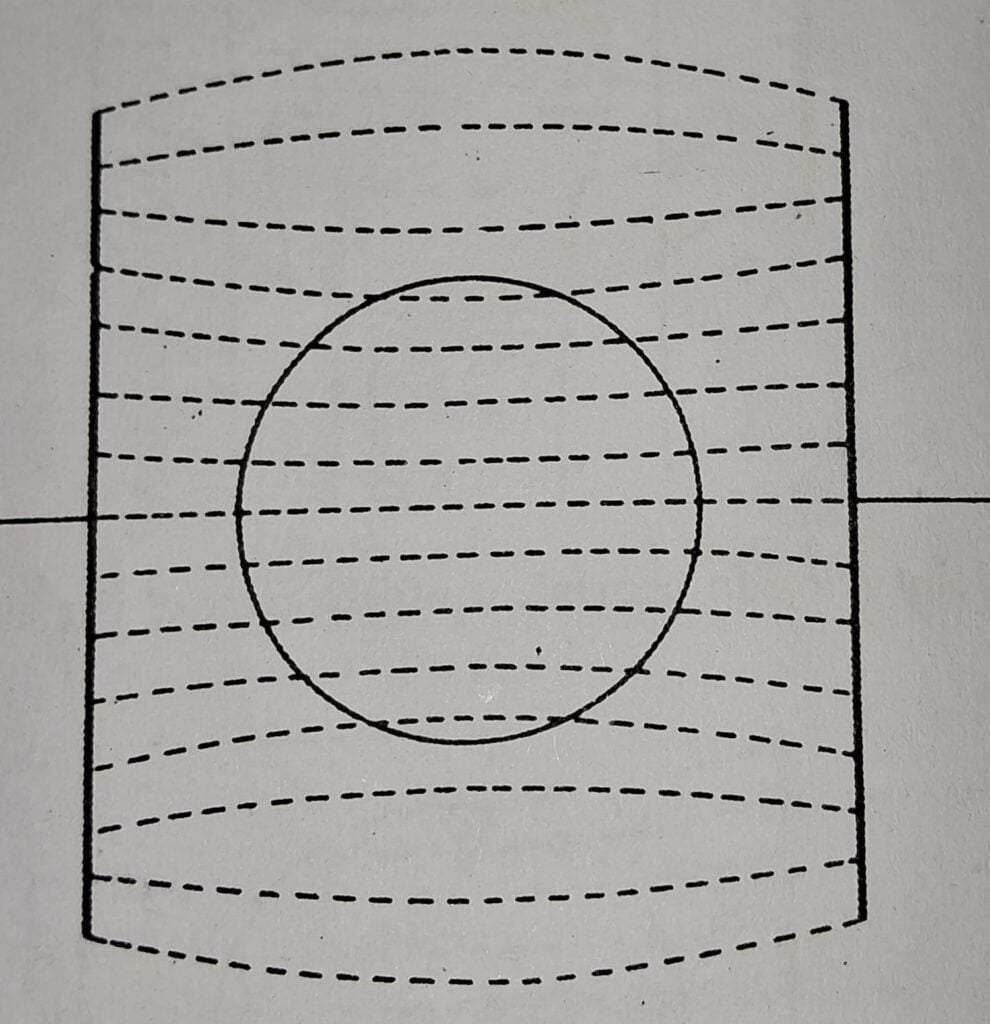
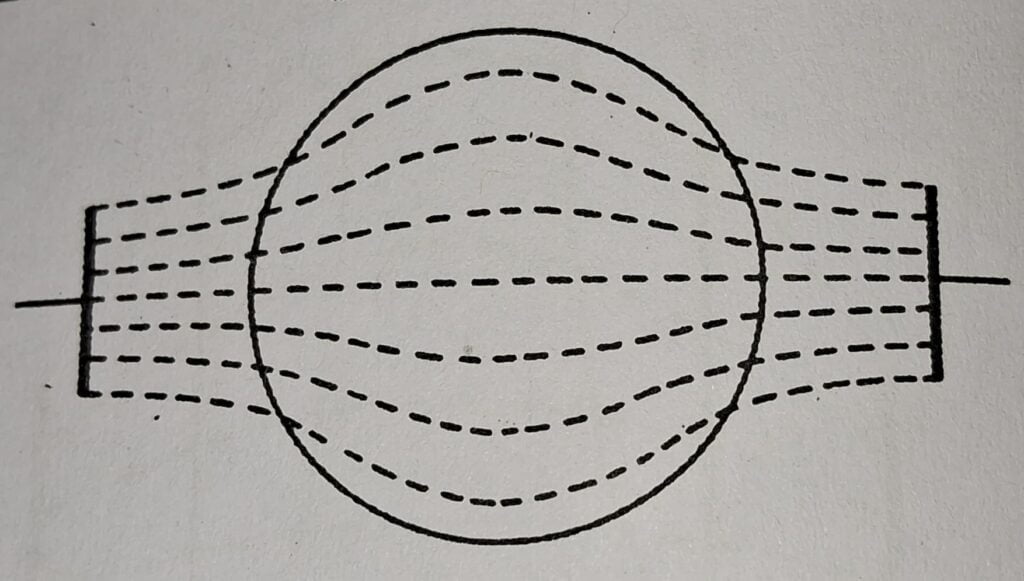


Spacing of electrode
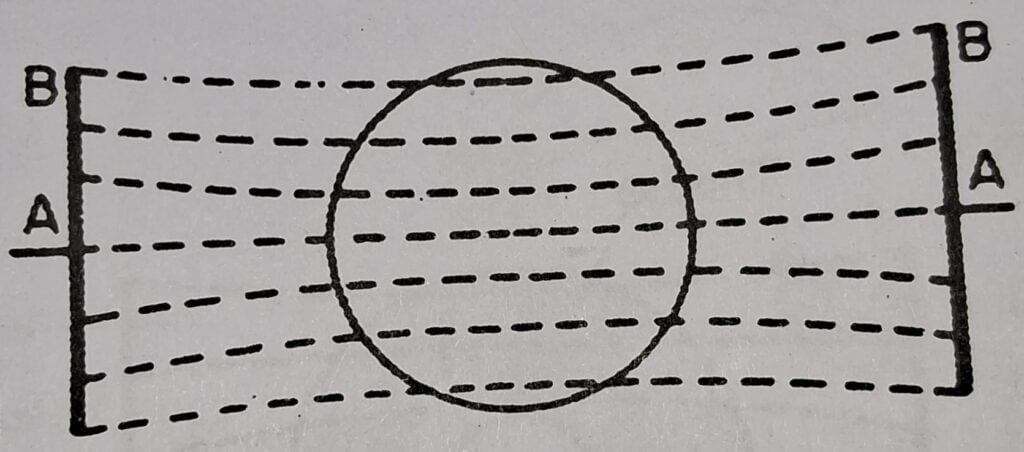
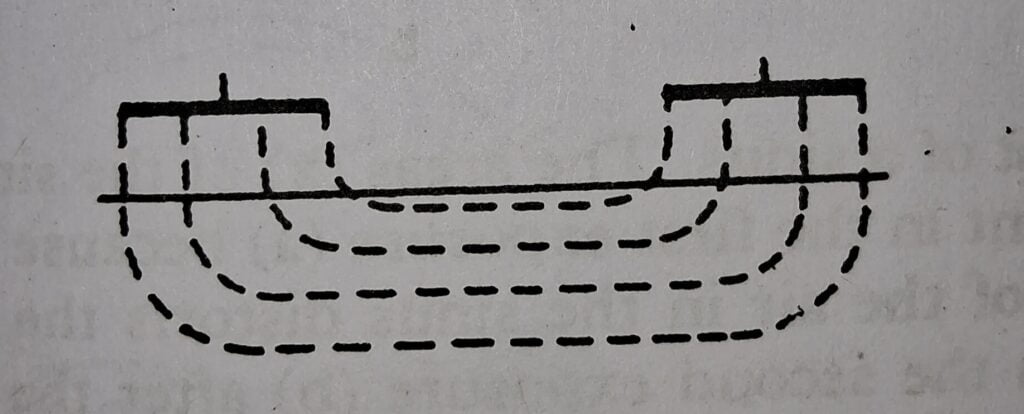
The spacing between the electrodes and the patient’s tissues should be as wide as the machine’s output allows. The material between the electrode and the skin should be low dielectric constant, the air being the most satisfactory.
- When electrodes are at unequal distances from body surfaces.
- When electrodes close to the body surface
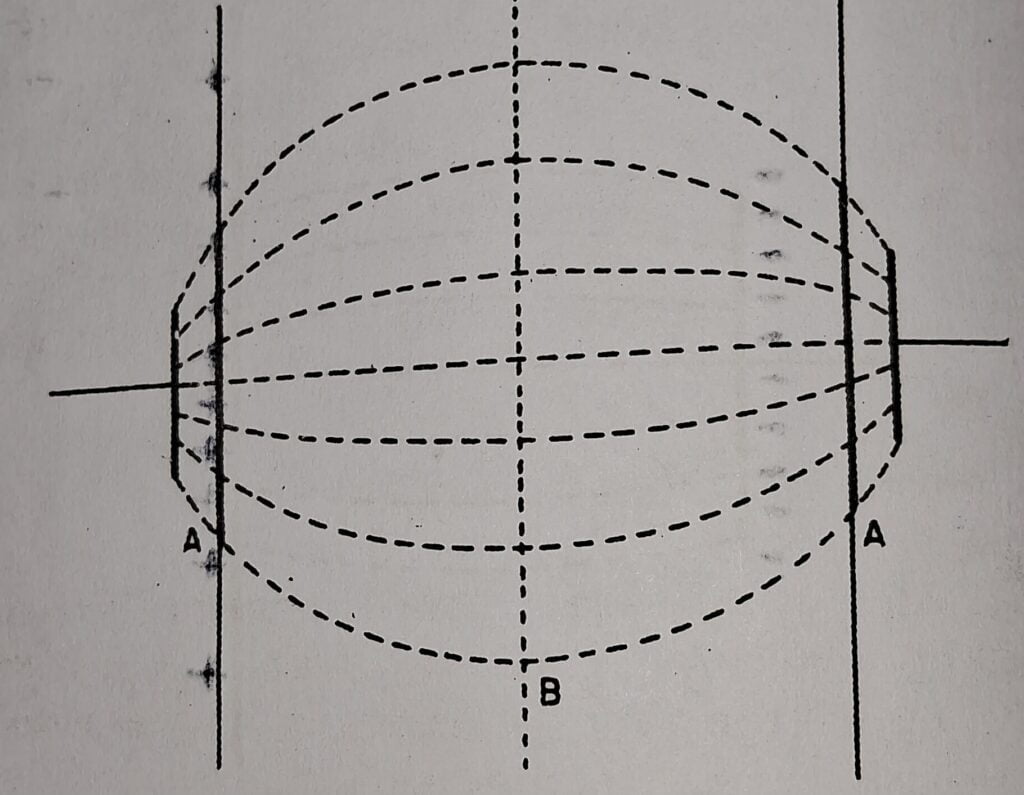
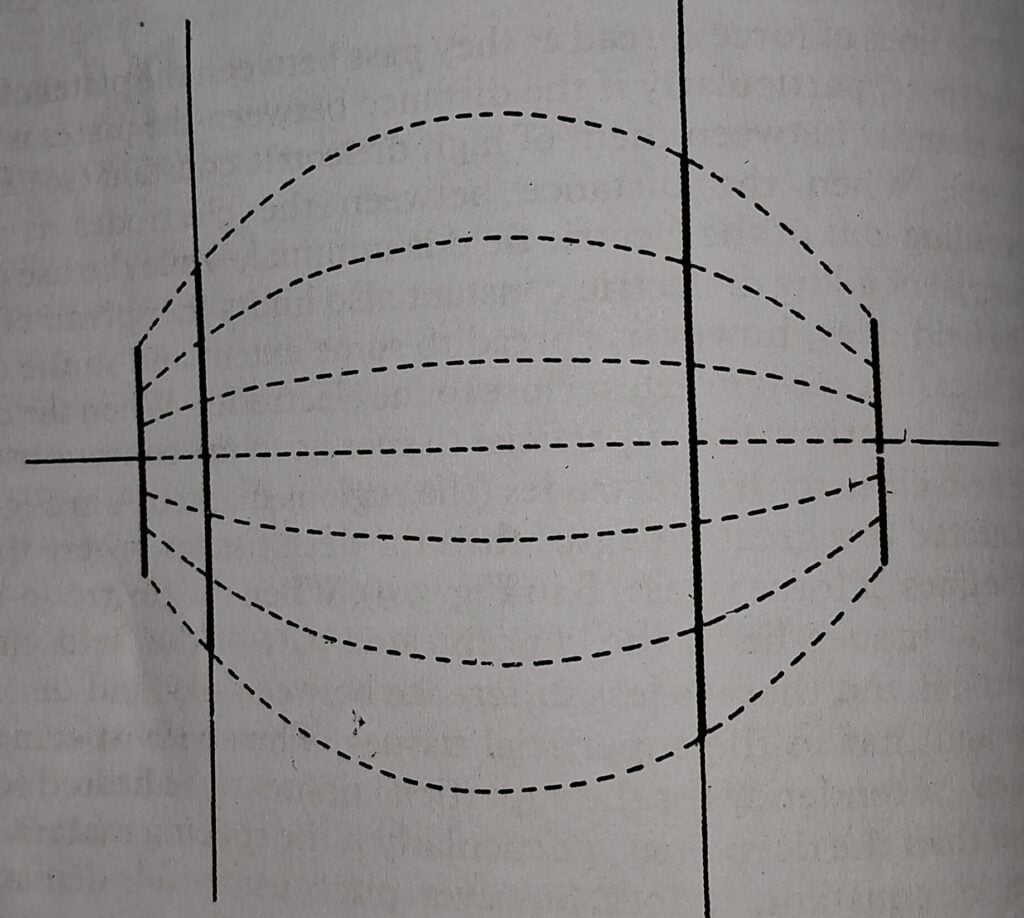
At what position the electrode are placed?
What physiological effect does our body have during Short-wave diathermy?
The various chemical and physical changes due to SWD are as follows :
- Increased Metabolism
- Increased Blood supply
- Pain relief
- Muscle relaxation
- General temperature increases
- Fall in blood pressure
- Sweat gland activity increases
How to apply the Short-wave diathermy?
- Testing of machines
How to arrange when condenser electrodes are used
- These are arranged opposite to each other with gaps between them.
- The operator places her hand between the electrodes, switches on, and tunes the machines.
- A comfortable warm is produced by increasing the current
How to arrange when a cable electrode used
- It is arranged in a single loop and tested with a neon tube
- It lights up when two circuits are in resonance.
- Preparation of patient’s
- Removed the clothing from the area of treatment.
- We can use a couch, chair, or table that is used for support the patient
- Remove the metals, and hearing aids at least 30 cm away from the electrodes
- Wound and sinuses must be cleansed and covered with dry dressing before treatment
- The patient must be comfortable and the part to be treated must be fully supported as movement may alter the skin-electrode distance.
- Selection of Types of electrode used
- Metal electrode
- Rigid metal plate coated with a thin layer of insulating material
- Malleable metal plate covered with a thin layer of rubber
- The Cable electrode consists of a thick wire covered with rubber.
- Position and size of electrode
- For example: when treating one knee joint the back of the electrode placed in the medial aspect of the joint may lie too close to the other knee, which is consequently heated.
- Application of current
- The current is then turned up slowly, allowing the time for Vasodilation to occur.
- The operator should remain within the call of the patient throughout the treatment
- At the end of the treatment, the controls are returned to zero, the current is switched off and the electrodes are removed.
- Dosage
- Dose – 20 to 30 min ( acute condition ) and 30 min ( chronic condition )
- Can be given on alternate days or daily
- In acute conditions, it should be 5 to 10 min and can increase progressively.
- Dosage should be minimal to avoid overtreatment


What condition can we apply for Short-wave diathermy?
- Degenerative joint diseases
- Sprains
- Strains
- Haematoma
- Muscle and tendon tear
- Inflammatory condition
- Boils
- Carbuncles
- Sinusitis
- Pelvic condition
Infection surgical incision
In what condition is Short-wave diathermy prohibited?
What are the Dangers?
- Excess of current
- Overuse
- Damage to equipment
- Burn
- Hypersensitivity skin
- Faintness
- Gangrene
Frequently Asked Question
Q1. Is SWD safe?
Yes, SWD is safe when performed by a trained physiotherapist. Proper precautions must be taken to avoid burns or overheating.
Q2. How long does an SWD session last?
A typical SWD session lasts 10–20 minutes, depending on the condition and intensity.
Q3. Does SWD hurt?
No. SWD produces a gentle warmth. If a patient feels excessive heat or discomfort, the therapist adjusts the intensity.
Q4. What is the difference between Continuous SWD and Pulsed SWD?
- Continuous SWD: Provides constant heat → used for chronic conditions.
- Pulsed SWD: Gives intermittent heat → used for acute or subacute inflammation.
Q5. Who should avoid SWD? (Contraindications)
SWD should NOT be used in:
- Patients with pacemakers
- Pregnant women (abdomen/pelvis)
- Patients with metal implants in treatment area
- Over active infections or open wounds
- Malignancies
- Severe circulatory disorders
- Sensory-impaired patients
Q6. Can SWD be used over metal implants?
No. SWD is contraindicated over metal implants due to the risk of excessive heating and burns.
Q7. Are there side effects of SWD?
Possible side effects include:
- Skin burns (rare)
- Excessive heating if improperly used
- Dizziness (if dehydrated)
SUBSCRIBE
subscribe to our newsletter and stay updated
X-ray
X-Ray Imaging Table of Contents X-ray imaging is a diagnostic medical procedure used in various clinical conditions such as fracture,.......
Wrist Complex
Wrist Complex Table of Contents Introduction The wrist joint consists of two compound joints : the radiocarpal and the midcarpal.......
Why My Knee Hurt and Fix It?
Why My Knee Hurt and Fix It? Knee hurt is a common problem that can affect your daily routine, especially.......
Why my heel hurts when i walk : Possible Reasons and Fixes
Why my heel hurts when i walk : Possible Reasons and Fixes Heel pain can make everyday activities difficult. Many.......
Whirl Pool Bath
Whirl Pool Bath Table of Contents The principal of whirlpool bath therapy is to combine effects of temp with mechanical.......
What should we eat during periods to reduce pain?
Home During period, the right food choices can make a huge difference in how your body feels. Warm, comforting drinks.......