Goniometry of Hip region
Table of Contents
Goniometry of Hip region
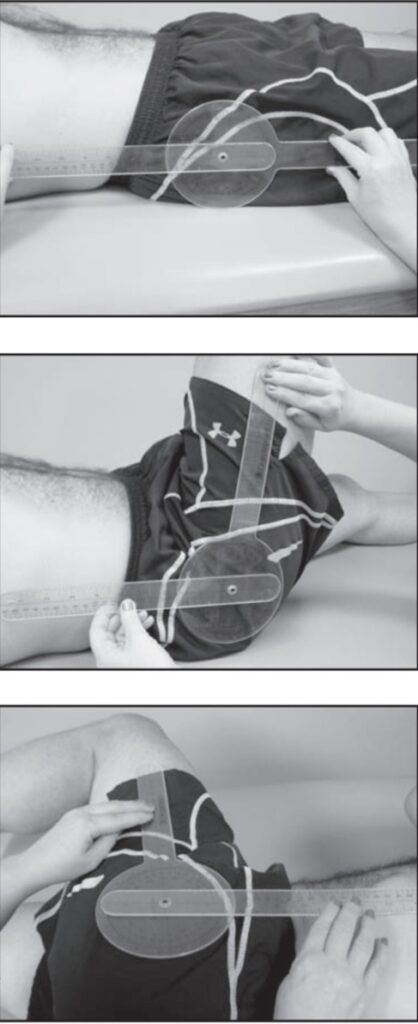
Hip Flexion
Planes/axis of movement: Motion occur in the sagittal plane around a coronal axis. During testing, the knee is allowed to flex passively so the hamstrings do not limit movement.
Range of motion:
β’ 0 degrees to 115 (with the knee extended)
β’ 0 degrees to 125 (with the knee flexed)
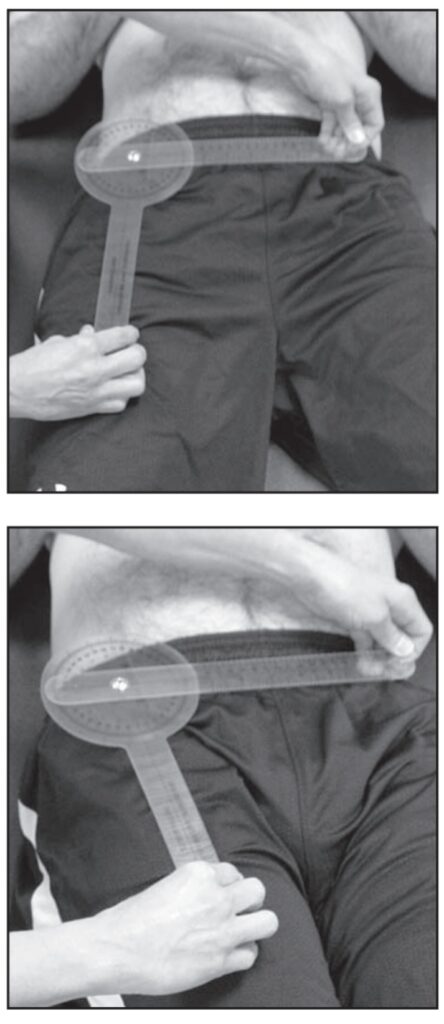
Preferred starting position: See Figure 4-1.
End position: See Figure 4-1
Goniometric alignment:
Axis: Center on the lateral aspect of the hip joint over the greater trochanter of the femur
β’ Stationary arm: Align parallel to the lateral midline of trunk
β’ Moving arm: Align parallel to the lateral midline of femur, siting the lateral epicondyle
Stabilization: The pelvis should be stabilized against a supporting surface by the weight of the body
Substitutions: The subject may try to flex the lumbar spine or opposite hip during testing.
Β

Hip Extension/Hyperextension
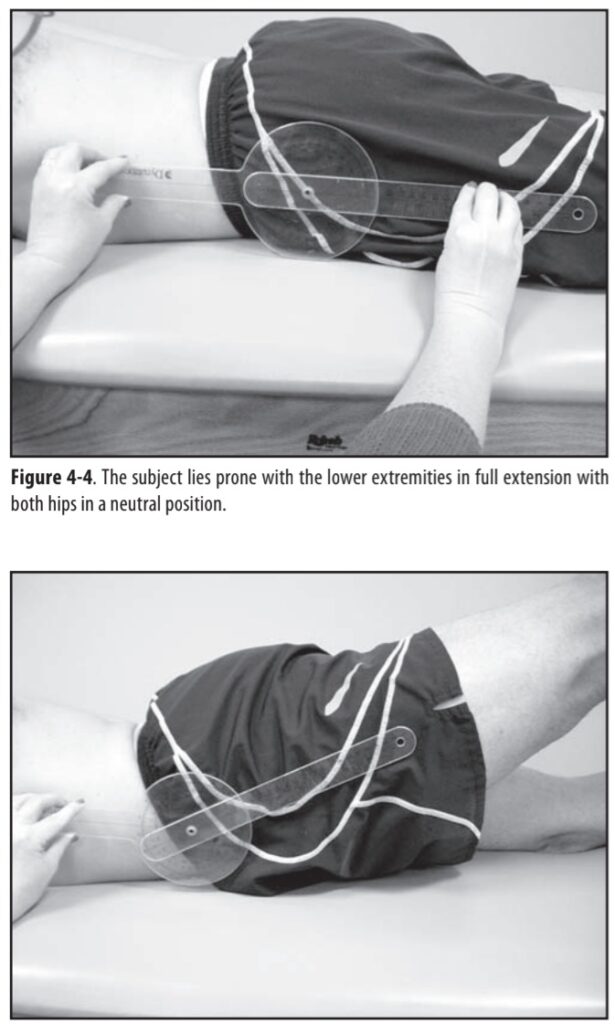
Planes/axis of movement: Movement occurs in the sagittal plane around a coronal axis. Extension and hyperextension are βreturnβ movements from a position of hip flexion.
Range of motion:
β’ 125 degrees to 0 degrees (extension)
β’ 0 degrees to 15 degrees (hyperextension
Preferred starting position: See Figure 4-4.
End position: See Figure 4-4
Goniometric alignment
β’ Axis: Center on the lateral aspect of the hip joint over the greater trochanter of the femur
β’ Stationary arm: Align parallel to lateral midline of the trunk
β’ Moving arm: Align parallel to lateral midline of the femur, siting the lateral epicondyle
Stabilization: The pelvis should be stabilized against a supporting surface by weight of the body, a strap, or the clinicianβs hand if necessary.
Substitutions: The subject may try to extend the lumbar spine or rotate the hips to avoid pain or increase motion
Alternate method/position for testing: The subject may be positioned in side lying on the uninvolved side. The nontested hip should be flexed to 90 degrees to prevent anterior pelvic tilting
Β

Hip Abduction
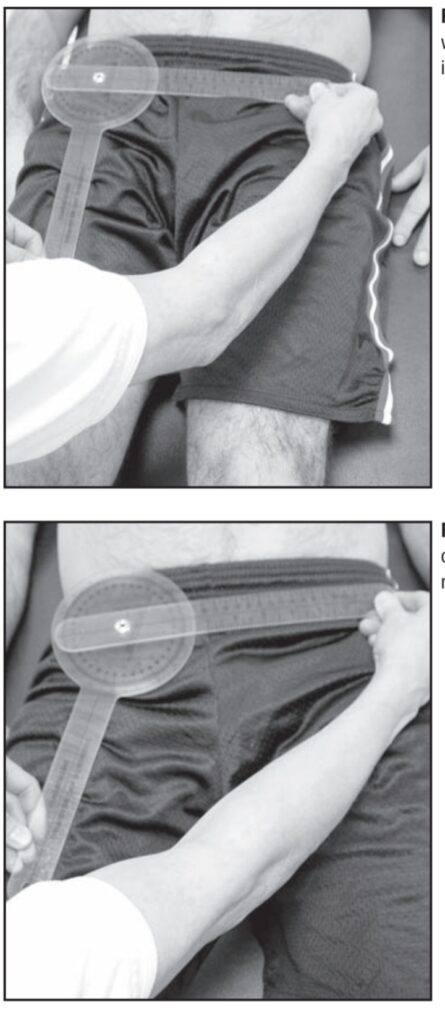
Planes/axis of movement: Movement occurs in a frontal plane around an anterior/posterior axis.
Range of motion:
β’ 0 degrees to 45 degrees
Preferred starting position: See Figure 4-6
End position: See Figure 4-6
Goniometric alignment:
Axis: Center over the anterior aspect of the hip joint at the anterior superior iliac spine (ASIS)
Stationary arm: Align with an imaginary horizontal lines, siting the ASIS of the opposite hip
Moving arm: Align with the anterior midline of the femur, sitting the center of the patella
Stabilization: The pelvis should be stabilized against a supporting surface.
The clinician may use his/her hand on the lateral aspect ofΒ knee to prevent hip rotation.
Substitutions: The subject may try to rotate the tested hip or bend laterally to the opposite side to increase motion or avoid pain. He/she may also try to tilt pelvis on the contralateral side.

Hip Adduction
Planes/axis of movement: Movement occurs in the frontal plane around an anterior/posterior axis. This is return motion from abduction.
Range of motion:
β’ 0 degrees to 30 degrees
Preferred starting position: See Figure 4-8
End position: See Figure 4-9
Goniometric alignment
Axis: Center over the anterior aspect of the hip joint at the anterior superior iliac spine (ASIS)
β’ Stationary arm: Align with imaginary horizontal line, siting the ASIS of the opposite hip
β’ Moving arm: Align with the anterior midline of the femur, siting the center of the patella
Stabilization: The pelvis should be stabilized against a supporting surface and encourage subject compliance to prevent ipsilateral tilting of pelvis
Substitutions: The subject may try to attempt to laterally flex the trunk toward the tested side to increase the range of motion (ROM) or avoid pain with movement.

Hip Internal (Medial) Rotation
Planes/axis of movement: Movement occurs in the transverse plane around a longitudinal axis in anatomic position and in the frontal plane around an anterior/posterior axis during testing
Range of motion:
0 degrees to 45 degrees (with the hip flexed)
0 degrees to 30 degrees (with the hip extended)
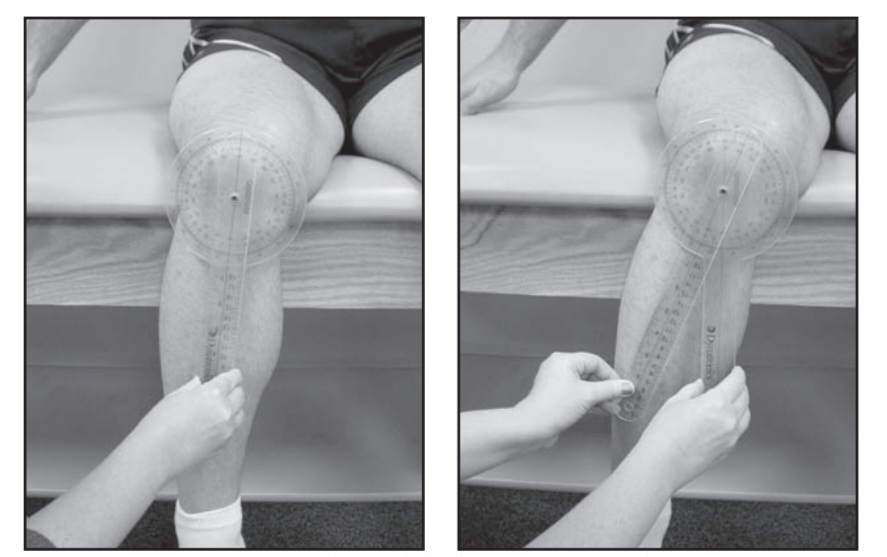
Preferred starting position: See Figure 4-10.
End position: See Figure 4-10.
Goniometric alignment
Axis: Center over the mid patellar surface
Stationary arm: Align so goniometer is perpendicular to the floor or parallel to the tabletop
Moving arm: Align withΒ anterior midline of the lower leg, sitting on midpoint between two malleoli of the ankle
Stabilization: The distal end of the femur should be stabilized against a
supporting surface through body weight. The clinicians may have to use his/ her hand to prevent hip adduction or flexion.
Substitutions: The subject may try to tilt the pelvis on the contralateral side
or raise the pelvis off the table to gain increase the range of motion. He/she
may also adduct the hip to avoid pain.
Β

Hip External (Lateral) Rotation
Planes/axis of movement: Movement occurs in the transverse plane around a longitudinal axis in the anatomic position and in a frontal plane around an anterior/posterior axis during testing.
Range of motion
0 degrees to 45 degrees (with the hip flexed)
0 degrees to 30 degrees (with the hip extended)
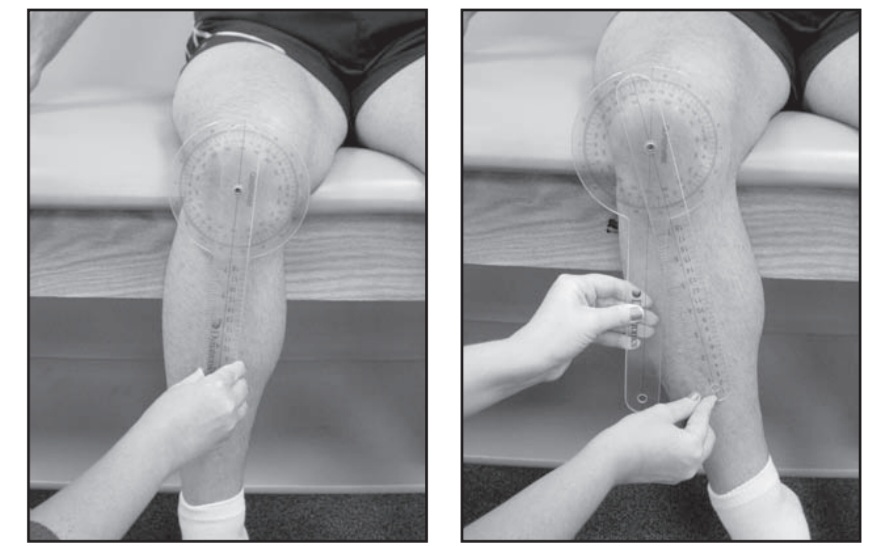
Preferred starting position: See Figure 4-13.
End position: See Figure 4-13.
Goniometric alignment:
Axis: Center over the anterior mid patellar surface
Stationary arm: Align so the goniometer is perpendicular to the floor or parallel to the tabletop
Moving arm: Align with the anterior midline of the lower leg, siting the midpoint between the two malleoli of the ankle
Stabilization: The distal end of the femur should be stabilized against a supporting surface through body weight. The clinician may have to uses his/ her hand to prevent hip abduction or flexion

Why my heel hurts when i walk : Possible Reasons and Fixes
Why my heel hurts when i walk : Possible Reasons and Fixes Heel pain can make everyday activities difficult. Many people notice discomfort while getting

8 best pain killers for muscle pain
8 best pain killers for muscle pain Pain is one of the most common health complaints worldwide, and pain killers are often the first solution

Immediate Gout Pain Relief Fast in 24 hours
Immediate Gout Pain Relief Fast in 24 hours Gout is a form of inflammatory arthritis caused by elevated serum uric acid levels, leading to the
5 Effective knee pain exercises at home
5 Effective knee pain exercises at home Knee pain exercises at home are a simple way to reduce pain, ease stiffness in an aching knee,

Why My Knee Hurt and Fix It?
Why My Knee Hurt and Fix It? Knee hurt is a common problem that can affect your daily routine, especially when walking, running, or climbing

Understanding ALL about Rheumatoid arthritis
Rheumatoid arthritis Rheumatoid arthritis (RA) is a disease of synovium (a thin, soft connective tissue membrane that lines the inner surface of synovial joints) characteristics