
Tuberculosis
Table of Contents
Definition of tb disease
Tuberculosis ( tb disease) is a communicable disease that primarily affects the lungs but can spread to other organs such as the kidneys, brain, and spine. Tuberculosis is caused by the bacterium Mycobacterium tuberculosis ( bacillus tuberculosis bacteria). This disease is preventable and curable. Tuberculosis was discovered by Robert Koch in 1882.
Tuberculosis (TB) is a significant public health challenge globally, which continues to affect millions of people each year. Community-level implications for health systems, economic stability, and social development.
How do tuberculosis bacteria enter into body?
Bacillus tuberculosis bacteria that lead to tuberculosis by entering the body through several different pathways, including
1- Inhalation: When any person inhales tiny droplets expelled into the air by an infected individual (through coughing, sneezing, or speaking), the bacteria can enter the lungs and begin to multiply.
2 – Ingestion: When any person consumes unpasteurized milk or food contaminated with the bacteria, particularly from infected cattle. This can lead to TB infection in the gastrointestinal tract.
3- Inoculation: In healthcare or laboratory settings, the bacteria may enter the body through a break in the skin or mucous membrane, especially during handling of infected material.
4-Transplacental route: Also known as the congenital Route. In this condition infected mother transfers Mycobacterium tuberculosis to her unborn baby through the placenta. Although it is rare, this form of transmission can lead to congenital tuberculosis in the newborn.
How do TB Bacteria spread in the body?
1- Local spread
After inhalation, the TB bacteria are taken up by immune cells called macrophages. These infected macrophages carry the bacilli to nearby lung tissues, leading to localized infection and inflammation.
2 – Lymphatic spread
The TB bacteria can travel through the lymphatic system, spreading to:
Lymphoid tissues and follicles
Pharynx, causing pharyngitis
Intestines, lymph nodes, and lymphatic vessels, resulting in lymphangitis (inflammation of lymph vessels) and lymphadenitis (inflammation of lymph nodes)
This mode of spread plays a major role in extrapulmonary TB.
3 -Hematogenous spread (Through Bloodstream)
A condition called tuberculous bacillemia. When TB bacteria enter the blood circulation and they may damage the vein walls, especially near infected lymph nodes. This allows the bacteria to disseminate widely and form tiny nodular lesions (like millet seeds) in multiple organs, including:
Lungs
Liver
Kidneys
Bones
Other tissues
This pattern is characteristic of miliary tuberculosis, a severe form of the disease.
4 –By the natural passage
(i) Tuberculous Pleurisy: Lung lesions may extend into the pleural space, causing inflammation of the pleura.
(ii) Tuberculous Laryngitis: Infected sputum may reach the larynx, causing infection and inflammation there.
( iii) Ileocecal Tuberculosis: Swallowing infected sputum may introduce the bacteria into the gastrointestinal tract, particularly affecting the ileocecal region.
( iv) Tuberculous Peritonitis: TB infection in the fallopian tubes (salpingitis) can spread into the peritoneal cavity, causing abdominal TB.
Types of Tuberculosis
Depending upon the type of tissue, response, and age, tuberculosis is divided into 2 types :
1 – Primary tuberculosis
The infection of an individual who has not been previously infected or immunized is called primary tuberculosis or on complex or childhood tuberculosis.
2 – Secondary tuberculosis
The infection of an individual who has been previously infected or sensitive is called secondary or post-primary, or reinfection, or chronic tuberculosis.
What are the symptoms of tb disease?
The clinical features are the signs and Symptoms of tb disease, which depend on the location, extent, and type of lesions of infection.
Primary Tuberculosis
- Chronic cough, often with hemoptysis
- Pyrexia of unknown origin
- Unresolved pneumonia
- Exudative pleural effusion
- Asymptomatic (diagnosis on chest X-ray)
- Weight loss, general debility
- Spontaneous pneumothorax
- fever, night sweats, anorexia,
- Hepatosplenomegaly
Secondary Tuberculosis
- Fevers or night sweats
- Supraclavicular lymphadenopathy
- The formation of a ‘collar-stud’
abscess and sinus formation. - TB can affect any part of the bowel, causing anorexia and weight loss.
- Tuberculous peritonitis is characterized by abdominal distension, pain, and constitutional symptoms.
- Headache,
- Vomiting,
- Seizures
- Delirium
- Lymphocytic meningitis
Hydrocephalus - Space-occupying lesion
(tuberculoma) - Kyphosis
- Cord compression
- Abdominal mass
- Psoas abscess
- Cranial nerve palsy
- Lymph node enlargement
- Pericardial effusion
- Constrictive pericarditis
- Monoarthritic
- Hematuria/dysuria
- Infertility in women
- Epididymitis
- Anorectal ulceration
How to diagnose Tuberculosis?
Tuberculosis is a infection ,so if you or someone is suffering from symptoms like long-lasting cough, fever, weight loss, or night sweats, it’s important to get tested as soon as possible. It is a curable disease if diagnosed earlier.
1. Talk to a Doctor
If you have a persistent cough for more than 2 weeks, then visit a nearby clinic or hospital. The doctor will ask about symptoms and take your medical history. It helps in diagnosing tuberculosis early.
2. Sputum Test (Cough Test)
This is a test where your cough is taken in a container and tested in lab to see if TB germs are present. It’s the most common and simple test.
3. Chest X-ray
A chest X-ray often shows white spots or shadows in the lungs, enlarged lymph nodes in the chest, or fluid in the pleural space (pleural effusion).
4. Skin Test (Mantoux Test)
When a small amount of TB protein is injected under your skin. If a bump appears
after 2–3 days, it means you’ve been exposed to TB germs.
5. Blood Test
Any infection in the body can be identified by a blood test, so the TB.
6. Other Tests (if TB is outside the lungs)
TB occurs in other parts of the body, like bones or kidneys. The doctor may take samples from those places or do scans.
What are the options for tb treatment?
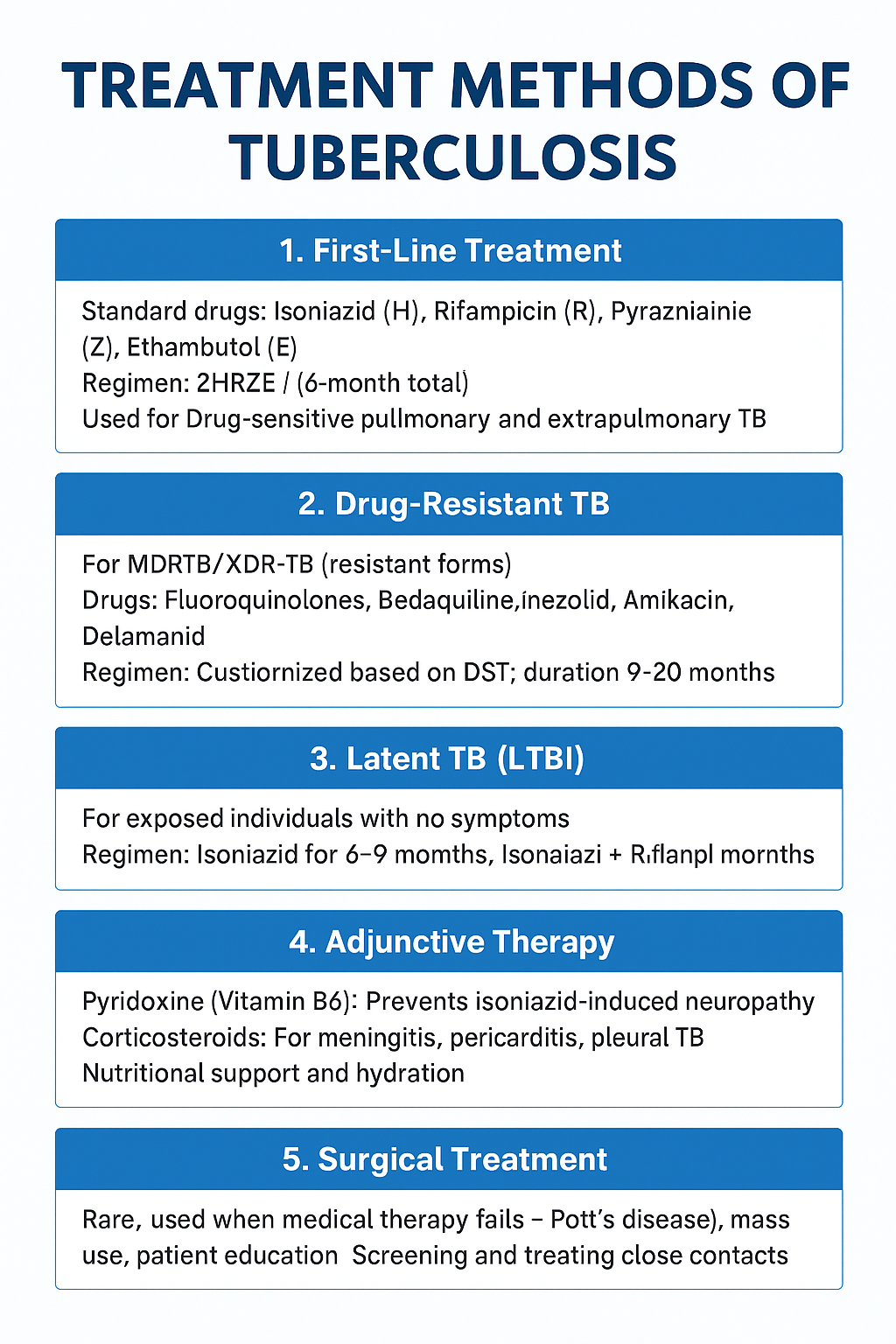
tb medication
Chemotherapy treatment needs 6 months’ treatment. The tb medications used for tuberculosis are isoniazid and rifampicin, which are used for the first 2 months along with pyrazinamide and ethambutol. Two or three drugs with Fixed-dose tablets are preferred for tuberculosis.
Six months of therapy is appropriate for all patients with new-onset pulmonary Tuberculosis and most cases of extrapulmonary Tuberculosis. However, 12 months of therapy is recommended for meningeal Tuberculosis, including involvement of the spinal cord in cases of spinal Tuberculosis; in these cases, ethambutol may be replaced by streptomycin.
Pyridoxine should be prescribed to pregnant women and malnourished patients to reduce the risk of peripheral neuropathy with isoniazid.
Complications due to Tuberculosis
Many people face many complications with tuberculosis, such as
Pulmonary complication
• Massive hemoptysis
• Cor pulmonale
• Fibrosis/emphysema
• Atypical mycobacterial
infection
• Lung/pleural calcification
• Aspergilloma/chronic
aspergillosis
• Obstructive airway disease
• Bronchiectasis
• Bronchopleural fistula
Non-pulmonary complication
• Empyema necessitates
• Laryngitis
• Enteritis*
• Anorectal disease*
• Amyloidosis
• Poncas’s polyarthritis
Control and Prevention
Tuberculosis is preventable, particularly so in those with latent TB. Supporting the development of laboratory and health-care services to improve the detection and treatment of active.
Vaccines BCG (the Calmette–Guerin bacillus), a live attenuated vaccine
derived from M. bovis, is the most established TB vaccine. It is administered by intradermal injection and is highly immunogenic. BCG appears to be effective in preventing disseminated disease, including tuberculous meningitis, in children, but its efficacy in adults is inconsistent, and new vaccines are urgently needed.
BCG is very safe, with the occasional complication of local abscess formation. BCG should not be given in pregnancy or to HIV patients.
Recent Post
What are infant primitive reflexes ?
What are infant primitive reflexes ? Infant primitive reflexes are automatic, involuntary movements that are naturally present during the early stages of a baby’s development.
How to Cure Insomnia Naturally ?
How to Cure Insomnia Naturally If you’re struggling with insomnia, the good news is that effective treatment doesn’t always require medication. Research shows that several

Understanding your back problems at once
Understanding your back Problems at once Introduction Because you clicked on this article, it is likely that you have had firsthand experience of how frustrating
What is the best diet to lower LDL cholesterol?
What is the best diet to lower LDL cholesterol? Introduction If you are concerned about high cholesterol, especially elevated LDL (Low-Density Lipoprotein) cholesterol, making the
What is best diet for high cholesterol ?
What is best diet for high cholesterol ? Maintaining healthy cholesterol levels is essential for protecting the heart and reducing the risk of cardiovascular

Best 25 Heart Healthy Foods to Eat
Best 25 Heart Healthy Foods to Eat Heart disease remains one of the leading health concerns worldwide, but many risk factors can be managed through