
A laser is a device that stimulates atoms or molecules to emit light at particular wavelengths and amplifies that light, typically producing a very narrow beam of the radiation. The emission generally covers extremely limited ranges of visible, infrared, or ultraviolet wavelengths. Many different types of laser have been developed, with highly varied characteristics. Laser is acronym for “light amplification by the stimulated emission of radiations.”
Types of laser
Crystals, glasses, semiconductors, gases, liquids, beams of high-energy electron, and even gelatin doped with the suitable materials can generate laser beams. In nature, hot gases near bright stars can generate strongly stimulated emissions at microwave frequencies, although these gas clouds lack resonant cavities, so they do not produce beams.
In crystal and glass lasers, such as Maiman’s first ruby laser, light from external source excites atoms, known as dopants, that have been added to a host material at low concentration. Important examples include glasses and crystals doped with rare-earth element neodymium and glasses doped with erbium or ytterbium, which can be drawn into fibers for use as fiber-optic lasers or amplifiers. Titanium atoms doped into the synthetic sapphire can generate stimulated emission across exceptionally broad ranges and are used in wavelength-tunable laser.
Many different gases can function as laser media. The common helium-neon laser contains a small amount of neon and much larger amount of helium. The helium atoms capture energy from electrons passing through gas and transfer it to the neon atoms, which emit light. The best-known helium-neon lasers emit red light, but they also can be made to emit yellow, orange, green, or infrared light; typical powers are in milliwatt range. Argon and krypton atoms that have been stripped of one or two electron can generate milliwatts to watts of laser light at visible and ultraviolet wavelengths. The most powerful commercial gas laser is carbon-dioxide laser, which can generate kilowatts of continuous power.
The most widely used lasers today are semiconductor diode lasers, which emit visible or infrared light when electric current passes through them. The emission occurs at interface (see p-n junction) between two regions doped with different materials. The p-n junction can act as laser medium, generating stimulated emission and providing lasing action if it is inside a suitable cavity. Conventional edge-emitting semiconductor lasers have mirrors on opposite edges of p-n junction, so light oscillates in junction plane. Vertical-cavity surface-emitting lasers (VCSELs) have mirrors above and below p-n junction, so light resonates perpendicular to junction. The wavelength depends on semiconductor compound.
few other types of lasers are used in research. In dye lasers laser medium is a liquid containing organic dye molecules that can emit light over a range of wavelengths; adjusting laser cavity changes, or tunes, output wavelength. Chemical lasers are gas lasers in which a chemical reaction generates excited molecules that produce stimulated emission. In free-electron lasers stimulated emission comes from electrons passing through a magnetic field that periodically varies in direction and intensity, causing electrons to accelerate and release light energy.
Because electrons do not transition between well-defined energy levels, some specialists question whether a free-electron laser should be called a laser, but label has stuck. Depending on energy of electron beam and variations in magnetic field, free electron lasers can be tuned across a wide range of wavelengths. Both free-electron and chemical lasers can emit high power. Crystals, glasses, semiconductors, gases, liquids, beams of high-energy electrons, and even gelatin doped with suitable materials can generates laser beam. In nature, hot gases near bright stars can generate strongly stimulated emissions at microwave frequencies, although these gas clouds lack resonant cavities, so they do not produce beams.
History of laser
first laser, constructed in 1960 by Theodore Maiman (born 1927) based on earlier work by Charles H. Townes, used a rod of ruby. Light of suitable wavelength from a flashlight excited ruby atoms to higher energy levels (see excitation). The excited atoms decayed swiftly to slightly lower energies (through phonon reactions) and then fell more slowly to ground state, emitting light at a specific wavelength. The light tended to bounce back and forth between the polished ends of rod, stimulating further emission.
Indications for laser therapy:
- Wound Management
- Tissue Injuries
- Inflammation
- Joint Conditions
- Arthritis
- Chronic Pain
- Dermatological Conditions
- Myofascial Trigger Point Therapy
- Acupuncture
- Addictions – smoking or for weight loss
Contraindications for therapeutic laser:
There are actually very few contraindications for laser therapy. They can be safely used around pacemakers and other implants, as metal does not absorb photons. The exception, however, would be for laser equipment that also emits a TENS-like electrical stimulation.
- Pregnancy – It is not recommended to use a laser directly over the uterus. Research does suggest, however, that therapeutic laser is safe at distant sites.
- Epilepsy – Seizures can be created if the laser produces a visible red light that is pulsed between 5 – 10 Hz
- Thyroid Gland – As the thyroid is a delicate structure, laser therapy is not recommended
- Cancer – As therapeutic laser accelerates cell growth, is it not indicated for regions with potentially cancerous cell
- Children – In regions with the bone growth laser therapy should be used with caution. The research is incomplete as to potential side effects.
- – Tattoos and skin discolorations will type
- Skin abnormalities react differently to laser light and are often contraindicated
Treatment Schedule and Protocols
Treatment Schedule
Acute Condition – 2 to 3 times per week
Subacute Condition – 2 times per week
Chronic Conditions – 2 times per week. Decrease to 1 to 2 times per week as the condition improves
Protocols
Protocols are where things get difficult. Treatment times will vary dramatically depending on the output power of the laser probe you are working with. For the examples provided, we will use treatment times based on the Apollo 3,000mW probe. The dosage is based on Joules. This probe delivers 3 Joules per second.
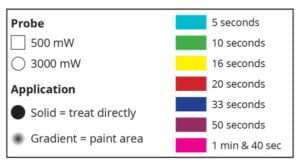
Disclaimer:
The recommended doses shown have been converted using Joules/second and have been rounded to a safe and effective dosage. These guidelines are not an exact reflection of the dosages outlined in the Light and Laser Therapy: Clinical Protocols handbook by Dr. Curtis Turchin. It is recommended that you read the full guide before beginning any treatment.
precaution
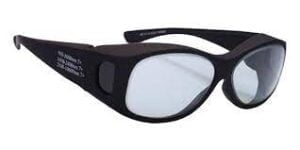
- Wear Laser Safety Glasses
2 Utilize Proper Storage
3 Follow Standards and Regulations
4 Work With Trained Personnel
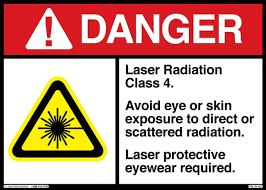
5 Use Warning Signs
What are infant primitive reflexes ?
What are infant primitive reflexes ? Infant primitive reflexes are automatic, involuntary movements that are naturally present during the early stages of a baby’s development.
How to Cure Insomnia Naturally ?
How to Cure Insomnia Naturally If you’re struggling with insomnia, the good news is that effective treatment doesn’t always require medication. Research shows that several

Understanding your back problems at once
Understanding your back Problems at once Introduction Because you clicked on this article, it is likely that you have had firsthand experience of how frustrating
What is the best diet to lower LDL cholesterol?
What is the best diet to lower LDL cholesterol? Introduction If you are concerned about high cholesterol, especially elevated LDL (Low-Density Lipoprotein) cholesterol, making the
What is best diet for high cholesterol ?
What is best diet for high cholesterol ? Maintaining healthy cholesterol levels is essential for protecting the heart and reducing the risk of cardiovascular

Best 25 Heart Healthy Foods to Eat
Best 25 Heart Healthy Foods to Eat Heart disease remains one of the leading health concerns worldwide, but many risk factors can be managed through