
PCOS – Polycystic ovary syndrome
-
 Dr.
Arpita Biswas
Dr.
Arpita Biswas
- Dr.Rahul Kr. Jha
- Disclaimer

Table of Contents

Polycystic ovary syndrome is a condition found in females between the ages 15 to 44. They suffer from irregular menstrual periods, excess hair growth, acne and high level of blood testosterone levels in the Body. This is a common hormonal condition affecting fertility many women.
What is polycystic ovary syndrome?
Polycystic ovary (ovarian) syndrome (PCOS) ) is a common hormonal disorder affecting many women between puberty and menopause. It is a syndrome that refers to a collection of multiple symptoms simultaneously. Polycystic ovary syndrome is also known as ‘polycystic ovary disease’, ‘Stein Leventhal syndrome’, or ‘hyperandrogenic anovulation syndrome’.
What happens if you have polycystic ovary syndrome?
The most visible PCOS symptoms when any female, if you suffer from all the symptoms then consult a Obstetrician or Gynecologist. These are the health care professionals in women’s reproductive health.
Let’s see PCOS symptoms!
Irregular periods
Irregular period’s problems are the first sign of polycystic ovary syndrome which vary from woman to woman. They can range from:
- Irregular
- Infrequent (oligomenorrhoea)
- Heavy
- Absent (amenorrhea).
Some women with few or absent periods may build up a very thick lining in the uterus, and this increase the risk of abnormal cells in uterus that, as a woman ages, can develop into cancerous cells.
Difficulty becoming pregnant
Many women have Anxiety and depression not because of POCS but because of Infertility associated with POCS. It is a frustrating symptom of PCOS. The help of treatment by Hormonal therapies, Assisted reproductive technology (ART) and many more helps to get pregnant.
It is to be noted that not all women with PCOS will have fertility problems, and some will have children naturally without any medical treatment.
Weight Problem
We have seen that women under overweight (an increase in fat, especially around the abdomen or tummy area) are more inclined to develop symptoms of PCOS than women of a healthier weight range. Often small amounts of weight loss (e.g. less than 5% of body weight) may cause spontaneous ovulation to recur.
Losing weight is easier than said — best achieved by a program of healthy eating and regular exercise (40 minutes, three times a week). Ask your doctor for advice about the best type of eating plan for you, e.g. lowering your intake of carbohydrates, sugar and fatty foods and choosing foods.
Even after doing these things you cannot lose weight then better go for any dietian and prepare a balance diet plan and work on it.
Excessive hair growth
The high level of androgens (male hormones) might cause you to become hairiness (hirsutism). Unwanted hair can grow on your face, thighs, back, tummy and nipples. Ask your doctor for more information. You may like to investigate some of the beauty therapies available that give immediate results.
Scalp hair loss
Losing hair from your head, also known as alopecia, can be another consequence of too much testosterone.
Acne
Acne may also be caused by elevated levels of androgens and can appear on the face, back and elsewhere on the body. There are various ways to treat acne, including oral contraceptive (birth control) pills, topical creams and oral antibiotics.
Your doctor or a dermatologist may prescribe certain stronger medications including anti-androgens – cyproterone acetate, spironolactone – or a retinoid isotretinoin. These types of medications need to be taken in conjunction with effective contraception as they may harm a foetus.
High levels of insulin
Many a time, women with PCOS are prediabetes or diabetes as there is high insulin in bloodstream because of high insulin resistance– meaning that the body cannot easily respond to the normal actions of insulin. The Insulin is a hormone, secreted by a gland called the pancreas. Insulin moves glucose from our blood stream into muscle and fat.
When there are high levels of insulin present in the bloodstream, the body produces more androgens. These are the same male hormones that can lead to PCOS symptoms.
Darkened skin
Higher levels of insulin can sometimes cause patches of darkened skin on the back of the neck, under the arms and in the groin area (inside upper thighs).
Long-term effects
Polycystic ovary syndrome is responsible for various health conditions like High blood pressure, Atherosclerosis, Heart attack and Stroke etc. Due to abnormal levels of blood fats (lipids, such as cholesterol and triglycerides).
Many women are having polycystic ovaries but none of the other symptoms of PCOS are visible and can ovulate normally. It is because when any female contain about 12 or more tiny cysts then slowly these symptoms become visible in female. The name polycystic ovary syndrome is confusing because not everyone who has the condition has polycystic ovaries.
Psychological effects
For some people dealing with the challenges of PCOS and its accompanying symptoms, including acne, weight gain and hairiness, can often damage self-esteem and lead to concern over body image, as well as anxiety, stress, loneliness and even depression. Get help. If you find that you have a lot of difficulty seeing yourself realistically, seek help from a trained counselor or psychologist. Ask your doctor for advice.


What are polycystic ovaries?
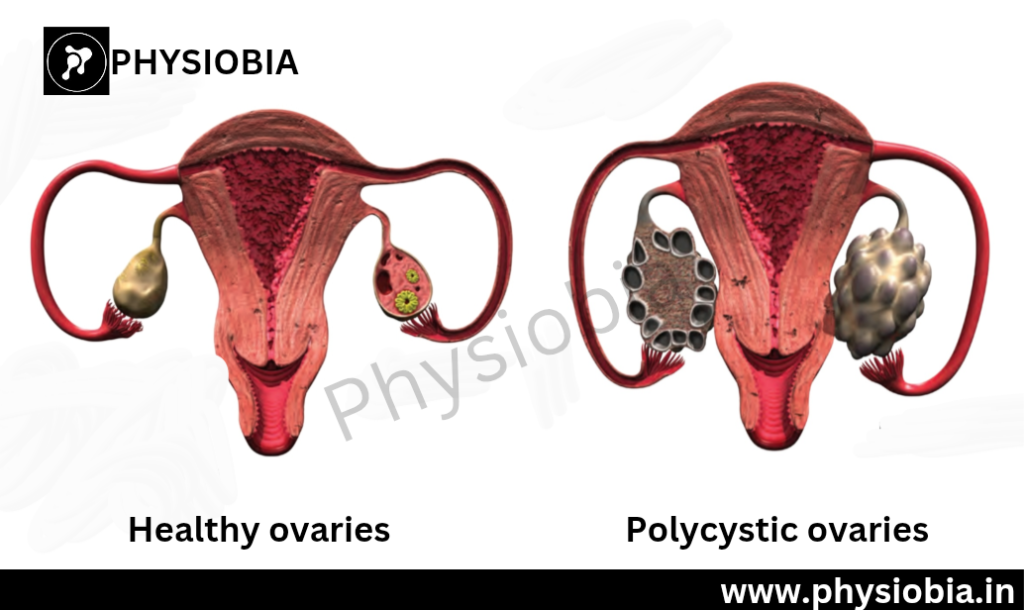
To understand what a polycystic ovary is let’s understand that during each menstrual cycle, follicles develop to allow maturation of eggs, one of which is released during ovulation. Once this process is completed, the other follicles in the ovary break down and disappear. All processes are regulated by two hormones, Luteinizing hormones (LH) and follicle-stimulating hormones (FSH) which travel in the bloodstream to the ovary.
In PCOS, there is one primary abnormality in the release of GnRH hormone, for some unknown reason it is released at higher pulse frequency. This increased pulse frequency leads to an increase in LH over FSH. This lower FSH causes unmatured follicles; these are not enough to become functional for ovulation if the follicle does not ovulate.
These follicles become cysts, which are usually less than 1 cm in size and are arranged around the ovary, just below the surface. Multiple cysts on the ovary represent past failed ovulation. On an ultrasound, the diagnosis of polycystic ovaries is confirmed if there are more than 12 cysts visible on one ovary.
These excessive, Luteinizing hormones (LH) lead to a release of androgen or testosterone (male sex hormone)in the female body. As mentioned previously, this can result in acne, an increase in facial and body hair, irregular periods, and infertility.


Why does it occur?
The Causes of Polycystic ovary syndrome are not entirely understood by various Doctors, although it is believed to be linked to both lifestyle factors and genetics— in other words it runs in the family. Sometime PCOS may be inherited from the male side where symptoms may not be obvious.
Many women who have polycystic ovary syndrome also have as insulin resistance, which occurs when the body struggles to carry out the normal actions of insulin such as regulating blood glucose levels. The high level of insulin in blood can increase the production of testosterone from ovary, contributing to the various PCOS symptoms. Insulin resistance can be caused by genetic factors or lifestyle factors (such as being overweight) or it can be due to a combination of both.
Can PCOS be cured?
There is no known cure for PCOS and it is thought that once you have it, you will always have it . But you can work together with your doctor to treat the various symptoms and manage your lifestyle so that you can have a healthy life.
Polycystic ovary syndrome is common cause infertility , but it is possible to get pregnant you just need a good doctor who is going to introduce you to other methods of getting pregnant so don’t worry about it.
Some medications used in PCOS
Medications used to treat PCOS typically target the underlying hormonal imbalances, insulin resistance, and other related PCOS symptoms. Here are some common medications used in PCOS:
Hormonal Medications
1. Birth Control Pills (BCPs): To regulate menstrual cycles, reduce androgen levels, and improve acne and hirsutism.
2. Progesterone: To induce menstrual periods and reduce the risk of endometrial cancer.
3. Anti-androgens (e.g., Spironolactone): To reduce excess hair growth, acne, and male pattern baldness.
Fertility Medications
1. Clomiphene Citrate (Clomid): To stimulate ovulation and improve fertility.
2. Letrozole (Femara): To stimulate ovulation and improve fertility.
3. Gonadotropins (e.g., FSH, LH): To stimulate ovulation and improve fertility.
Insulin-Sensitizing Medications
1. Metformin (Glucophage): To improve insulin sensitivity, reduce androgen levels, and promote weight loss.
2. Thiazolidinediones (e.g., Pioglitazone): To improve insulin sensitivity and reduce androgen levels.
Anti-Obesity Medications
1. Orlistat (Xenical): To aid in weight loss by reducing fat absorption.
2. Phentermine-Topiramate (Qsymia): To aid in weight loss by reducing appetite and increasing feelings of fullness.
Other Medications
1. Finasteride (Propecia): To reduce excess hair growth and male pattern baldness.
2. Eflornithine (Vaniqa): To reduce excess hair growth.
Caution: Before eating any medication please recommend with doctor. You can visit a doctor and then start taking the best combination of medication prescribed to you.


What food to avoid in PCOS?
Reduce Carbohydrates
Low carbs diets have become extremely effective in the recent year especially for weight loss but it is also effective for PCOS. Many study show that women with changed diet pattern have improved PCOS symptoms .These diet are also called low carbohydrate keto genic diet. In this diet the people eat less than 20 gram of carbs per day, automatically reduce their high insulin level in body which significantly reduce increased testosterone level.
Avoid Carbohydrate containing food, some examples are
Sugary food: Cakes, Cookies , Candy, Chocolates and sweetened beverages
Refined grains: Breads, Rice, Pasta, and cereals.
Fruits: Banana, apples and tropical fruits.
Starchy vegetables: Potatoes, corn, peas, and winter squash.
Legumes: Beans, lentil and Peanuts.
Increase the intake of Fat & Protein rich food ,some examples are
Protein rich food: Meat, Poultry , Fish, eggs and tofu.
Healthy Fat: Avocado , nuts , seeds , olive oil , coconut oil and avocado oil .
Vegetables (low carbs ): Leafy green( Spinach , Kale), Broccoli ,cauliflower.
Cheese : Full fat cheese, feta cheese ,etc.
SUBSCRIBE
subscribe to our newsletter and stay updated