
What are the type of congenital heart diseases?
Table of Contents
Classification of Congenital heart disease
Congenital heart disease may be either shunts (left-to-right or right-to-left), or defects causing obstructions to flow. However, complex anomalies involving combination of shunts and obstructions are also often present.
I. MALPOSITIONS OF THE HEART
II. SHUNTS
(CYANOTIC CONGENITAL HEART DISEASE)
A. Left-to-right shunts
(Acyanotic or late cyanotic group)
1. Ventricular septal defect (VSD) (25-30%)
2. Atrial septal defect (ASD) (10-15%)
3. Patent ductus arteriosus (PDA) (10-20%)
B. Right-to-left shunts (Cyanotic group)
1. Tetralogy of Fallot (6-15%)
2. Transposition of great arteries (4-10%)
3. Persistent truncus arteriosus (2%)
4. Tricuspid atresia and stenosis (1%)
III. OBSTRUCTIONS
(OBSTRUCTIVE CONGENITAL HEART DISEASE)
1. Coarctation of aorta (5-7%)
2. Aortic stenosis and atresia (4-6%)
3. Pulmonary stenosis and atresia (5-7%)
Mal positioning of heart
Dextrocardia is the condition when the apex of the heart points to the right side of the chest instead of its normal position on the left side. Dextrocardia does not usually cause problems, but it tends to occur with other conditions that can have serious effects on heart, lungs and other vital organs.
Cyanotic Congenital heart diseases
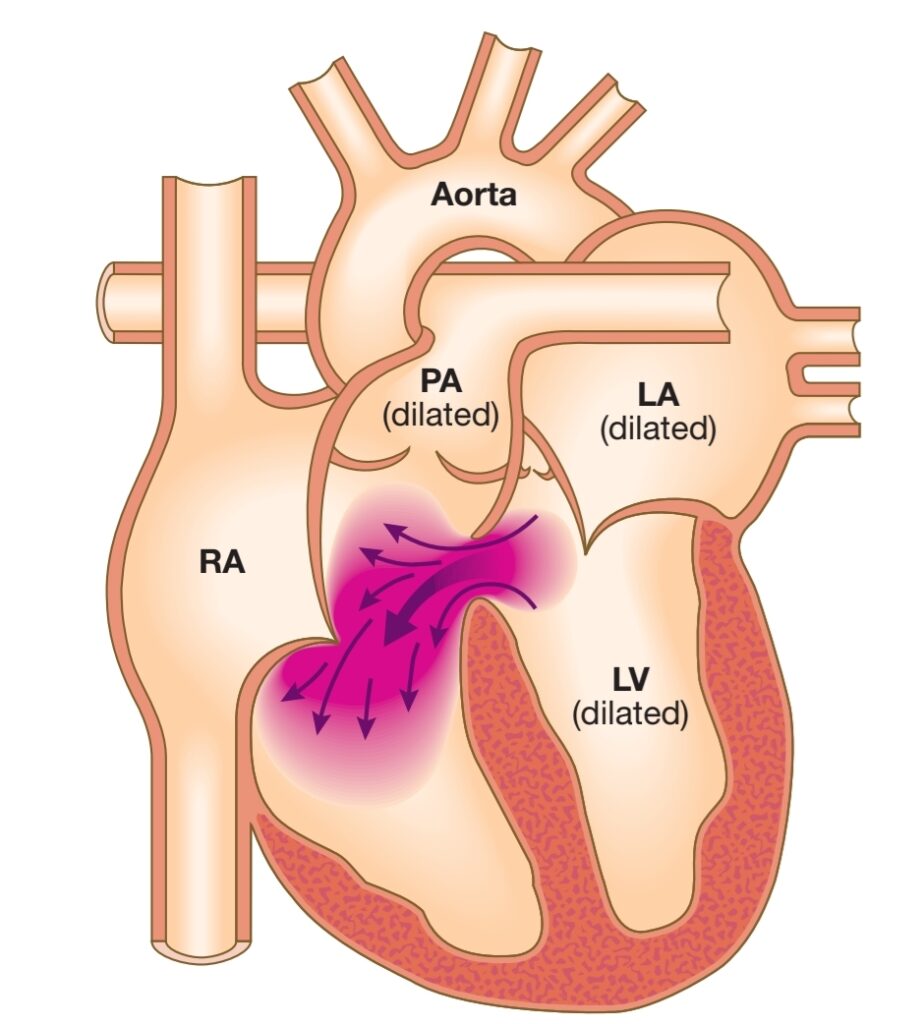
VENTRICULAR SEPTAL DEFECT (VSD)

VSD is the most common congenital heart diseases and comprises about 30% of all congenital heart diseases. The condition is recognised early in life.
VSD occur as a result of incomplete septation of ventricles . The smaller defects often close spontaneously, while larger defect remain patent and produce significant effects.
Depending upon the location of the defect, VSD may be of the following types:
- In 90% of cases, the defect involves membranous septum and is very close to the bundle of His
- The remaining 10% cases have VSD immediately below the pulmonary valve (subpulmonic), below the aortic valve (subaortic), or exist in the form of multiple defects in the muscular septum.
ATRIAL SEPTAL DEFECT (ASD)

ASD comprises about 10% of congenital heart diseases. The condition remains unnoticed in the infancy and childhood till pulmonary hypertension is induced causing late cyanotic heart disease
and right-sided heart failure.
Depending upon the location of defect, there are 3 types of ASD:
(i) Fossa ovalis type or ostium secundum type is the most common form comprising about 90% cases of ASD. The defect is situated in region of the fossa ovalis
(ii) Ostium primum type comprises about 5% cases of ASD. The defect lies low in interatrial septum adjacent to atrioventricular valves. There may be cleft in aortic leaflet of the mitral valve producing mitral insufficiency.
(iii) Sinus venosus type accounts for about 5% cases of ASD. The defect is located high in the interatrial septum near the entry of superior vena cava.
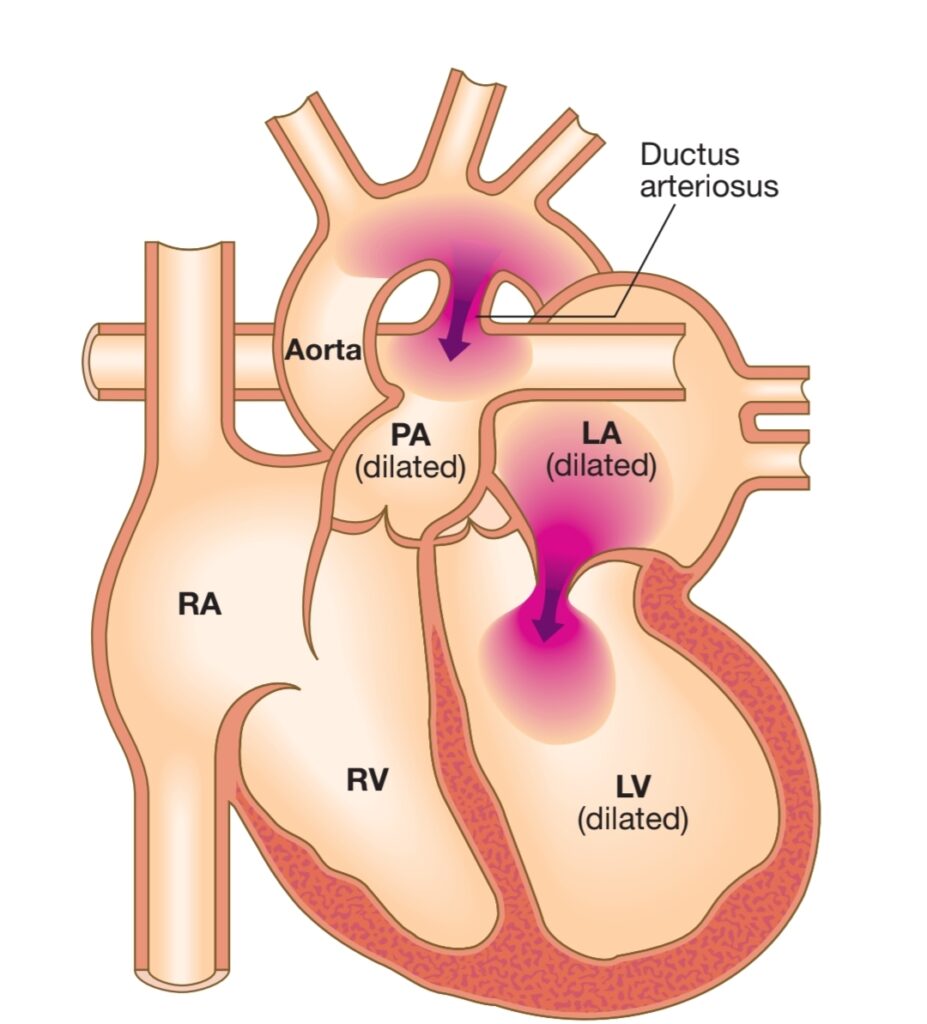
PATENT DUCTUS ARTERIOSUS (PDA)

The ductus arteriosus is a normal vascular connection between aorta and the bifurcation of the pulmonary artery. Normally, ductus closes functionally within the first or second day of life. Its persistence after 3 months of age is considered abnormal.
Pathogenesis: A large left to right shunt in infancy my causes considerable increase in pulmonary artery pressure lead to progressive pulmonary vascular damage .
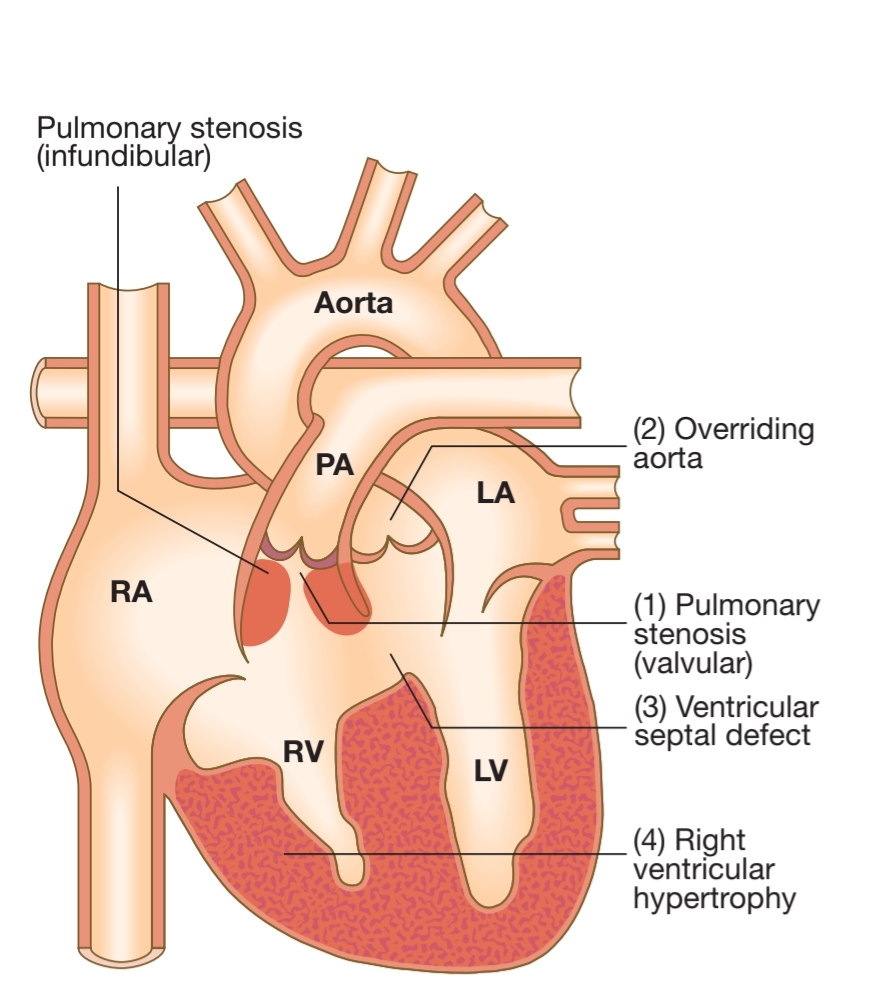
TETRALOGY OF FALLOT

Tetralogy of Fallot is most common cyanotic congenital heart disease, found in about
10% of children with anomalies of the heart.
The four features of tetralogy are as under;
(i) Ventricular septal defect (VSD) (βshuntβ).
(ii) Displacement of the aorta to right so that it overrides
the VSD.
(iii) Pulmonary stenosis (βobstructionβ).
(iv) Right ventricular hypertrophy
TRANSPOSITION OF GREAT ARTERIES
The term transposition is used for complex malformations as regards position of the aorta, pulmonary trunk, atrioventricular orifices and the position of atria in relation to ventricles.
PERSISTENT TRUNCUS ARTERIOSUS.
In PTA, the arch that normally separates the aorta from the pulmonary artery fails to develop. This results in a single large common vessel receiving blood from right as well as left ventricle. They are often associated VSD.
Obstructive congenital heart disease
In this type of Obstructive congenital heart disease the blood flow may result from obstruction in the aorta due to narrowing (coarctation of aorta), obstruction to outflow from the left ventricle (aortic stenosis and atresia), and obstruction to outflow from the right ventricle (pulmonary stenosis and atresia).
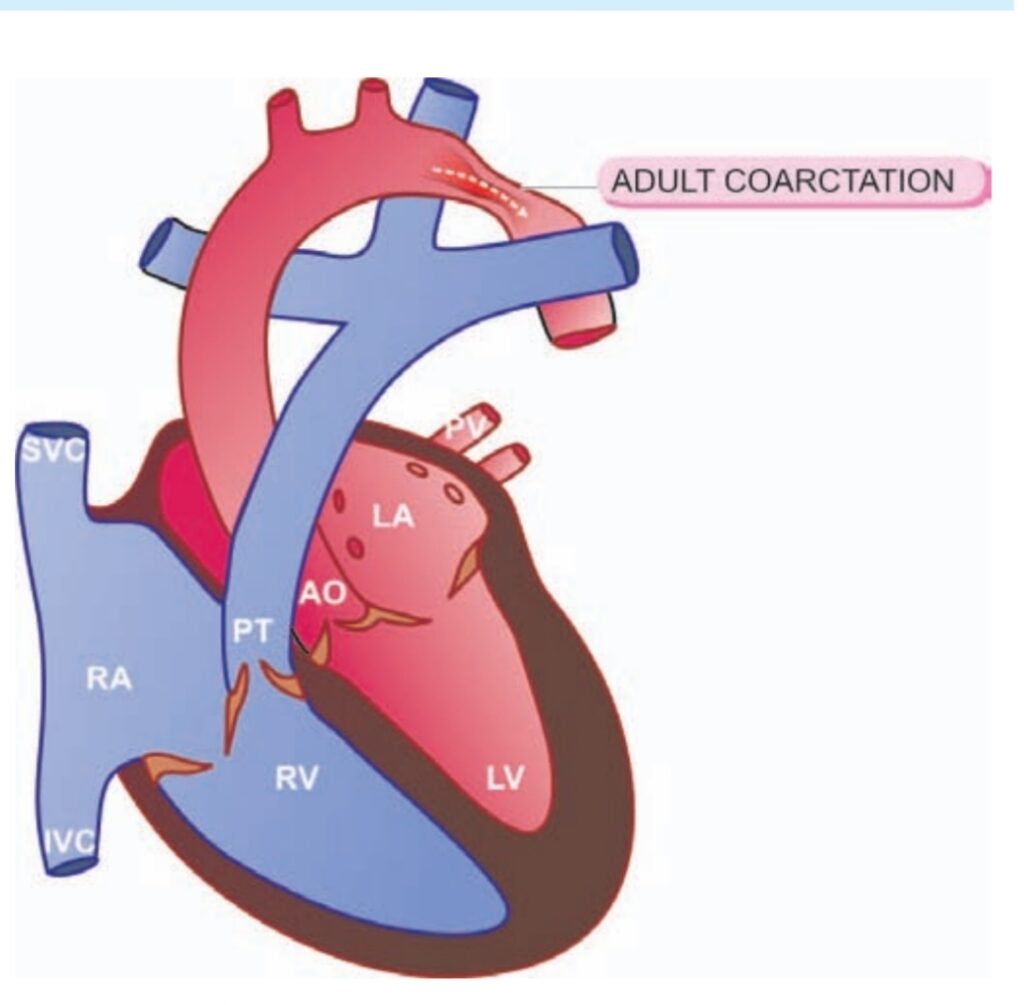
COARCTATION OF AORTA

Coarctation of aorta is localised narrowing in any part of aorta, but constriction is more often just distal to ductus arteriosus . It occur mainly due to trauma , Progessive arteritis ( Taryasu”s Disease)
AORTIC STENOSIS AND ATRESIA
The most common congenital heart disease of the aorta is bicuspid aortic valve which does not have much functional significance due to predisposes it to calcification .Aortic stenosis may be
acquired (e.g. in rheumatic heart disease, calcific aortic stenosis) or congenital
Congenital aortic stenosis may be of three types: valvular, subvalvular and supravalvular.
(i) Valvular stenosis: The aortic valve cusps are malformed and are irregularly thickened. The aortic valve may have one, two or three such maldeveloped cusps.
(ii) Subvalvular stenosis: There is thick fibrous ring under aortic valve causing subaortic stenosis.
(iii) Supravalvular stenosis: The most uncommon type, there is fibrous constriction above sinuses of Valsalva
PULMONARY STENOSIS AND ATRESIA
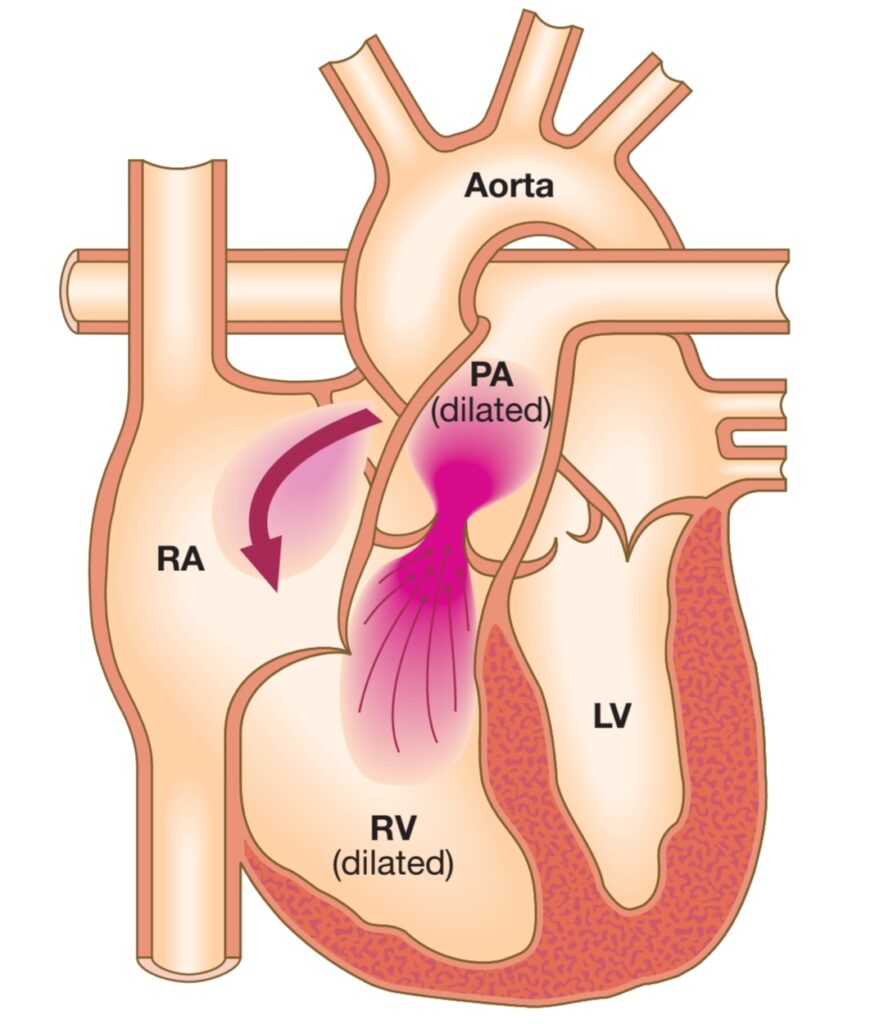
It is a acyanotic Congenital heart diseases
Pulmonary stenosis: It is the commonest form of obstructive congenital heart disease comprising about 7% of all congenital heart diseases.Pulmonary stenosis is caused by fusion of cusps of the
pulmonary valve forming a diaphragm-like obstruction to outflow of blood from right ventricle and dilatation of the pulmonary trunk.
Pulmonary atresia: There is no communication between the right ventricle and lungs so that the blood bypasses the right ventricle through an interatrial septal defect. It then enters lungs via patent ductus arteriosus.

Why My Knee Hurt and Fix It?
Why My Knee Hurt and Fix It? Knee hurt is a common problem that can affect your daily routine, especially when walking, running, or climbing

Understanding ALL about Rheumatoid arthritis
Rheumatoid arthritis Rheumatoid arthritis (RA) is a disease of synovium (a thin, soft connective tissue membrane that lines the inner surface of synovial joints) characteristics

Different menstrual cycle phases
Stages of menstrual cycle Phases Let’s start this article with my story of mensturation , I was 15 when I got my first period and

What is pain scale & how it works
What is pain scale & how it works ? What is a Pain scale? A pain scale is a tool developed by therapists and doctors
What should we eat during periods to reduce pain?
Home During period, the right food choices can make a huge difference in how your body feels. Warm, comforting drinks like ginger tea or turmeric
How to perform Neurological assessment ?
Home Download a PDF ofΒ Neurological Assessment sheet- Click on thisΒ Every Neurological assessment starts with taking the demographic data from patient. A demographic data